It’s official, The New York Times is telling us, ‘It’s time to dress like a witch’. In an article published just days ago in reaction to the worldwide fashion weeks, the US supergiant is telling its readers to adorn themselves in black fits, a painfully pointed heel, black gloves, and a vampy lip. With major fashion brands like Rick Owens and Schiaparelli promoting what Owens claims to be, ‘the darker side of us.’
Hoping across to the mystifying streets of Soho can be, you wouldn’t always assume what happens above them to be of ancient, magical practice… or maybe you would. Up a fittingly crooked staircase, old book smell wafting in the air, a group of fellow minded witches draw themselves together in a sacred circle, casting spells upon the world around them. But in this coven, they’re wearing nothing like the outfits seen on recent walkways. Thankfully, they are wearing something.
Meet, the Blackthorn Coven, one of London’s largest known group of witches. With over 25 members, all different in age, gender, looks and practices, they come together every fortnight as Gardnerian Wiccans, in praise and devotion to the Triple Goddess and the Horned God.
Lead by High Priest Andy, he boasts the impressive number of attendees down to, ‘the necessity of community in troubling times.’ Churning together a myriad of herbs and spices, he talks of both the healing and cleansing benefits of rosemary, sage and rose petals, talking about how, ‘people don’t realise it, but the ordinary person has a multitude of powerful, potent ingredients for a spell hidden right at the back of the spice cabinet’. Finally! A use for the two jars of out-of-date cinnamon.
“It’s clearly increasing,” said Helen A. Berger, a sociologist studying modern witchcraft. She’s right—witchcraft is flourishing, not just in TV shows and hidden spaces but in open rituals, thriving online communities, and even businesses. From covens meeting in secret corners of the city to influencers on TikTok and Paris fashion week, witchcraft has moved from the shadows into the mainstream.
Yet, magic has woven itself into the very fabric of London. It’s history rich, tragic, and ever-changing. From Roman Britain to 2025’s Blackthorn Coven, maybe our prenotions of witches and the occult are wrong? Who are London’s modern magical practitioners, who’s making money of the spiritually in tune and financially able? First, a history lesson.
Witchcraft Through Time
Enlarge
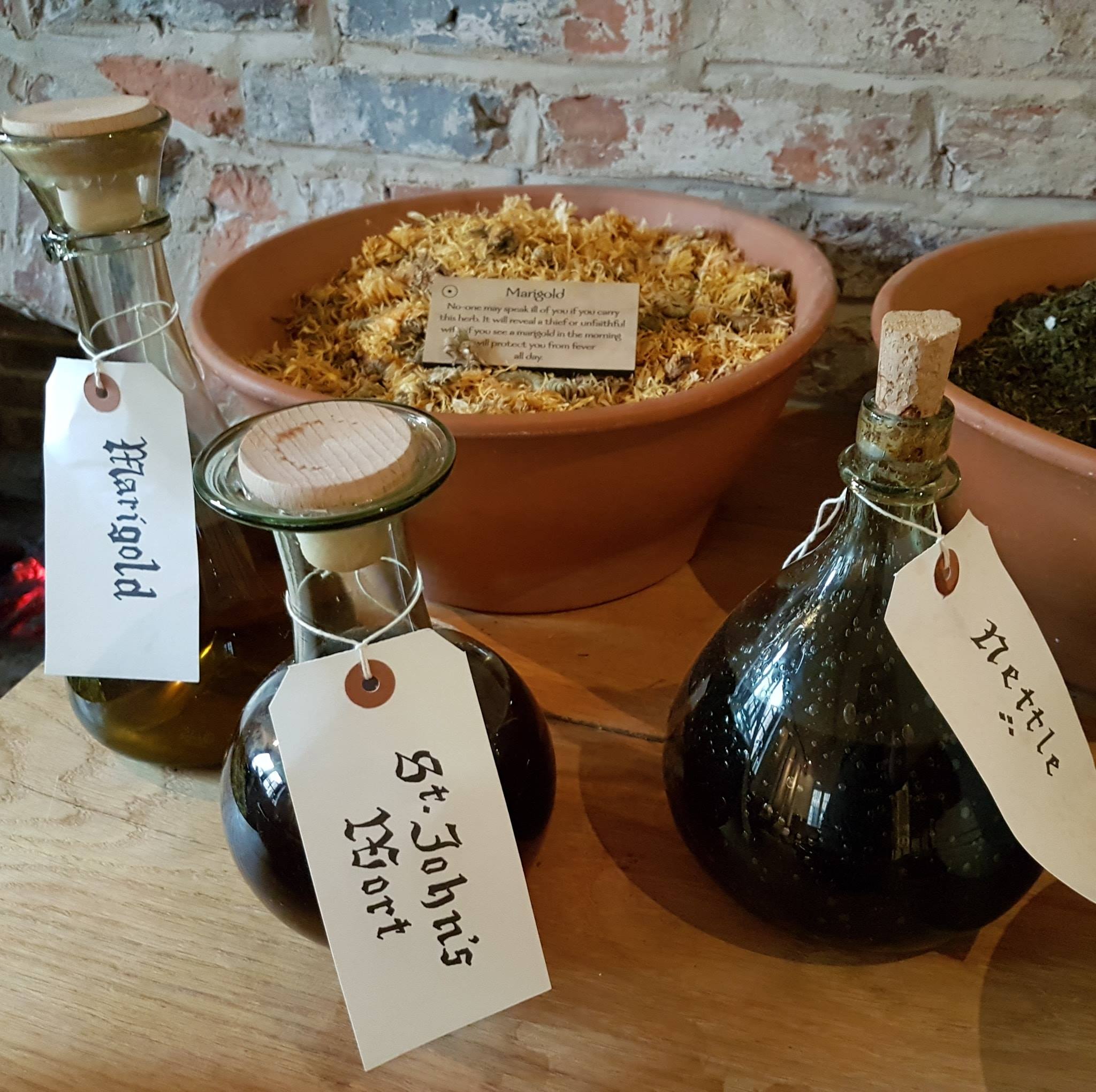
A selection of herbs used by Blackthorn coven in ritual work. Photo: Andy Pembrock
Though disease and death have long haunted Londoners, modern medicine and public health systems now help us combat plagues and pandemics. However, those who once roamed London’s streets had to seek alternative means to make sense of the terrifying reality of illness. From carrying protective amulets to exploring alchemy and astrology, Londoners have long embraced magic as a shield against misfortune.
Enlarge
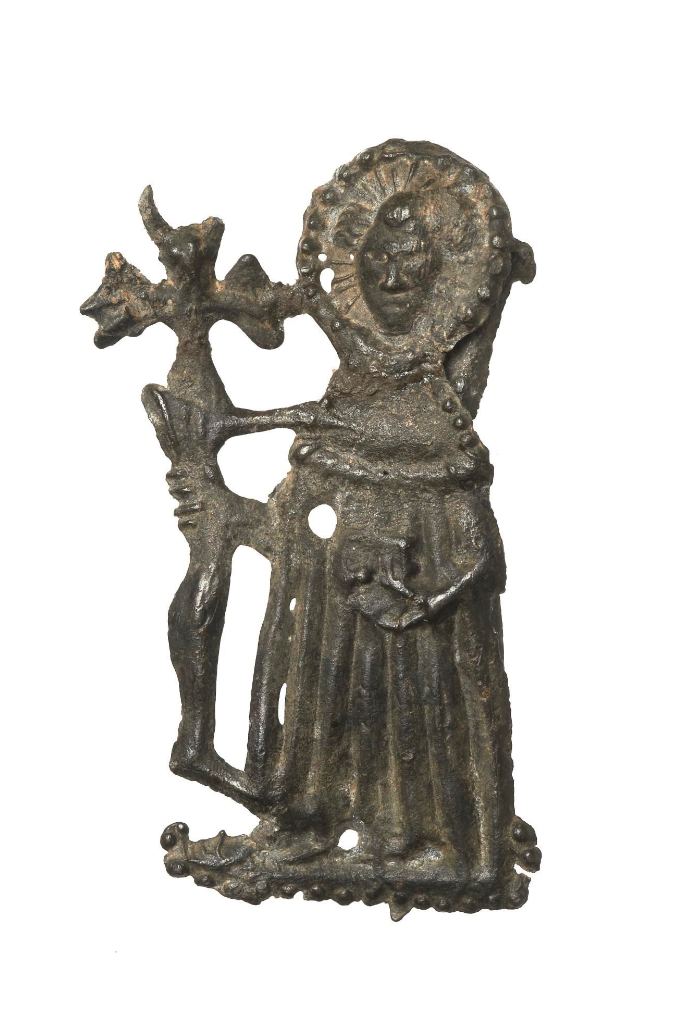
Late Medieval, 15th Century pilgrim amulet, courtesy of The London Museum
Stashed away in the National Archives are some of the earliest physical examples of magic we have. Roman amulets dating from the 160-70’s AD. One amulet inscribed with a protective spell or prayers to the gods, invoking their protection for the amulet’s owner, a man named Demetrios. Found in the River Thames, it may have been thrown deliberately as a ritual offering.
Pilgrim badges, where magic met religion. Many ‘magical’ practices of the past would have been understood as matters of religious faith by their followers. In medieval England cheap lead badges purchased as souvenirs of holy pilgrimages were believed to hold magical protection against sickness. Many Londoners went on religiously charged treks to the shrine of London born martyr Thomas Becket, the Archbishop of Canterbury, in Kent’s Canterbury Cathedral, where he was assassinated in 1170.
Historian Alison Murray spoke with me about the cultural importance of such artifacts, stating how, ‘It’s might be hard to understand the importance of these objects for a modern audience, whose quality of life has improved so much in comparison to their ancestors, even more to a point religious beliefs have declined’.
‘These pieces would be sown into clothing, coat pockets, under hats, throughout layers of clothing… it was always close on someone’s person.’. ‘They’re a key part of magic history in the UK’.
This merging of religious and magical practices is something we still see today in modern witches. Antonio Pagliarulo writes for NBC saying how he – ‘In petitioning the archangel Michael for protection, for example… I will recite a prayer but also make offerings of wine, bay leaves and cloves. In addition to venerating Catholic saints, I light candles to the goddess Diana at every full moon and place small bundles of rosmarino, or rosemary, on my altar to honour the dead‘.
‘In many cultures around the world, magic practitioners have continued to pass on their traditions and teach their practices uninterrupted, however, that wasn’t the case for European witchcraft.’
Although magical practices were common in ancient London, it wasn’t until medieval England that the term “witch” was first recorded, and fears surrounding those accused intensified. Authorities saw them as a threat to social order, leading to widespread persecution.
Between 1450 and 1750, a period known as “The Burning Times,” an estimated 40,000 to 100,000 people—mostly women—were executed across Western Europe and the American colonies. As historian and folk magic practitioner, Sarah Granger comments, ‘women who were healers, midwives, or herbalists were especially vulnerable, as were those who were considered too outspoken, too independent, or simply different. Accusations were often arbitrary, and fear fuelled mass hysteria, making virtually any woman a potential suspect.’
‘In many cultures around the world, magic practitioners have continued to pass on their traditions and teach their practices uninterrupted, however, that wasn’t the case for European witchcraft.’
In London, Tyburn—near what is now the bustling streets around Marble Arch—served as an execution site for over 600 years. Among those hanged there was Elizabeth Sawyer, the so-called “Witch of Edmonton,” executed in 1621 after being accused of making a pact with the Devil. Her story was quickly turned into a book and stage play. Today, a plaque marks the spot where the notorious “Tyburn Tree,” gallows used for mass executions, once stood.
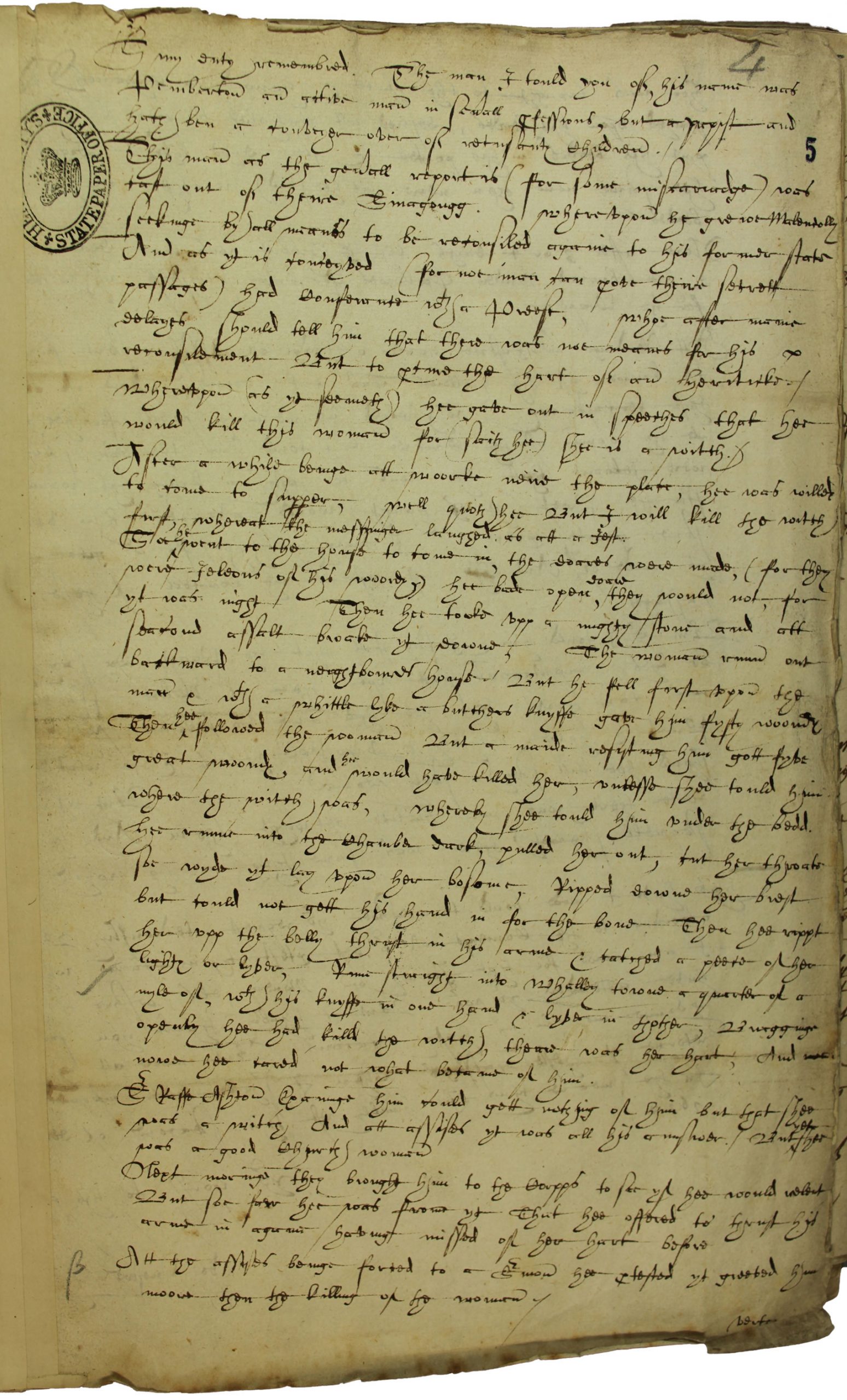
In 1625, a woman accused of witchcraft was brutally murdered—her death recorded in a chilling document now housed in The National Archives. The account describes how her attacker, in pursuit of the so-called “witch,” wounded a maid before dragging the accused from under a bed. He then “cut her throat so wide it lay upon her bosom” and attempted to rip into her chest.
While most victims were women, men weren’t immune. Around 10 to 15 percent of the 500 people executed for witchcraft in England were male. A 1590 document describes two men caught in a London field performing rituals with a cape, a crown, a sceptre, powders, and even poison. Their fate remains unknown, but it’s unlikely they were met with sympathy.
Murray discussed how, ‘The persecution of witches is fundamentally one of women, but as with all social history, there are those that frequently get overlooked… when you go looking for those people, a different side can open up entirely’.
One man who did escape persecution was Nicholas Culpeper, a physician accused of witchcraft in 1643. His patient claimed his treatment caused her to “waste away,” but Culpeper was acquitted. His book, Culpeper’s Complete Herbal, is still in print today—and even has a Gatwick Airport restaurant named after him. A far better outcome than most accused women ever saw, classic.
These tragedies became far less frequent in the years that followed, with the last person being executed for Witchcraft being Janet Horne, who died in 1727 after being burned at the stake. Not thirty years later, the Witchcraft act of 1735, repealed James I capital punishment consequence to a maximum of one year’s imprisonment.
By 1944 this had lessened even more so. Britain’s last convictions for witchcraft were set against Jane Rebecca Yorke, who had worked as a medium for many years in Forest Gate before being prosecuted under the Witchcraft Act.
Yorke was fined £5 and placed on a good behaviour bond for three years, promising never again to hold a séance. The light sentence was due to her age of 72.
Buoyed by the rise of 19th-century Spiritualism, new religions like Theosophy, and esoteric orders such as the Hermetic Order of the Golden Dawn, Ordo Templi Orientis, and the Rosicrucians—not to mention secret societies like the Freemasons—interest in witches and witchcraft began to bubble and boil away.
This much later resurgence of spiritualism is where much of what the Blackthorn Coven derive their practice from, headed by Lancashire born, Gerald Gardener. Nicknamed the, ‘Father of Witchcraft’, by both scholars and witches alike, Gardener had returned to London after over 27 years around the world, from Egypt, Palestine, Sri Lanka, Borneo and his personal favourite, Malaya. He came to London armed with magical teachings from around the world.
Dissolutioned by his own atheism, Gerald Gardner developed a new form of the “old religion” that he called Wicca, with its adherents being called “witches.” His choice in calling his religion Wicca, was a choice of shrouded in history. The word “witch” comes from the Old English word “wicce” (originally pronounced “WITCH-ay”) and is the root of the name of his religion “Wicca” (pronounced “WICK-uh”).
Covens are led by a High Priestess and the High Priest of her choice and celebrate both the Goddess and the Horned God. High Priest Andy, commented on how, ‘It’s funny when people think this hierarchy is so strange but wouldn’t question, lets say, the Catholic Church…most religions have a structure like this’.
Although, Gardner has faced academic backlash posthumously, with claims of him being, ‘a superstitious old man’, who made it all up. Devotees to have long contested it, with Blackthorns own, Melicia, 63, one of the coven’s longest serving member comments how, ‘People always question what they can’t understand… this is a reconfiguration of beliefs and ideas from all around the world…that makes way more sense to me’.
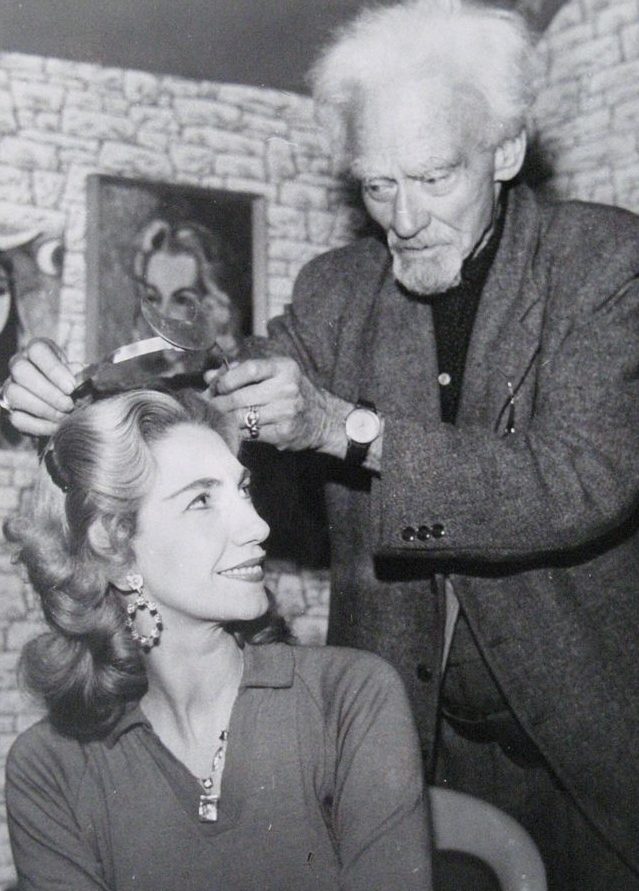
Gardner with fellow devotee, 1954. Courtesy of The Museum of Witchcraft and Magic
An extension of Wicca and Gardener’s foundations is Alexandrian Wicca, established by High Priest and Priestess, Alex and Maxine Sanders in 1960’s London. Housed in an unknown location near Kings Road, the Sanders couple housed a hedonistic approach to the craft, practicing ‘skyclad’, which for us common folk means, naked .
Creating elaborate, sex filled rituals, It was said that at Alex’s lectures all Maxine had to do was to “sit there in her finery.” It is alleged that Alex said, “All I want you to do is sit there and look beautiful and represent the Goddess.”
Together they stared in multiple film documentaries about the craft in London, appearing in Legend of the Witches (1970), Witchcraft’70 (1970) and Secret Rites (1971), which follows a London born women looking to join the Alex and Maxine’s coven. It depicts interviews had, initiation rituals, fellow coven members decked out in fineries all filmed in that beautifully hazy, 70’s way.
Speaking with Maxine, who now after a 10-year break from the capital in Snowdonia, teaches Witchcraft and ritual in The Abbey Road Coven. She commented on the beginnings of Alexandria Wicca, saying how ‘In the 1960s and ‘70s, wider freedom of religious beliefs and back-to-the-land movements fed into interest in more earth-based and nature-connected religions of the past.’
‘Those who aspire to the role of High Priestess and Priest went through vigorous training before the rituals of the higher degrees could proceed.’
‘I was the high priestess, the highest honour in the Craft, people believe in me because I am to be believed. I studied, training, practice and honed my skills for many years. These new so-called Witches have no idea what they’re doing half the time, it’s a shame really, there’s too much that could go wrong…women don’t understand the power they have’.
She unfortunately didn’t comment on the orgy rirtuals.
The Modern Witch
The Blackthorn coven members define the modern witch as, ‘person (female, male or non-binary) who practices magic, whether as part of a formal religion or not’. One Blackthorn coven member commented how ‘Witchcraft becomes a lifestyle… it’s about being in touch with nature, honouring the changing of the seasons and connecting with a higher version of self.’
‘Modern witches don’t cackle into the night or fly around on broomsticks… but they are connected to their own spirituality, and I think that’s far more interesting’.
Picture lush, dark furnishing – candles across all four walls, a waft of incense through the air and a rather picturesque circle window, surrounded by vines. Rune stones and tarot cards scattered across the central table; herbs collected in a gold bowl. The ritual is about to begin.
A low chant hums as Priest Andy begins to show thanks to the four elements: fire, water, earth, and air. It is common practice for witches to show appreciation to the earth, to many, it makes the most sense to worship what they can see as opposed to a great man in the sky.
Youtuber and fellow pagan priest, Tom Rossell has written of his own beliefs and how they work in the modern world, he says, ‘We worship the same gods as our ancestors, and our rites are observed in sympathy with the cycles of the natural world around us. This worldview naturally encourages an appreciation for the land through a sense of sacred space, rooting the worshipper both in their own regional history and in nature’.
‘The sacred centre of the world for us is neither Mecca nor Jerusalem, but the old oak forests and burial mounds of this island. The feet of a popular Palestinian carpenter are less likely than Woden’s to have walked in ancient times upon England’s mountains green’
Roswell denounces this with an explanation of his ancient way of life, how ‘They are naturally frustrated to see people reject the empty atheism of our age, not in favour of England’s traditional religion of the last 1,200 years, but for what they see as a New-Age fantasy based on arbitrary superstitions and whims. I doubt, however, that many of them have ever met a real Pagan’.
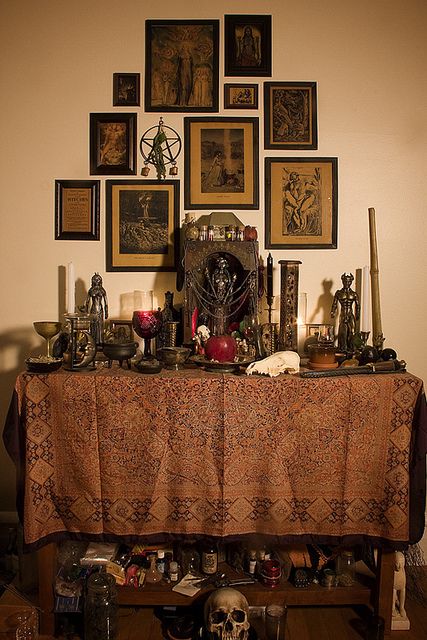
A classic pagan altar, Flickr
Blackthorn is home to many different types of witches. Some categorise themselves based on how and what they practice with. The Green Witch uses herbs, plants, the power of nature to cast spells. The Ceremonial Witch, who conjures their abilities through gatherings with other Pagan folk, performing group rituals or séances.
Or even the Sex Witch, one that believes in the potent, higher self when experiencing sexual pleasure. Speaking with a few of them, they indulged their draws into the practice, how and who they work with.
- Green Witch, Emma, 18 ‘I grew up around a lot more greenery than I have around me now. I think moving to London made me realise how powerful I found nature. As a woman I understand natural cycles, I go through them every month! But that is all a green witch is, through the medium of the earth, its plants, its cycles, it’s about honouring them all, worshiping with and for them.’
- Folk Witch – Italian born Aurora, 27, practices folk magic passed down through family, focusing on the history and origins of their practice, often working with plants and objects native to Italy, and emphasizing practical, everyday magic rather than elaborate ritual. For them it includes a clear quartz at the front door to cleanse negative thoughts carried throughout the day, maybe a 3 foot one needed for some after a day in the office.
- Divination Witch – a witch, or practitioner of witchcraft, who uses divination techniques, such as tarot cards, pendulums, or other methods, to gain insight into the future, past, or hidden knowledge. Celia, 45, a practitioner of this craft for over 22 years. ‘It’s just about intuition, believe that either someone is offering guidance, or that you yourself can decipher your past, present or future. I think both’
When discussing cliental and service costs with Celia, she explained, ‘Oh god no, I’ve never charged anyone for this’. When reminded about her 20+ years’ experience she said, ‘It’s not about making money for me, I just really love sharing this with people… there’s so many people online nowadays profiting off this… they’re sort of becoming the modern faces of the Craft… I’ve got a bit of a love hate relationship with it’.
Modern magic goes viral
If you find yourself, like many of us, on a late-night TikTok doom scroll, you’re becoming increasingly likely to stumble across, WitchTok. A tag used by creators to share their spells, incantations, tarot readings and more.
With the hashtag amassing over 7 million posts on Instagram and an astonishing 32 billion views on TikTok, what used to be an underground movement has evolved to a mainstream media phenomenon.
London based content creator, Bunny Gourlay, 27, goes by the username @the.aphordisian.witch. A self-proclaimed ‘Profesh Witch, Aphrodite Devotee and Welsh icon’ with an Instagram following of over 46,000.
With the Ancient Greek goddess love and beauty at the helm of their practice, Gourlay, who’s fiery orange hair stands out in the sea of videos, preaches a self-love, feminine fuelled practice of magical devotion.
From gentle reminders to check on the upkeep of your, giving ideas of luxurious offering like champagne or fruits, or promoting the dedication of every orgasm you have to the goddess of love, they teach their audience to trust in what She has planned for you.
But, if you’re really looking to learn their ways of practice, you’re looking at a hefty £90 a month cost to join their Magical Misfit Mystery school.
Online green witch, Fern Freud (@forged.by.fern) offers online content on how best to stumble around your local greenery, looking for multipurpose plants or household tools. Alongside this, for £65, you can also join her every Saturday throughout March and April for a guided foraging walk in a secret location (‘near Worthing’).
Costly services like this are a controversial topic within the witchcraft community, with Blackthorn Celia later adding, ‘There definitely are some [witches] exploiting the curiosity of others for their own personal gain…maybe they’re turning for guidance in a troubling time… how can you turn around and say, ‘that’ll be £50 please’.
Tarot card readers such as Peckham born and raised, Hannah Joy Graves (@cultmothertarot), a straight-talking, no nonsense Tarot reader, with brutally honest, regularly insightful advice, with a dash comedic relief. Head to toe covered in colourful tattoos and thick black glasses, she has amassing a following of over 96,000 on Instagram alone. Reading for people all over the UK, she’s recently done one with national treasure Dawn French.
‘I think content creator witches get such a bad rep, I mean, ‘some are awful’ she says laughing, ‘you always get idiots, no matter what field of work’.
Why do you think people come to tarot readers for guidance?
‘People want guidance and reassurance. I genuinely think that’s what it all comes down to… same reason we turn to anything spiritual, same reason even atheists pray in times of need, hoping someone or something might be listening’.
When asked what she felt about the commercialisation of the craft – that some scholars and fellow witches say demean the origins of Pagan traditions she said , ‘Listen, I love what I do and want to share it with as many people as possible, in a world ruled by capitalism I need money to be able to do that…. I should be able to provide that service that people want and seek out and support myself properly. It’s a bit shit, but it is how it is unfortunately’.
‘Also, people have made money off of this for hundreds of years, people have always paid fortune tellers or wise women for their services’.
In a time of increased separation, staring down at our phone screens instead of each other, it comes as no surprise that if people can’t peel themselves away, they’ll find community in the magic, all knowing, flashing rectangle.
It may then seem slightly hasty to condemn a practitioner for profiting off a service that people are more than willing to pay for. Echoing the words of Cult Mother, how else are they meant to survive, working a mundane office job they lack passion and joy in just because everybody else does, nah.
Practitioners are however wanting to divert attention to the huge, multimillion pound companies doing exactly what some of them are accusing of doing. Companies like Urban Outfitters, Oliver Bonas, Pretty Little Thing, Asos, just to name a few, are part of the spirituality industry creating millions in revenue, selling to the spiritually in tune and financially able.
The US is currently boasting a $2 billion dollar spiritually industry, but with UK data hard to come by, it is assumed by Berger it can’t be too far behind. With Quora pages dedicated to the question, ‘Can witchcraft make you rich’ Companies are in search for the mystical money mine, but are their intentions are pure as one would hope?
Capitalism and the Craft
London has always been home to alternative ways of living. Whether it was the punk filled streets of Camden, the mods of the 60’s, squatters of the 90’s, if people want to learn and live differently, the capital has always been the place to do it.
Where there are subcultures, there are shops. Filled with anything you would possibly need to splash the cash all in the name of self-expression. Doc Martens, leather jackets, band shirts, poster, badges, all available somewhere nearby.
Now, there are an increasing number of shops promoting physical wellbeing, spiritual harmony and the aligning on one’s chakras, ouch.
From big businesses to the independent East London coffeeshop/vinyl bar/ crystal shops, there is clearly investment worth making in this booming industry.
Urban Outfitters’ have filled their shops with crystals, tarot cards and spiritual self-help books for years, even still their website is full of off brand occult merch. Their London flagship store down Oxford Street, boasts an impressive, almost shrine like section.
Author of Witches, Witch Hunting, and Women, Silvia Federici comments on the recent capitalistic urge for ‘witchy-goods’ with, ‘Consumption promises to fill the aching void; hence the attempt to surround commodities with an aura of romance; with allusions to exotic places and vivid experiences…’
‘As witchcraft has become increasingly popularised, the opportunities for participation in Witchcraft are increasingly through market exchanges such as purchasing ‘how to’ books and videos, attending fee paying training courses, and the purchase of ritual tools and accessories.’
She later adds, ‘Given the focus on self-development of the New Age and Pagan spirituality it could similarly be argued that commodification encourages self-indulgent hedonism as an alternative to practices that might result in self-awareness and self-growth.’
‘I’m sure they have good intentions with it, but spending £300 on a crystal won’t save you’
Independent sellers are also setting up shop, with an entire focus on these alternative practices. She’s Lost Control is the Broadway Market brainchild of founder Jill Urwin. Created in 2014, she began to, ‘create a space where conscious consumerism, community and personal wellbeing could flourish’, after a 10-year career in fashion buying.
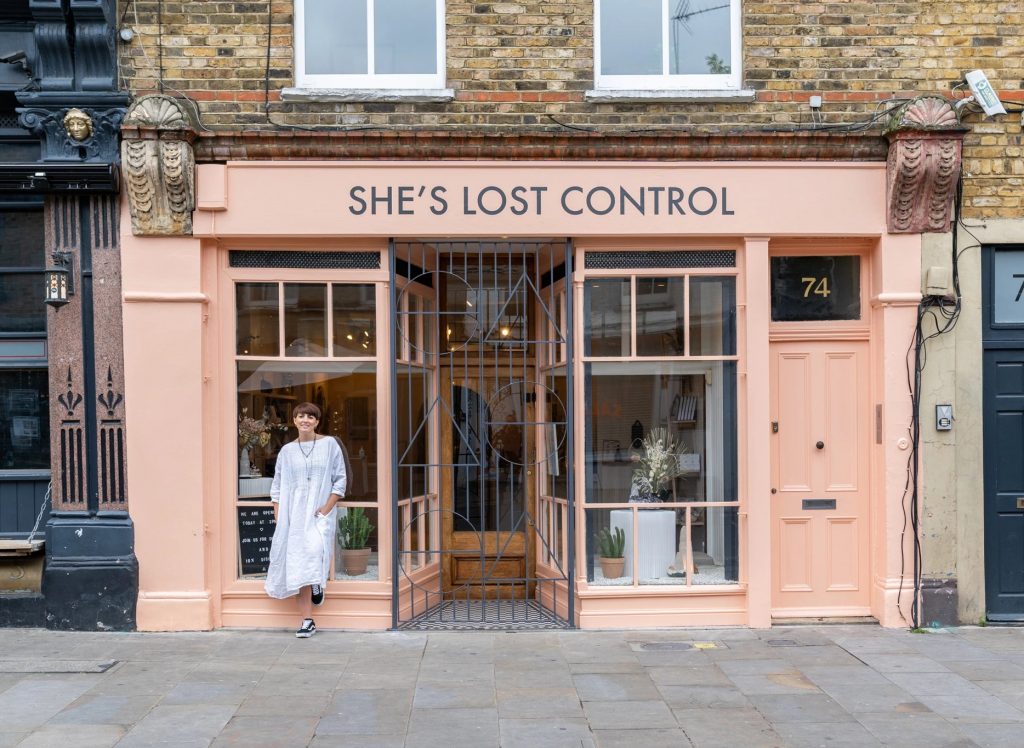
Selling a £295 clear quartz and recycled silver necklace, a chunk of mango quartz for £300, or my personal favourite, a £95 pound chuck of fool’s gold, their website states, ‘We are conscious of our social, environmental and financial impact and actively promote positive change; we are never afraid to challenge conventional thinking in our mission to find meaning in profit… forever being respectful to sacred trade.’ ‘Being a conscious brand is also about supporting you on your journey.’
Meeting with Urwin, we discussed the costly goods she had in her, undeniably well decorated, shop. Think limewash pink walls, minimal clutter, arched doorways, colourful crystal displays and linen trousers.
Many would maybe question how ethical it is to your consumers to be selling products such expensive products, aimed at personal wellbeing, which many seem quite essential in an unavoidably stressful time. Do you think it’s a fair price?
‘Unfortunately, there is a cost to ethical buying… we don’t want to cut any corners and ultimately do harm to anyone, that means spending more money.’
Pushing forward a question given by Blackthorn coven members, I asked whether she recognised she may be capitalising on sacred cultural practices?
‘We want to open it up to as many people as possible. We may not be experts, but we are passionate about giving people the space and the tools to connect with their higher self’.
Over in Lower-Clapton’s Mama Moon shop, owner and professional Witch Serma Haksever, 41, spoke with me about her stance on shops like She’s Lost Control, ‘It doesn’t surprise me that people who don’t really have any understanding of the craft run shops like this… there’s always money to be made in it’
‘I’m sure they have good intentions with it, but spending £300 on a crystal won’t save you’
Mama Moon is a far cry from its minimalist competitor. A vast wall the entire length of the shop filled with old sweet jars containing mug wort, chamomile, raspberry leaf, cloves, just to name a few. A very sweet looking, but slightly wonky eyed, taxidermy fox, every animal skull imaginable, and just for fun, a classic witch’s broom.
Speaking previously for My London, Haksever spoke of her own practice, that she, ‘uses herbs and affirmations to cast spells for both clients, friend, friend, and for herself’.
Her craft seems fruitful, claiming, “I manifested my last big holiday in Bali. That was a full-on spell, and it was mind blowing, that came out of absolutely nowhere.”
How many repeat clients do you have currently?
‘A good 25, at least. People only really come to me when they need me though my dear, it’s the curse of the witch. People will mock what you do behind your back but as soon as something bad happens, they’re back in that room’.
She points to a large, glossy black door at the back of the shop. An out of bounds space unless receiving one of her 10 optional services ranging from tarot reading, palmistry, herbalist treatments, reiki, or tea leaf readings.
Not only are there witches all over London, but there are also people seeking out their services, their aesthetic, their easily adaptable practices like tarot or spice cabinet raided love spell. But exactly how many people are personally identifying themselves formally with this practice?
Shadows to Statistics
If you do a quick google search for ‘London covens’, you’ll be promptly met with the website Mandragora Magika. A comprehensive list of covens across the UK, wishing to promote membership or simply to remind the world where and who they are. A far cry from our 17th Century ancestors.
Numbers of practicing Wiccans, Pagan’s or witches goes beyond this list, with the 2022/23 census claiming there to be 99,500 people identifying within Paganism in England alone.
“I manifested my last big holiday in Bali. That was a full-on spell, and it was mind blowing, that came out of absolutely nowhere.”
Meetup, a site for public made events and community gatherings has a page for ‘London Wiccans’ with over 2,100 members. It states itself as the ‘first port of call for those in London who are interested in Wicca’.
In statistics published by News Shopper of the back of this most recent census, Bromley is home to 290 Pagans, as opposed to Lewisham’s 254. It seems to be Croydon however, with the most concentrated witch population, with a massive 1,766 devotees.
Home to London’s Witchfest, Croydon’s large population of witches comes as no surprise. The festival, after short hiatus post covid-19 pandemic, makes a comeback last year and is set again for the 22nd November 2025. With, ‘a wide range of Witchcraft, Wiccan, Pagan, Heathenry, Occult and Mythological subjects’, it is once again set to be the UK’s largest Pagan event, a title they’ve held for over 20 years.
London’s witches, once condemned innocent women, now walk the city’s streets with ease. From the Blackthorn coven’s moonlit gatherings to the bustling trade of spell bottles and tarot decks, the craft has buried itself deep in London’s past and present. Where once there were whispers, now there are shop signs, meet-ups, and thriving businesses catering to the magically inclined.
The sheer number of esoteric shops and markets speaks volumes—London has embraced its witches rather than condemned them. The community flourishes, drawing from the past while shaping a future where a witch can sell charms in broad daylight without fear of a noose.
As I was about to leave Blackthorn, I sought out Starlet, 75, the coven’s eldest member. She hadn’t been on her feet much, rarely spoke, but I desperate to know this fabulously dressed lady’s thoughts on modern witchcraft and its visibility in a city that once hunted its own. She looked at me, and with a smudged red smile, simply said, “Well, they couldn’t burn all of us.”