Last year presented voters with an array of political candidates to choose from, both in the UK general election, and the US election. The US saw a tense stand-off between Republican leader Donald Trump and Democratic candidate Kamala Harris, whilst the UK witnessed the fall of the Conservative party, and the rise of smaller parties from the left and right.
Every vote cast in these elections was done for entirely unique reasons – some voted with the economy in mind, some voted with their family and core beliefs in mind, whilst others voted for one party simply to avoid voting for another. What criteria did the voters of 2024 use when deciding who to vote for?
It’s a sunny Friday afternoon in Clacton-on-Sea, one of Reform UK’s new parliamentary seats as of the 2024 election – after seven failed attempts to become elected into the House of Commons, Nigel Farage has finally earned his place, taking Clacton’s seat from the Conservative Party.

I am sat in a Wetherspoons just across from the pier, where I meet a group of five Clacton locals, guarded by two pit bull terriers. “I’ve always liked Farage”, 64-year-old Mike tells me, “He’s very real and he’s a funny guy – not like all these other politicians.” His friend Noah chimes in as he takes a swig of his lager, “He’s not afraid to speak his mind about the important stuff either.”
“What kind of important stuff?”, I ask. The table falls quiet as the old friends trade looks with one another – one of Mike’s terriers, Polly, sniffs my leg. James, 57, breaks the silence, “I think we are all worried about this immigration problem”, the table nods, “all these people coming to our country illegally on boats.”
This remark brought forward an avalanche of comments from the group – one adds that he wants the UK to be “safe again”, no doubt a reference to the tragic murders of three children attending a Taylor Swift themed dance class in Southport in July last year. Fuelled by false rumours that the perpetrator was a Muslim migrant, far-right rioters targeted hotels housing asylum seekers and immigration lawyer offices, terrorising Muslims and other minoritised communities. Counter-protests to these riots took place across the country, further increasing the UK’s ever-growing political divide.
The focus on immigration slightly slips as 62-year-old Lewis reminisces that, “England is not at all how it used to be, now everything you say someone is getting offended by it.” Seemingly offended by his paper straw disintegrating into his gin and lemonade, James concludes that Farage is “not scared of fighting the fight against these woke people” – I make sure to hide my painted nails as I stroke Polly goodbye.
A study conducted by The Legatum Institute reveals that out of 3,421 self-identified Reform UK supporters, 37% said that the most important issue that will determine how they vote is stopping the small boats and illegal immigration, whilst 26% said that the most important issue was dealing with the level of legal and illegal immigration in Britain. It is no surprise that Reform voters are so concerned about immigration, a topic that Farage has made a focal point of both his election campaign, and in turn, his political identity.
An undercover Channel 4 journalist recorded homophobic and racist remarks made my Reform UK members whilst they campaigned in Clacton last year – this included an unidentified canvasser repeatedly suggesting that the LGBT+ community are paedophiles, reportedly calling the pride flag a “degenerate flag”. The footage also shows another canvasser for Farage, Andrew Parker, using a racial slur to refer to former Prime Minister Rishi Sunak, who is of Indian descent.
Nigel Farage built his campaign on division, mockery, and hatred, weaving a strong political brand of being ‘outspoken’ and upholding ‘traditional’ British values. During the build-up to the election, Farage rallied a crowd of around 800 people in Clacton, whilst attracting 1500 people in UKIP’s former headquarters, Newton Abbot. Both areas have predominantly white populations of over 95% – “proper England”, as described by one of Reform UK’s canvassers.
“Okay, so I’m your 67-year-old first time voter”, Andrew tells me from his old farmhouse just outside of Blairsville, Georgia, where he has lived with his wife and children for 30 years now. “The farm sits in a little valley – it’s my boyhood dream, Henry”, he tells me, “I’m lucky to be sitting right in the middle of it.”
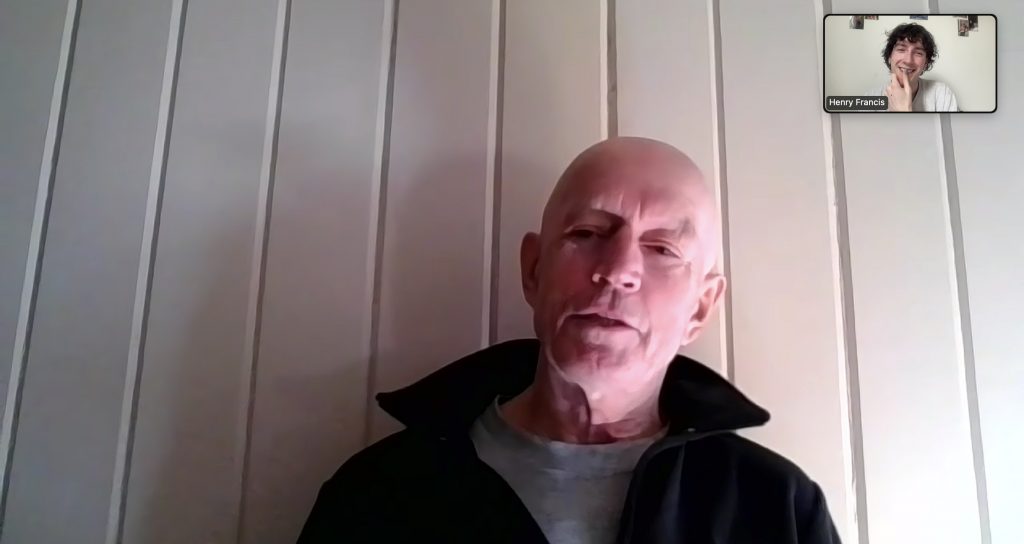
Born in the UK, Andrew started work in the oil and gas business back in the 80s – “they offered me the opportunity to go and live and work around the world, that more than anything was what bought my attention.” During his travels he met his wife Gwen, who allowed for him to live in America with a green card before he officially earned his citizenship last year.
“Blairsville has a background of resilient people, if you go back far enough, the settlers displaced the indigenous Indians and then the area developed a very successful mining industry – the site of the first US gold rush was near here so it brought a lot of people to the area,” Andrew tells me, “it’s moved on from that, and now it’s a typical residential.”
“There’s a lot of people of retired here, but it’s got a good school system. It’s well run. It’s organized. It’s a small place that’s growing – it’s dealing with the issue of people moving in. And of course, I was one of them 30 years ago so there’s some tension about that but overall, it’s an amenable place to live, Henry”
“The particular district I live in unsurprisingly votes heavily Republican, but for the most part it’s a don’t ask, don’t tell situation.” Andrew grew up just outside of Cardiff, Wales, raised by a single mother along with his two brothers and sister. Despite his mother being a devout Christian, neither him nor any of his siblings stayed with the church.
140 miles south in Hampton, Georgia, 45-year-old Taylor conveys a differing message – “Myself and my family, along with my community at church, we were all very outspoken when it came to this election,” he tells me from his family home. Originally from Suffolk, Virginia, Taylor has lived in Hampton for over 20 years now with his wife Sarah and their five children. “Both me and my wife were raised Christian, and now we are raising our little ones the same way.”
“Henry County as a whole can be quite here and there politically, but in my particular area we all have shared values and care about the important things,” Taylor says. He tells me that Hampton earned its namesake from General Wade Hampton, an American soldier who fought in the Revolutionary War – he is visibly filled with pride as he explains this to me.
Formerly a maintenance manager at a local ranch, Taylor grew up in a large middle-class family – “I grew up with two brothers and a sister. My mother took us to church four times a week, my father joining us when he could. It taught all of us to have faith and made us have good values, you know?”
“What kind of values did you learn at Church growing up?” I ask. Taylor thinks for a moment, “Well, things like caring for your neighbour, helping the elderly in our community, just good manners in general.” I wonder if he cares for all of his neighbours as he tells me this.
Back in Blairsville, Andrew reminisces, “When I first came to the US back in 1983, I looked at the politics here and I could barely see the difference between the Democrats and the Republicans – especially coming out of the UK, where we had the Tories and the Labour Party, which there were big obvious differences between.” He lets out a sigh as he tells me, “That space between the Democrats and the Republicans is opening up at a dramatic speed currently.”
“However, when you take the empathy out of your politics, I am no longer there with you,” he declares, “that’s why wherever I go, I would call myself an old-fashioned social democrat.”
Andrew hints at a wider issue in the US today – political expert Jennifer McCoy explains that “the rise of an ‘us versus them’ mindset and political identity in American sociopolitical life is evident in everything,” she continues, “from the rise of highly partisan media to the decline in Americans’ willingness to marry someone from the opposing political party – we are witnessing the division of society into mutually distrustful political camps in which political identity becomes a social identity.”
A rapid polarisation of political identities can also be seen in the UK – the relatively moderate Labour and Conservative parties are beginning to give way to the further left Green Party and the distinctively right-wing Reform UK Party. In the 2024 election, the Conservatives lost 244 seats, whilst Labour gained 209 seats. Most of the remaining seats in Britain were made up of five seats gained by Reform, four seats won by the Green Party, and 61 seats gained by the centre-leftist Liberal Democrat Party.
In Hampton, Taylor shows me some highly partisan media he himself had shared to his Facebook account – one post reads “Abortion is not (and never will be) healthcare.” He jokes that calling abortion healthcare is like calling slavery “human resources” – it becomes painfully clear the kind of ‘core beliefs’ him and his community at church hold so dear. “I’ve voted for Trump at every chance I’ve been given,” he tells me, “He puts Americans first and stands for the traditional Christian values that need to return to the USA.”
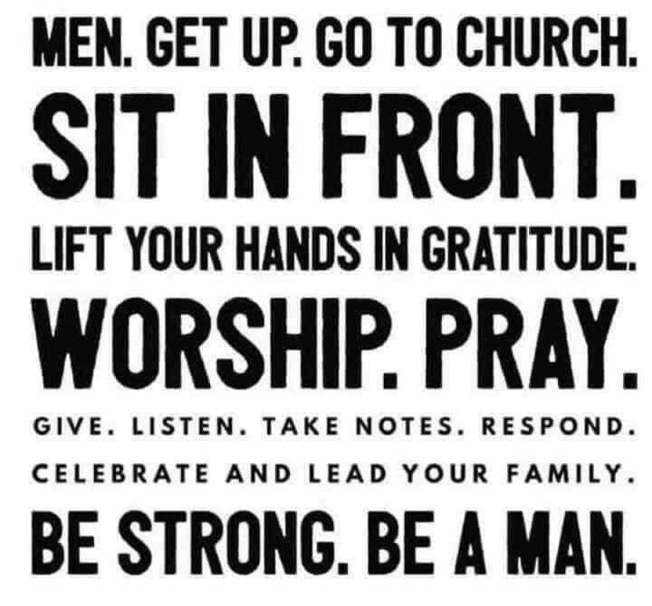
I ask to see more of his Facebook posts, now interested in what else could be there – he scrolls for a moment and reads me a joke he had reposted. It goes, “Isn’t it a little odd for a party to push the idea of ‘first woman president’ when they can’t even define what a woman is?” I stare blanky at my screen as I watch him laugh.
He stops for a moment, having found a good one. He reads me the following passage slowly, so I can hear every word.
“No one has been a Christian their whole life. Every one was born a sinner in need of a Saviour.”
“There must be a point in your life where you repent and believe.”
“Christianity is not something you’re born into, it’s something you have to be saved by Jesus into.”
I start to feel like he is handpicking these posts for me in particular, so I decide it’s time to move on from Taylor’s Facebook account.
Taylor is evidently not alone in his belief that America’s values and traditions are under threat – a study conducted by Cambridge University’s Political Psychology lab show that 89% of Trump voters agree that “American values and beliefs are being undermined and cherished traditions are under threat”, whilst only 45% of Harris voters agreed with the statement.
Dr Lee de-Wit, head of Cambridge’s Political Psychology lab, explains that “Our results highlight that part of Trump’s appeal is in the values he communicates, and the way in which he manages to respond more directly to the sense of threat perceived by many US voters.”
I ask Andrew why he thinks so much of his Blairsville community voted for Trump. He responds, “I think it’s culture politics, and Trump is extremely good at manipulating people into believing that there are simple solutions to very complex problems – Trump supporters don’t even really understand what ails them. But like everyone else, they’re aware that something’s wrong, and believe that Trump has all the answers.”
“Henry, the bottom line is that they’ve been manipulated,” Andrew exclaims, “The evangelicals who are trying to put Trump up on some kind of religious pedestal – for God’s sake, I mean, how dumb can you be?”
“I voted for Kamala because she was something different, which is direly needed – she’s not white, she’s not a man, and she’s years younger than any president has been, ever. Those were my main three reasons right there. And of course, she isn’t a felon, she hasn’t bankrupted multiple businesses, and she’s not a climate denier.” I ask Andrew why her identity is so important to him – “Well, because it’s time for a change,” he explains, “I believe it’s time for a change out of the paradigm that we’re in, because it’s just not working.”
It has become clear that social and political identities held a major role within the elections of 2024 – Trump pushed a patriotic and evangelical social image, whilst Harris promoted a political identity based on change, youth, and revolution.
A masterful example of building a strong political identity must be credited to former UK Prime Minister Margaret Thatcher, who kept her position as head of the Conservative Party for 11 years before losing power.
From the very beginning of her campaign, Thatcher used preconceived ideas of gender to build a sociopolitical identity and rally up support from men and women alike. Most notably, the former Prime Minister reportedly worked with a voice coach to achieve her low and gravelly voice, which soon became one of her most distinctive traits, and in turn, a hidden political weapon.
In many interviews and press releases, Thatcher made sure to flaunt the fact that she was not a man, whilst making an effort to separate herself from society’s ideas of what it meant to be a woman at the time. In an archived press release from 1975, shortly after Thatcher became leader of the Conservative Party, a reporter asks her, “Mrs. Thatcher, do you view your victory today as a victory for Margaret Thatcher alone or do you view it as well as a victory for women in Britain?” She responds, “Neither. No one can win alone, ever. You can only win by having a lot of people thinking and working the way you do. It’s not a victory for Margaret Thatcher; it’s not a victory victory for women. It is a victory for someone in politics.”
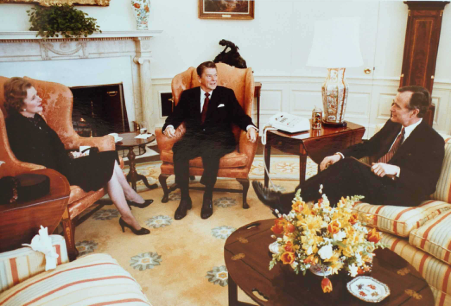
Continuing to weave her political image of stability and power, two traits historically viewed as masculine qualities, Thatcher earned herself the title of “The Iron Lady”, a name originally created by the Soviet Army newspaper Red Star in January 1976 to tarnish her name. In her ‘Britain Awake’ speech that inspired the name, Thatcher makes a bold warning against the Soviet Union, who had been steadily expanding their collection of weapons and missiles – “The Conservative Party must now sound the warning. There are moments in our history when we have to make a fundamental choice. This is one such moment – a moment when our choice will determine the life or death of our kind of society, and the future of our children. Let’s ensure that our children will have cause to rejoice that we did not forsake their freedom.”
The former Prime Minister’s image as “The Iron Lady” was further reinforced after her victory in the Falklands War in 1982, a military triumph that secured Thatcher another eight years as leader of the Conservative Party – echoes of her engineered political image could be seen in both Trump’s and Kamala’s campaigns for President of The United States.
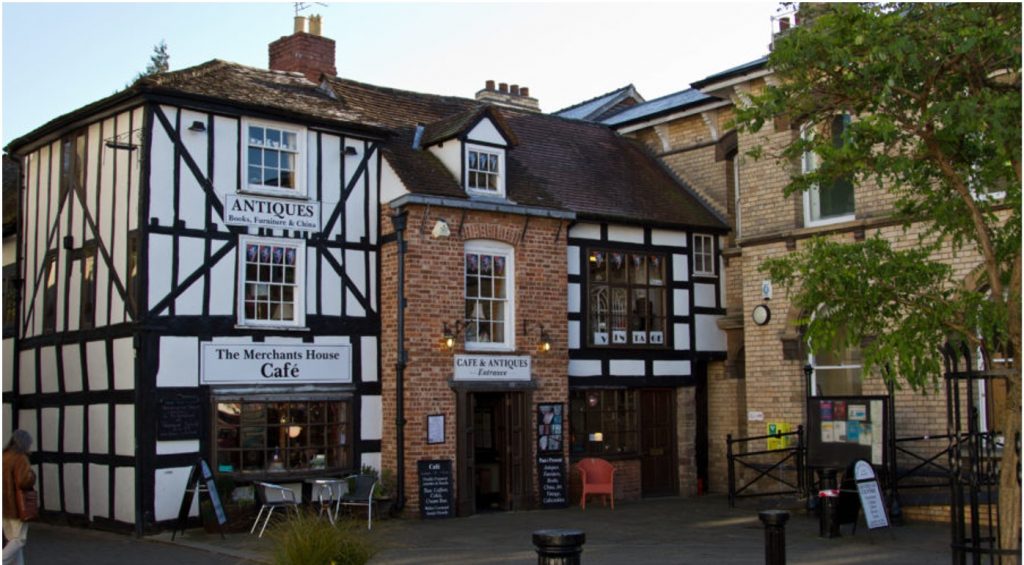
Back in the UK, I am sat on a bench within the grounds of The Priory Church of St Peter and St Paul in Leominster, North Herefordshire. As of the 2024 general election, the constituency now has a Green party MP, Ellie Chowns – this is one of the few examples of a Green party candidate taking a parliamentary seat from the Conservatives.
In a press release following her win, North Herefordshire MP Ellie Chowns said, “It was clear that the Conservatives had become deeply unpopular, but this result had more to do the Greens’ positive offer, one which looked at how investment in our health, care and dental services, affordable housing as well as our commitment to cleaning up our rivers and addressing the climate and natures crises can improve the lives of everyone.”
Since the 2024 UK general election, North Herefordshire is now one of four Green Party constituencies, up from just one parliamentary seat in Brighton and Hove. The seat was taken from Sir Bill Wiggin, who was North Herefordshire’s Conservative MP for 14 years.
I catch the eyes of an elderly couple taking a stroll around the church grounds. They give me polite smiles despite it being blatantly clear I was not from this West Midlands market town – my collection of facial piercings combined with my set of acrylic nails made sure of this. Despite our differences, I spark up a conversation with the couple.
“We have lived in Leominster for most of our lives,” 75-year-old Michael tells me, “I used to work in recruitment and operations but retired about 10 years ago.” Mabel, his wife of 50 years, adds, “We raised our children here, so this town is very important to us – we have a lifetime of memories here.”
As my questions turn towards politics, Michael looks a little embarrassed, “I have voted for the Conservatives in every election, apart from last year,” he confesses, “I used to believe that they cared about small towns like ours, but we have seen such little change to our day-to-day lives, it became hard to believe that they care.”
Mabel hesitantly tells me that last year was the first time she had voted – “The Tories seat was always very safe, so I knew that if the Green Party were going to win it was going to take as many people voting as possible.”
Michael tells me that he and Mabel can no longer drive, so they rely on local buses if they need to travel, “The Green Party had already made all buses free on the weekend before they were elected,” he explains, “The scheme only lasted for a year but it really made a difference – it was nice to see some actual change that helped people like us.”
Michael continues, “We had just become bored of empty promises made by the Conservative Party, I couldn’t vote for them again in good conscience.” Mabel chimes in, “The Greens have already started cleaning up our rivers, too!”
The anti-conservativism rhetoric in Leominster was a common one – 34-year-old salon technician Rita tells me, “I’ve never really liked the Tories, but Leominster has always voted heavily in their favour,” she adds, “I could feel a real change in this election though – it felt like everyone was finally fed up with watching the Conservatives ruin our country.”
Rita’s accounting is accurate, with the Conservatives receiving 31% less votes in North Herefordshire in this election than the last, and the Green Party gaining 34.4% more votes.
Back in the state of Georgia, I question our voters on which of the candidate’s policies were important to them when deciding who to vote for – “I think at first it was difficult to identify what Kamala was promoting because I think she was caught up in the failures of Biden to some extent,” Andrew explains from Blairsville.
“She was going to support the Obamacare program, which the Republicans have been fighting for years – my family have benefited a lot from that program in the past, we still do,” Andrew continues, “She was also going to support the Inflation Reduction Act by continuing the funding and the programs, not doing everything she could to undermine it like Trump. Lastly, she was going to boost FEMA, the Federal Emergency Management Agency, the ones that are the first responders and the funding for all a climate related stuff that’s going on. So those three, right there would have been top of my list.”
I ask Taylor which of Trump’s policies earned his vote – he responds “Well, Trump has the power to end inflation and make life in America affordable again, he has to be the one to fix all the problems that Biden has created.” After a lengthy rant about former president Biden’s mental state, Taylor continues, “Trump is also going to complete building the wall and secure America against illegal immigrants again. He’s spending money on what is important, not wasting money on whatever Kamala wanted to spend it on.”
I ask why immigration laws were so important to him whilst deciding who to vote for. Taylor furrows his brow and tells me, “I just want America to be safe again for my children, but it’s more violent than it’s ever been. Things have changed in America; it’s not like how it used to be – times are hard, and Americans have to come first.”
Before I can stop myself, I ask “Wouldn’t having tighter laws around gun ownership make America safer for your children?”
Without hesitation, he responds “People like me wouldn’t feel secure without protection – anyway, we’re not the problem.” I decide we’ve spoken enough about guns.
In another section of Cambridge University’s psychological study on Trump and Harris supporters, they asked voters to respond to scales measuring authoritarianism and Social Dominance Orientation traits– high scoring voters on the authoritarianism scale are concerned about enforcing in-group norms and respecting legitimate authority, whilst those high in Social Dominance Orientation care about the position of their in-group in relation to others.
Dr de-Wit explains that those who scored high on the Social Dominance Orientation scale “are sensitive to status, and often view the world as divided into winners and losers. They can be triggered by the idea that their group is slipping down the social and economic hierarchy.”
Of the voters polled, Trump voters scored significantly higher than Harris voters for both the authoritarianism and Social Dominance Orientation characteristics. De-Wit explains that “When a group’s norms are under threat, they seek safety through greater conformity, punishment for norm breakers and the authority of a strong leader.”
In the case of the US 2024 presidential election, it seems the white men of the country felt under threat; they seek conformity by cracking down on reproductive rights and immigration laws; and Trump has taken the role of authority.
The very bedrock of Trump’s patriotic political image is perhaps his now infamous slogan, “Make America Great Again”, with 97% of Trump voters agreeing with the statement that “Americans should make our country great again,” as found by Cambridge University’s study.
Themes of division, patriotism and national pride are nothing new, both in British and American politics. Leaders like Franklin Roosevelt and Winston Churchill, who’s legacy was secured as he was coined ‘the only man we have for this hour’ by Labour politician Hugh Dalton.
In seeing through the alliance with Russia and the US during World War II and defeating the Nazi’s, Churchill forever earnt his political identity of being a war-time hero. Perhaps this is what republicans see in Trump or what Reform voters see in Farage – a war-time hero against change.
It certainly seems that the presence of political identity was stronger than ever within the elections of 2024, with most voters grasping at a candidates’ religion, ethnicity or age before taking the party’s policies into consideration.