Residents of a small town in Eastern Oregon fear for the future of their water, a local breaking point in the national reckoning over data center’s secretive water use. For some residents, the consequences have already arrived at their front doors.
Dawn Rasmussen gestures towards Seven Mile Hill, a grassy canyon overlooking her one-story red farmhouse on the outskirts of The Dalles. It’s a month into summer and the ground is already dry and dusty from the lack of rain. “There’s a lot of places out there that have 500 foot wells,” she says, wringing her hands. “They’re running dry out there.”
Dawn and her husband Brad moved to The Dalles 10 years ago when data centres hadn’t yet taken over the horizon. She says it’s the best place she’s ever lived. But in the years since, they’ve watched the landscape change. Google’s campus has multiplied, its steam emissions a constant reminder of the tech giant’s presence amidst the region’s otherwise largely undisturbed high desert flats and basalt cliffs.
A few years ago, Dawn’s well pump died. When the repair crew pulled the motors up from the bottom of it, they had news for her: the water table had dropped 15 feet since the well was drilled 15 years earlier. “The reality is, that was when Google had only three data centres here in The Dalles,” says Dawn. “Now they have six.”

She’s an unlikely candidate for water-rights activist. Before moving to The Dalles a decade ago, Dawn ran her own resume-writing business, Pathfinder, for 18 years in Portland. Restless and frustrated with the Trump administration, in 2025 she decided to challenge Oregon’s Republican Congressman Cliff Bentz, who was running unopposed. “It was more or less an act of resistance,” she says. Though Dawn lost the Democratic primary in May, the campaign left her convinced that rural Oregon had an inadequate number of qualified campaign managers, so she trained at Yale University and started her own consulting firm. Water, and the data centers draining it, became a topic she kept coming back to.
It’s hard to miss the rising steam clouds and monstrous nondescript warehouses looming on The Dalles’ horizon. Once a Native American trading hub and later the end of the overland Oregon Trail, its downtown is still lined with historic brick storefronts that nod to its history. The Granada, a 1929 art deco theatre, stands proudly in the center of town next to Gorge-us artisan gallery and the Last Stop Saloon. Nestled between Mount Hood and Mount Adams, the town of nearly 16,000 people is known for its striking views, but over the last two decades, it’s also become a breeding ground for the world’s tech giants and their digital backbones.
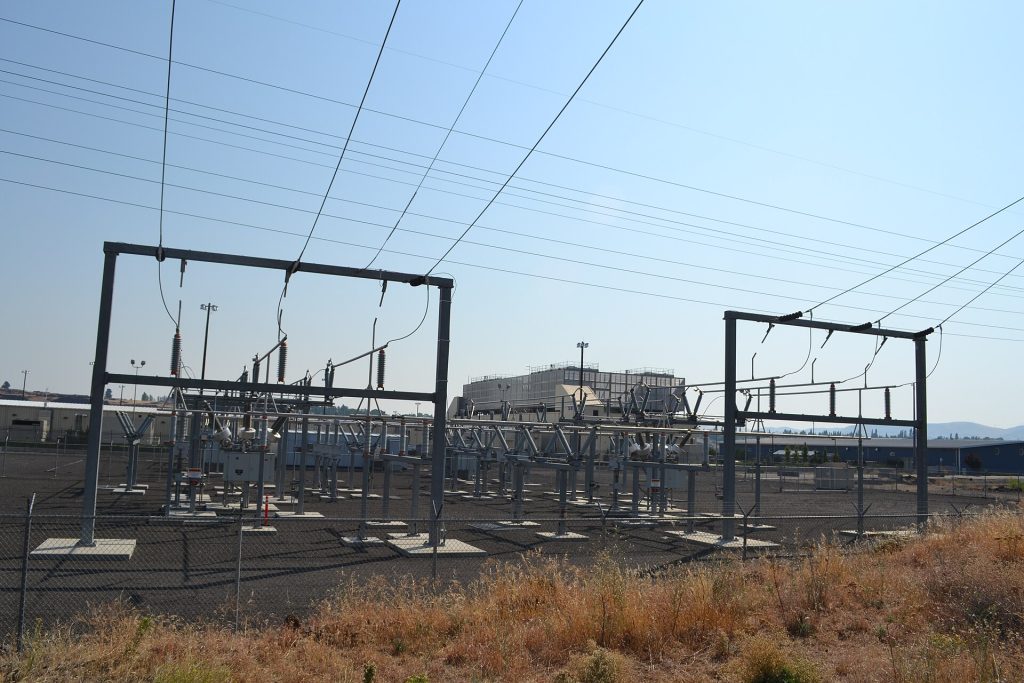
In 2006, Google built their first data center in The Dalles and today, their campus of five operational buildings has a sixth on the way. For locals, they’re more than just an eyesore, and Google’s rapid expansion across the region has made many people wary of the limitations, or lack thereof, to the data center boom.
But The Dalles is not an isolated case. As Google, Microsoft, Amazon and Meta race to build the infrastructure that AI runs on, a quieter fight is playing out underground. What happens when the water that keeps those buildings cool runs dry? A Guardian US analysis from early June found that roughly two-thirds of prospective data centers are set to be built in places that have been among the driest in the country over the past year. It’s a collision in the making as the tech industry races to meet the demands of AI, while communities like Dawn’s are left wondering how much longer the water underneath them will remain theirs.
“I’m planning that this will be our retirement home but if there’s no water, what do we do?” says Dawn. “I’ll be 59 this year. Do I really want to be dealing with this when I’m 80? Probably not.” In the six years since the discovery of her dramatically decreased water table, Dawn has taken precautions; gathering quotes for the cost of digging a deeper well and considering the benefits of an atmospheric water condenser, which collects ambient moisture before filtering and mineralising it for drinking. “But secondary to that, what about the city of The Dalles? Our water comes from wells. If they’re empty we’re going to have a ghost town.”
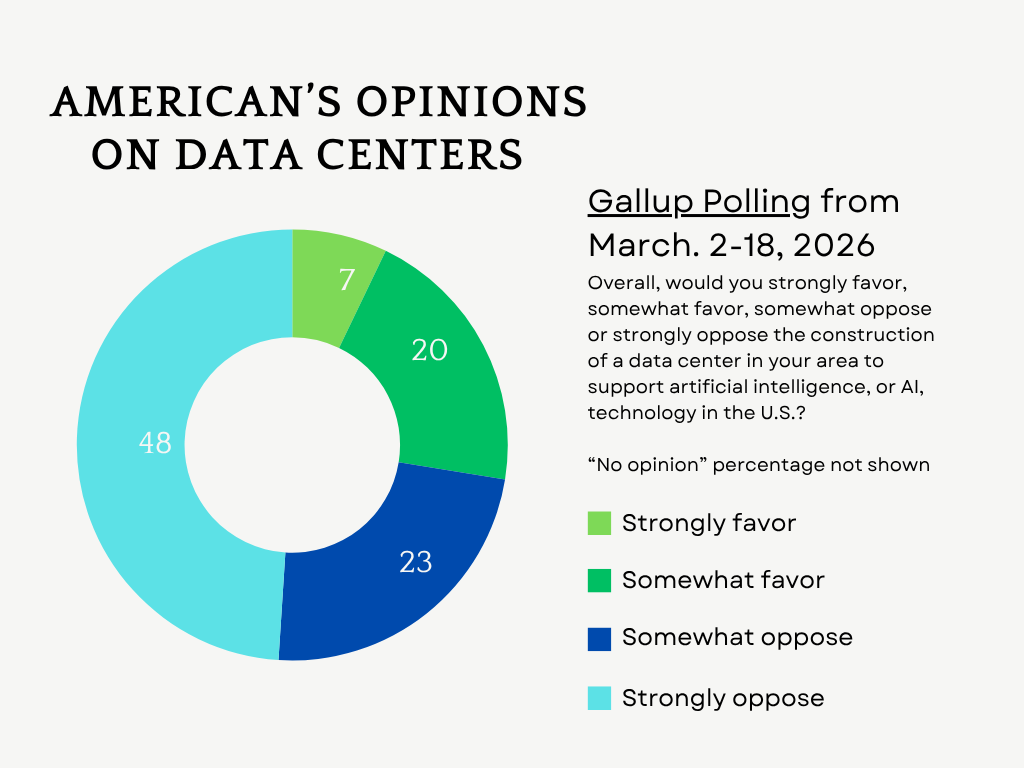
Across the country, Americans are overwhelmingly in opposition to data centers. Polling by Gallup recently revealed that seven in 10 Americans oppose constructing data centers for Artificial Intelligence in their local area. Of those in opposition, 70% were worried about the environmental impact, while those who favored them mainly cited potential economic benefits.
“AI is not going away, so there is a reality that we need data centers,” says Dawn. “The issue is why are they siting them in the most water poor areas?” She’s frustrated with Google’s choice to use evaporative cooling, where water absorbs server heat before being evaporated into the ecosystem. She wishes Google hadn’t chosen what she calls the “cheapest route,” and instead invested in infrastructure for liquid cooling, which continuously recycles and recirculates the same water. “If we’re going to have this situation we should have a closed loop and require data centers to have their own cooling system. That way they can reduce the water draw,” she says.
Large data centers can consume up to 5 million gallons of water per day, roughly 1.8 billion gallons annually, according to the Environmental and Energy Study Institute. This is equivalent to the water use of a town populated by 10,000 to 50,000 people, The Dalles falling on the lower end of that spectrum. And as data centers grow in size, number and complexity, this number is only expected to grow.
“I’m planning that this will be our retirement home, but if there’s no water what do we do?” Dawn Rasmussen
Like the Cold War Space Race or the Nuclear Weapons Race of the 1950s, America’s AI boom has been fueled by questions of national security, economic dominance and global leadership. President Donald Trump has been a vocal proponent of AI data centers, pushing to accelerate federal policies through executive orders that would help to streamline permitting and environmental reviews. But those orders can’t override state authority on land use, zoning or utility regulations, so when it comes to limiting the tech giants’ consumption of precious resources like water, energy and land, the key decisions ultimately fall to state leadership.
Across the US, state legislatures are already stepping into that role. As of July, twenty-seven states are advancing data center legislation that would require developers to report their energy usage and cover the energy costs their facilities generate.
In Oregon, Governor Tina Kotek has been a vocal proponent of safeguards against data center expansion, describing the state as a “cheap date” for tech giants like Google, Amazon and Meta. And in June, Oregon lawmakers passed a one-year moratorium on data centers’ eligibility for major tax breaks, the state’s first steps towards curbing tech incentives.
New York has gone even further. In July, Governor Kathy Huchul signed an executive order, making it the first state to impose a statewide moratorium, an executive order that will temporarily pause state environmental permits for up to one year for new-large scale data centers.
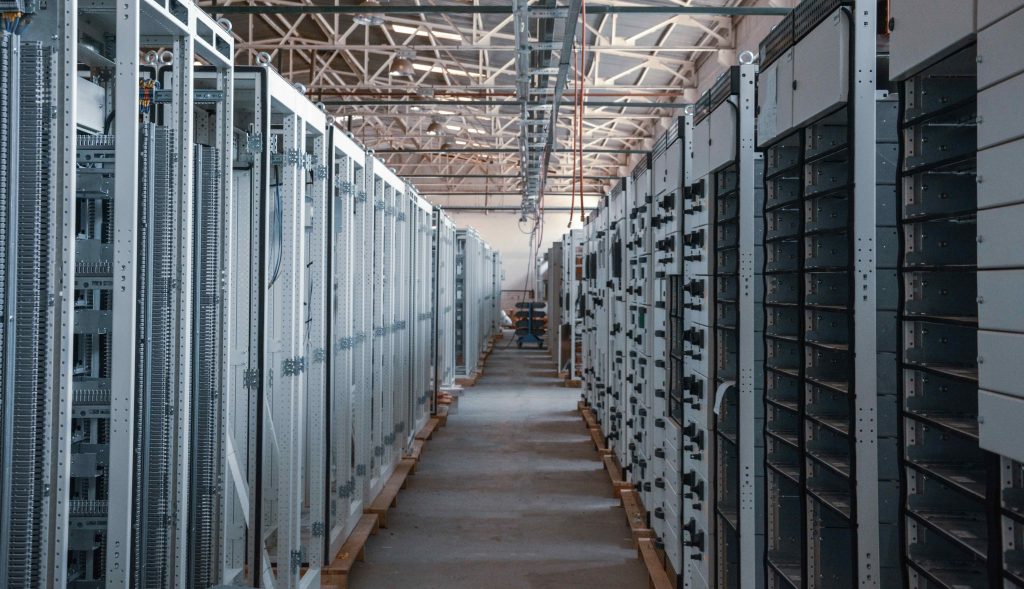
“There’s a lot of other things that happen in the water world that are much less visible on the landscape,” says Chris Kowitz, the North Central Regional Manager at Oregon Water Resources Department (OWRD). “When a data center that occupies roughly 15 acres of land shows up, it’s pretty hard to miss.”
The OWRD is the state agency responsible for all water allocation decisions and regulations regarding surface and groundwater resources. Chris says that in general, it’s become difficult to find areas in Oregon where his department would offer new water.
“What we’ve continued to see across the state is that either all of the water’s already been allocated, or the department has over-allocated the water because of things that happened many decades ago,” says Chris. “When we think generically about new applications for water, they’re fairly rare. There’s just not a lot of water that we would consider available.”
While allocations are hard to come by, water holders have found another route: transferring existing water rights. “If a city determines that it’s within their interest to sell water to a data center and it’s within their portfolio of water rights that they hold from the department or from the state, we don’t really get involved,” says Chris.
“Many of these rivers just have nothing left to give.” John Devoe
Because OWRD doesn’t need to be a part of the transfer process, these workarounds could in theory leave regions short on water. But Chris says he hasn’t seen that happen. In the seven years that he’s been managing North Central Oregon’s water, which includes the city of The Dalles, he says he’s never seen a town over-promise their water supply, largely because of a reporting requirement that catches problems before they start.
“Municipalities have to report their water use to the department annually,” he says. “We don’t want to wait until they’re overusing to come in and try to ratchet them back, so we still have that back end check.” The check, however, doesn’t guarantee that the figures will be made public, and for residents like Dawn, that lack of transparency is one of the most concerning issues.
Between 2012 and 2025, Google’s water use in The Dalles nearly quintupled, reaching about 550 million gallons and nearly 40% of the city’s total water consumption. Yet these figures were only revealed through a December 2022 settlement in which a local paper, The Oregonian, won a 13-month legal battle forcing the city to disclose the data annually from that point on.
“In my opinion, it was poor planning on the part of the city and an exploitative mindset from the data centers” says Dawn. “I don’t see how this is going to turn out well for us.”
It’s a pattern that’s emerged across the country, as trade-secret claims, public records fights and eventual disclosures play out between tech giants, local governments and activists. In Mount Pleasant, Wisconsin, a Microsoft data center did everything in its power to keep its water records hidden from the public, but it ultimately failed after the nonprofit Midwest Environmental Advocates sued the city, revealing that the data center would require more than eight million gallons of water each year.
In Virginia, home to more data centers than any other US state, non-disclosure agreements (NDAs) have become common practice amongst tech giants and local governments. And on the other side of the country California’s Governor Gavin Newsom vetoed legislation last December that would have required data center operators to provide water-use estimates and annual consumption reports to local water suppliers. He argued that placing transparency mandates on the growing industry could have unforeseen impacts.
But disclosure agreements are only a piece of the larger issue: the question of supply. “The truth is, if The Dalles runs out of water, (Google) is just going to pick up and go somewhere else,” says Dawn. “But what about our community? How are we supposed to continue on if there’s no water in our town?”

The Dalles is currently looking to triple the size of its primary water storage reservoir, Crow Creek, prompting further concern from local conservationists and residents. The project, which was first planned in the 1990s, is now making its way to congress through The Dalles Watershed Development Act, legislation sponsored by US Republican Representative Cliff Bentz. If the bill is passed, the United States Forest Service (USFS) would hand over 150 acres of Mount Hood National Forest surrounding Crow Creek reservoir to The City of The Dalles.
“From the department’s perspective, they’re utilising a right that they have already applied for and been given approval,” says Chris. “They just haven’t done the physical changes to the reservoir that would allow them to store the extra water that we’ve already authorised.”
Amie Ell, The Dalles’ City Clerk and Public Information Officer, says that the project takes into account both the “projected residential and non-residential water demand over the planning horizon,” adding that it does not break out projected future demand by individual customers or companies. The plans, Amie says, are based on providing reliable municipal water service for the community as a whole.
Richard Mays, the mayor of The Dalles, echoed her sentiment in a public letter posted on his Facebook page. He wrote: “While Google is currently the City’s largest water customer, it is incorrect to imply that their water demands are the driving force for the City’s plans to increase its watershed reservoir storage capacity.” He added that water-management changes are meant to serve residents and that expanding the reservoir is a proactive approach to the city’s predicted growth.
Yet the numbers paint a different picture. According to Electric Choice, an independent electricity marketplace, Google’s water use in The Dalles grew by 316% while the town’s population grew only 12%.
“The notion that this water is somehow for drinking water for residents of the city, it’s just a fallacy,” John DeVoe, senior advisor at WaterWatch of Oregon, told Oregon Public Broadcasting (OPB). “Obviously, the great driver of demand for water in The Dalles is Google.”
“Every unit of water you take out of the system over time eventually results in probably higher water temperatures, less spawning and rearing habitat for fish,” John told OPB. “Many of these rivers just have nothing left to give.”
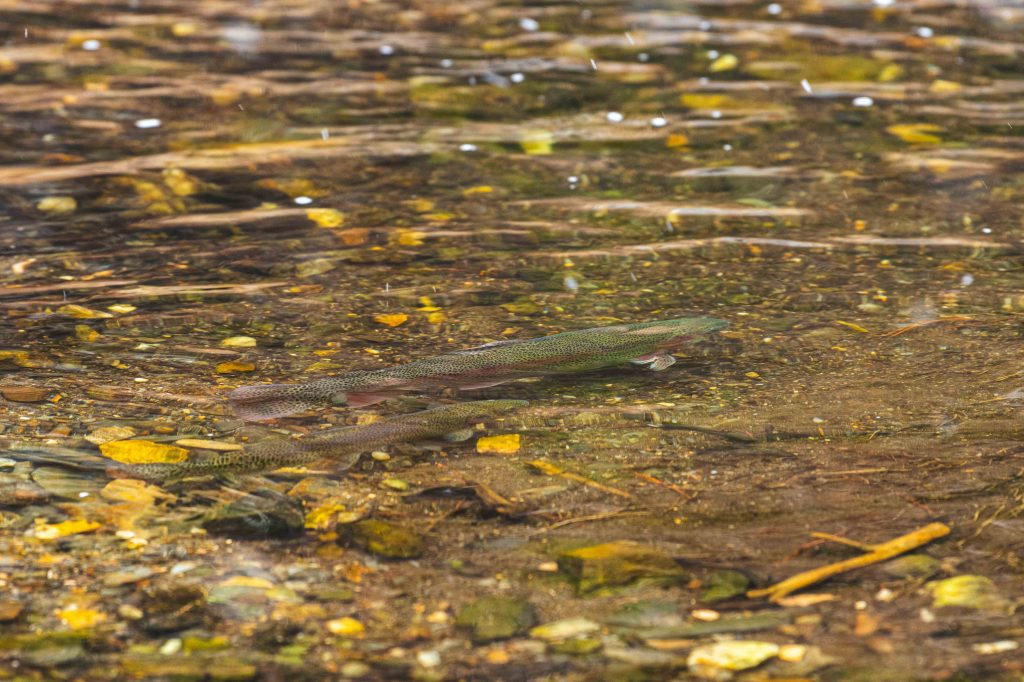
More than 200 species of wildlife call The Dalles’ mountainous foothills home, the same region where nearly 80% of the city’s annual water supply comes from. Named The Dog River, this crucial water source doubles as an important snowmelt tributary to the Hood River that’s collected downstream in the Crow Creek Reservoir. It’s an ecologically significant cold water refuge for five runs of local salmon and steelhead that are listed as threatened or endangered under the Endangered Species Act.
“There’s also seasonal Vernal Pool Fairy Shrimp (in The Dalles), which were an important food supply for migrating birds,” says Dawn. She says that years earlier, local residents fought off a Walmart development in the area to protect the small crustaceans. “That was one of the major environmental concerns out here, but Google’s come in and just dug everything up.”
“The glaciers are receding and there could be a time where there’s just no snow on Mount Hood…I think somehow we’re going to be in trouble.” Dawn Rasmussen
The local ecology is already under environmental strain. At the end of June, Oregon Governor Tina Kotek issued a drought emergency for The Dalles and greater Wasco County. The declaration followed a winter of historic snow drought where levels fell nearly 30% below the previous low snowpack record in 2015. Coupled with some of the warmest winter months in the state’s history and more than 50 wildfires currently raging in Eastern Oregon, the impacts are already being felt by farmers and residents alike. And just a few weeks into summer, hundreds of farmers and ranchers across the region have already seen their water deliveries reduced or cut off entirely.
“The glaciers are receding and there could be a time where there’s just no snow on Mount Hood,” says Dawn. “The city leaders seem to not care about that…I think somehow we’re going to be in trouble.”
To date, Google has brought 200 new jobs to the region, and with the new facility’s completion, the company expects to hire an additional 50 employees. But the relationship isn’t unilateral. Under a 2021 agreement between the city and Wasco County, Google pays 50% of its assessed property tax on the first project and 60% on the second for up to 15 years, at which point it will be charged the full tax rate.
City officials have called the company a “good neighbour” pointing to real benefits for the communities it’s employed. As Google spokeswoman Kate Franko told AP “Google’s data centers in The Dalles in Wasco County help millions of people find directions, send emails and search for information every day.”
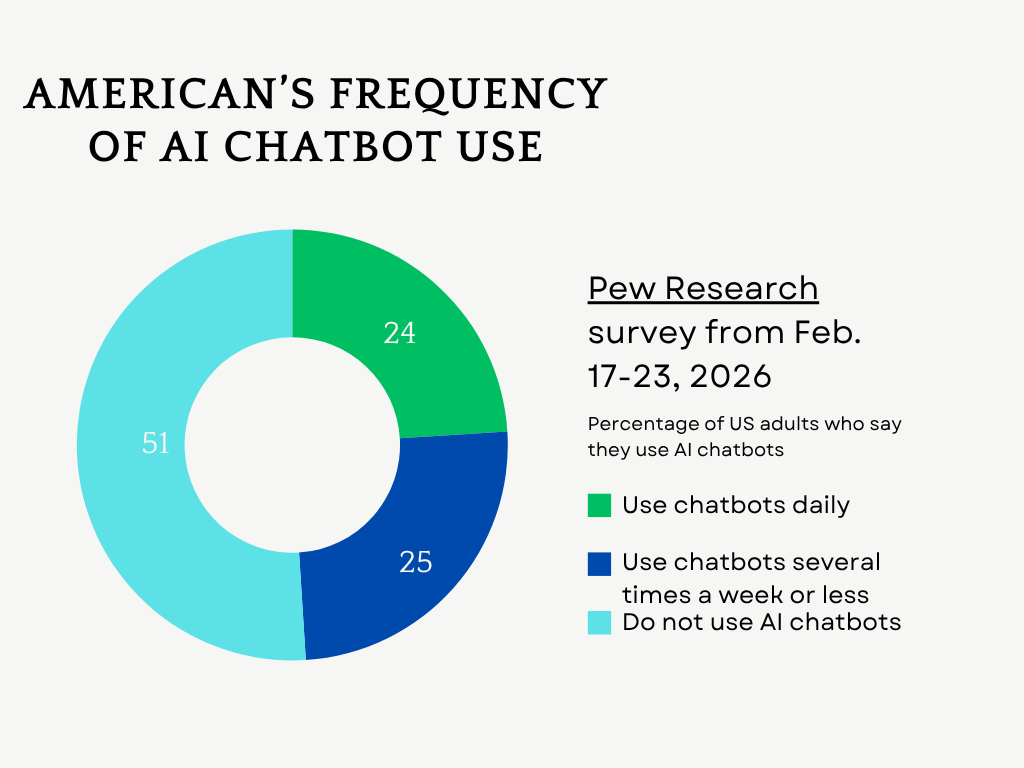
According to a June study from the Pew Research Center, about half of US adults report using AI chatbots, with one in four people stating that they use the tools on a daily basis. Overall, researchers found that the share of Americans using ChatGPT has more than doubled over the last three years.
Despite this, the same study revealed that roughly two-thirds of Americans feel that AI is advancing too quickly. In Oregon, many residents and politicians seem to agree. In a letter sent to Governor Kotek’s Data Center Advisory Committee, Senators Ron Wyden and Jeff Merkley outlined several issues brought to their attention by Oregonians. These included transparency and public accountability as well as an emphasis on water quality and quantity issues due to data centers’ use of large water volumes from surface, ground, municipal or reclaimed water sources to cool servers and prevent overheating.
“Data centers are infrastructure that support the development of new technologies and cloud computing, and thus play a role in competitiveness and national security,” Senator Wyden wrote in separate letters to Google, Apple, Meta and Amazon’s CEOs. “However, they can also impact local communities and the environment if not managed sustainably and transparently.”
Dawn is also aware of the nuance of the situation. “You can’t be a luddite in this era,” she says. “So you have to think about how you’re going to use your time. I see a use for AI, but we need to do something as far as managing it, containing it, and then defining how we are going to set up these data centers.”
“I’m going to keep advocating for my community, and hopefully these things can begin to change,” says Dawn. “It’s something we’re all trying to grapple with as a society. How far do we want to go with AI? How much are we willing to compromise on its behalf and at what cost?”