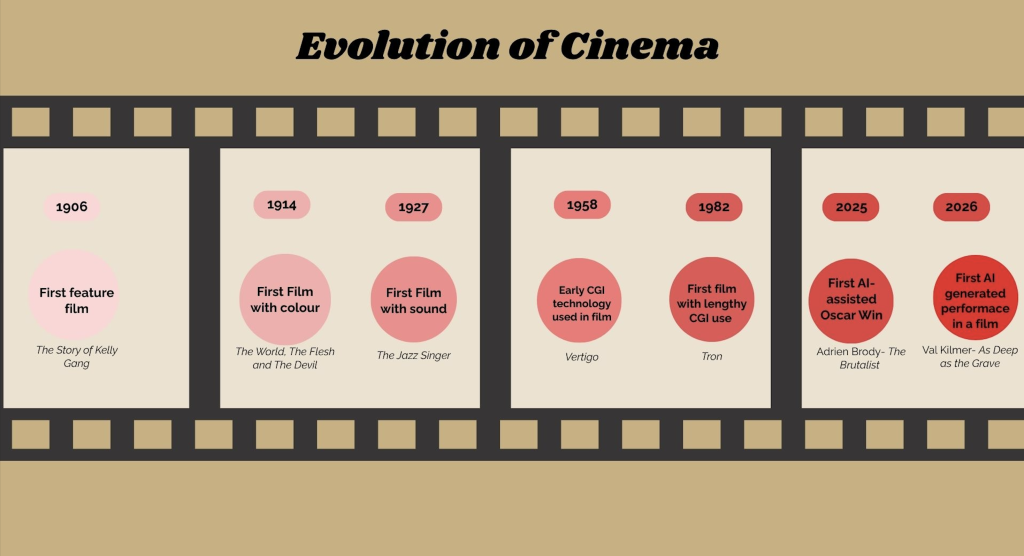
Art is a uniquely human form of expression, but what is art in the digital age? AI and CGI are evolutions in film, but the former evokes cries of job losses and shortcuts. Is there a place for AI in the film industry?
To many, AI and art are a relationship that will never work. They seem total opposites and impossible to exist in the same space. But to others AI tools are their perfect partner allowing their creative vision to flourish. Opinions on AI in film differ from the most famous in film to up-and-coming independent filmmakers.
AI is undoubtably, the biggest challenge to cinema since the introduction of sound and it is dividing the film industry. Martin Scorsese, in a controversial move, recently became an advisor to the AI firm, Black Forest Labs, he said AI tool helps him to “share what I’m visualising more clearly and efficiently to my creative team.” Black Forest Labs creates AI tools such as Outpainting which extends an image past its frame.
AI isn’t starring in The Odyssey, this summer’s big blockbuster, and likely to be a major Oscar winner, from director Christopher Nolan. Nolan is known for lack of computer- generated imagery) CGI throughout his films, preferring practical effects; he crashed a plane for Tenet and flipped a truck for The Dark Knight. Some of The Odyssey’s visuals were made practically, like the 60-foot animatronic puppet of the cyclops monster.
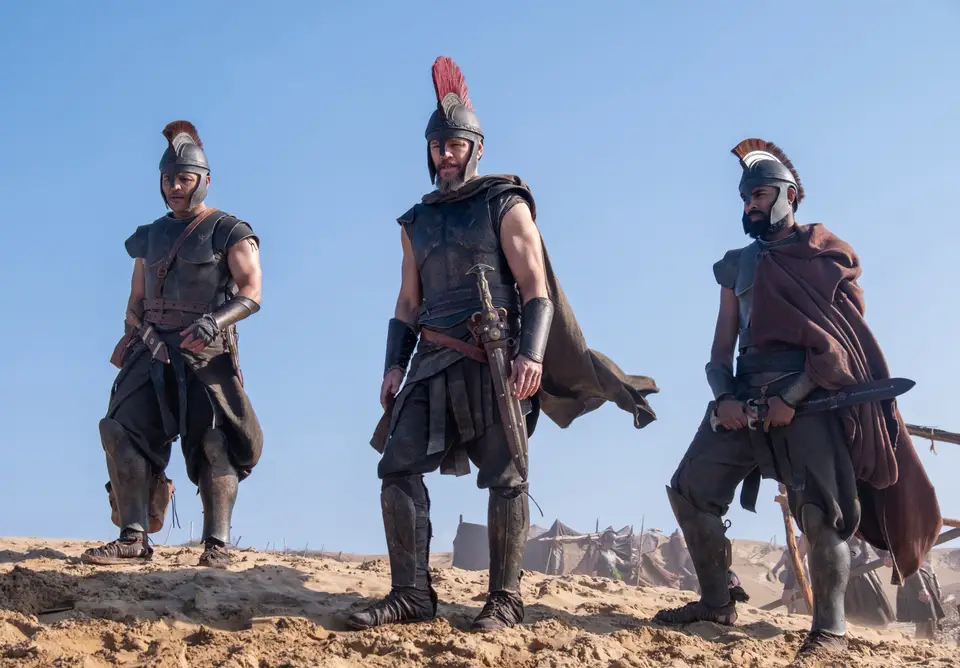
Other cinematic epics were made before AI sat in the director’s chair, 1963’s Cleopatra is one of the most expensive films ever made with the budget going to star salaries and elaborate sets. When Vertigo’s opening sequence required a preciseness that couldn’t be achieved by hand, John Whitney pioneered an early form of CGI using a World War two computer, a swinging pendulum and animation cels.
With a love of practical effects and a disdain for an over-reliance on digital tools, AI has no place on a Nolan set.
He has called AI “a Trojan horse that everybody knows the Greeks are inside… everyone can see what’s going on.” Nolan also said: “I’ve never seen a technology advancing so rapidly, so completely rejected by the public. Everybody’s suspicion of it is so extreme.” Although some filmmakers have already begun using AI, Nolan said that “the motives of the people giving it to us also have to be viewed with scepticism. That’s when we’ll get the best out of a new technology.”
Elon Musk promised to use his Grok Imagine, the fastest AI image and video generator, to “make a full-length movie of The Odyssey that is historically accurate.” Maybe not what Nolan intended when he made decision to shoot entirely on IMAX 70mm film, the first feature film to do so which meant the editing was done by hand. Frames were spliced together on the physical copy of the film. A largely neglected practice in the digital world we live in now.
The Oscars, AI and CGI
The Odyssey isn’t the first film to have AI related controversy. At the 2025 Oscars Adrien Brody won best actor for The Brutalist, but not all celebrated. AI technology was used to improve his Hungarian accent, which could be considered like allowing an athlete to take home a medal because they only doped a little bit. Would he have won the Oscar without the accent improvement?
Brody may not have been excluded for digital enhancements but 1982’s Tron was. The Oscars didn’t nominate the film for best visual effects because they deemed CGI cheating. One of many rule changes that The Academy of Motion Picture Arts and Sciences has have enacted over the years.
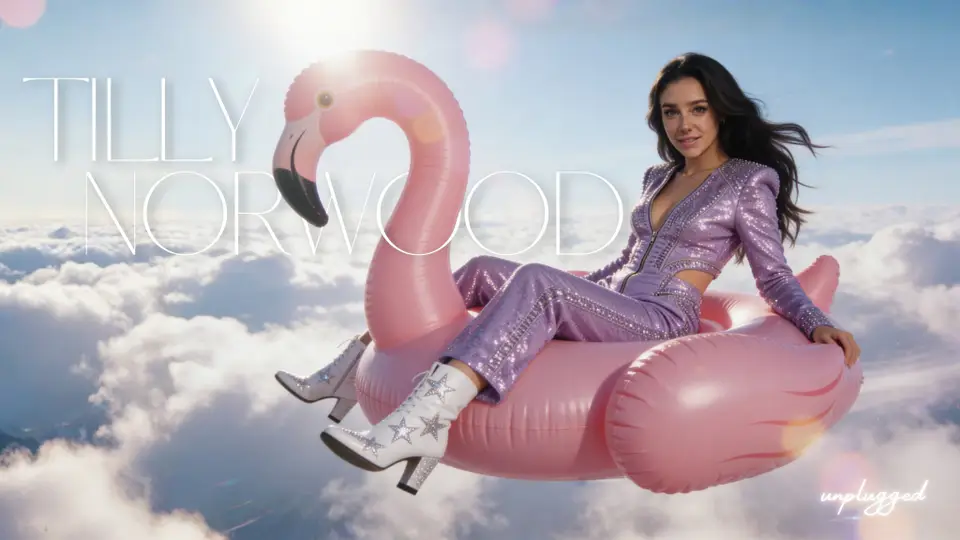
In May this year The Academy directly addressed AI use. The Academy said only performances by humans and screenplays that are human-authored are eligible for Oscars. This may deter the appeal of AI actress Tilly Norwood from company Particle 6; they want to create a “Tillyverse” to foster “a new generation of AI characters” and help them build careers. Norwood is set to lead a feature film. However, it only touches on the issues facing industry. Just as self-service checkouts took the jobs of shop workers, there is some concern that AI image generation tools will replace visual effects workers and script writers.
Industry titans like Scorsese may be using AI for future films, but not all filmmakers want to; Guillermo del Toro told NPR “I am not interested, nor will I ever be interested [in generative AI] and I hope to remain uninterested until the day I croak.”
Marc Isaacs- How film and AI can work together
A filmmaker who finds himself at the intersection of film and AI is Marc Isaacs. His latest film Synthetic Sincerity follows students at a fictional university training AI on characters from his past work in a documentary-esq style. Isaac likes to toy with the documentary form to ask: “what does it mean to film reality?” Between decisions of where to place the camera and people’s awareness of the camera, he thinks it’s hard to capture reality, but AI does remove some obstacles. “With AI you don’t need a camera, and you don’t need to leave your desktop space.”
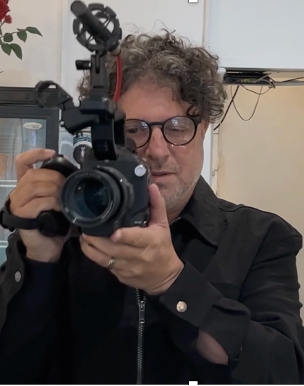
On the theme of AI being trained on already existing work, Isaacs isn’t so much worried about this but rather reflecting how AI is being used. He said companies are buying creative works “because it’s valuable to them. They’re making character-based films, what better way than to learn from real people?”
A big concern amongst actors about AI is that it will be trained on their performances without their knowing, while the richest and most famous actors will have easier access to ways to legally protect themselves; this same protection is not the same for indie filmmakers and actors.
When it comes to film, although unsure what it means for cinema overall, Isaacs thinks that AI’s presence is all dependent on who uses it: “interesting filmmakers will use it in a reflexive way, and other filmmakers will use it to make cheap versions of The Lord of The Rings or The Odyssey.”
Is Isaacs correct? Depending on your definition on “interesting”. An AI version of The Odyssey has already been made. The AI driven company, Fountain O has made an AI version called Odysseus: The Fall and for a lot less than Nolan’s budget of $250 million. A “mid-five figures” production where all the actors, sets and cameras were replaced by AI models, but the script, images and voicing were completed by director Ash Koosha. He is eager to entice those to the cinema on the back of Nolan’s project who are interested in “the ultimate in human creation [Nolan’s version] and compare it to one man’s collaboration with AI.” At the time of writing Koosha’s version is not in the cinemas but will be later available to rent from the company’s website.
Isaacs’ concern isn’t how AI is used in film, but rather how the technology affects our relationship with truth and fiction. He wants to make viewers of Synthetic Sincerity “question everything you’re watching.” By blending documentary and fiction to reflect the uncertain world that AI has thrown us into, seeing both how “technology can be used in ways that we might think are really liberating… but also how it’s used against us and can flatten life, become oppressive and authoritarian.”
“You can’t believe anything you see anymore and what kind of culture does that create?” Marc Isaacs
Not wanting to pass a moral judgement on AI, Isaacs was more interested in finding a way to talk about AI “in the most creative, playful way possible.” Alluding to the historical power that film once held before AI, CGI etc, Isaacs said “what we can believe in and what’s true has become so complicated… you can’t believe anything you see anymore and what kind of culture does that create?”
Isaacs is not the only filmmaker to use AI; Director Damien Hauser has used what he calls “AI assisted filmmaking” to make Memory of Princess Mumbai. Hauser’s film is not about AI though. The film features AI generated backdrops but to make the images work cinematically a heavy editing hand was needed. The process “took weeks of rotoscoping [manually altering film footage one frame at a time],” Hauser told Variety.
He is asking questions about how AI will shape film and the world outside of it, but Isaacs doesn’t have the answers: “I want the audience to walk out confused and have more questions about the world they’re living in.”
How did sound and CGI effect film?
AI is far from the first innovation in film to cause outrage. Sound was not warmly welcomed at first.
In 1928 Charlie Chaplin said, “moving pictures need sound as much as Beethoven needs lyrics.” By 1931, when his silent film City Lights didn’t do well, Chaplin finally came around, “I felt that to make another silent film would be giving myself a handicap… although a good silent film was more artistic.”
But as Chaplin had to surrender to the talkies, cinema eventually made way for the digital age. Like sound, CGI didn’t have the red carpet rolled out at first.
CGI moved the big studios away from practical effects and though ‘generated’ may make consumers think of ‘AI generated’ content, CGI is not AI. CGI used in films are manually built by visual effects (VFX) artists but, like AI, can be used to alleviate time and labour costs when making films. Time consuming practical makeup or labour-intensive stop-motion sequences were left on the cutting room floor, indie filmmakers could access CGI programmes more easily in 2002 when the prices dropped, opening new possibilities.
Some big names in Hollywood like Christoph Waltz, actor in films such as Frankenstein and Inglorious Basterds, didn’t welcome CGI to film.Hesaid that “CGI is for losers” at the 2025 Venice Film Festival. Waltz wasn’t alone in his disdain for CGI, Ian McKellen famously hated working with green screens when playing Gandalf. To make McKellen tower over the hobbits his scenes were filmed separately in a green screen studio and then edited together. McKellen called the experience “distressing” to the point he began to think acting wasn’t for him.
In more digital advances, actor Donald Glover told The New Yorker that CGI face scanning technology was used to scan his face into the Star Wars franchise. “Who’s to say at some point they won’t take that scan and say, ‘let’s make another movie with Donald. He’s been dead for 15 years, but we can do whatever we want with him.”
As Glover feared, the dead will be reanimated later this year; Val Kilmer’s family have given their blessing for an AI generated posthumous appearance in As Deep as the Grave. A far cry from director Francis Lawrence’s approach when Phillip Seymour Hoffman passed away before filming for The Hunger Games: Mockingjay Part 2 completed. Lawrence said to try and “fake a Phillip Seymour Hoffman performance would have been catastrophic.”
Films with AI are being made but are cinemas showing them?
Opinions among filmmakers may differ, but they don’t decide what paying customers choose to see. Cinema programmers, such as Patrick Newton, make those decisions. He is the film programmer for the independent Tyneside Cinema, in Newcastle Upon Tyne, and says that the job is about “finding a broad range of films that appeals beyond the generations and satisfies everyone.” Newton sees the process of film programming as “a human process,” and although other multiplex chains may be using AI across their business, that does not align with the Tyneside Cinema. “Independent cinema is about the human condition, human processes and we would never want to remove that voice.”
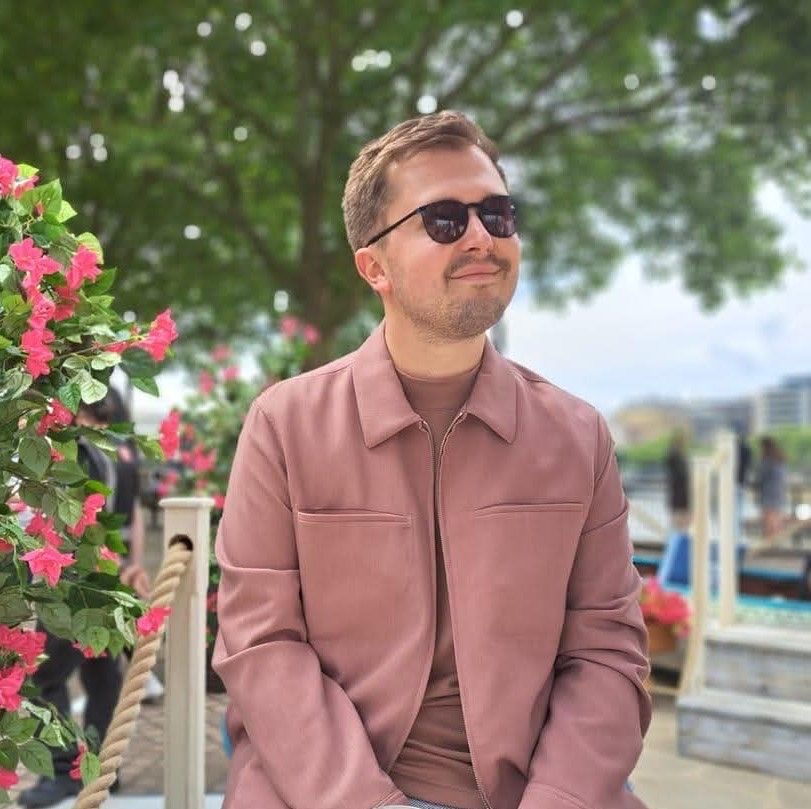
Veering more toward the human-made rather that the AI generated material in the arts is essential when it comes to film programming for Newton. He says that he thinks “a lot of people come to the Tyneside for that personal experience. It’s very important in the age of AI to have people who love film at the centre of it and the Tyneside is full of them.”
“Cinema is about empathy and human connection, you can’t really master that with AI.” Patrick Newton
Newton sees increasing AI use in film as something that makes his job harder, referencing Kilmer’s posthumous performance as something that “opens the door to a lot of slightly troubling, ethical conundrums and quandaries,” he said, “cinema is about empathy and human connection, you can’t really master that with AI.” As a film programmer for one of the most iconic independent cinemas, Newton wants the Tyneside to stand as somewhere “for championing real people, real stories.”
AI films are becoming part of the film industry and are celebrated globally, Chinese company, Beijing Zhongguancun Tongli Technology Service, is partnering with Astana AI Film Festival (AAIFF) in Kazakhstan later this year. The festival is dedicated to AI-powered film establishing frameworks for AI content to be made. Alamaz Zhali, co-founder and chairman of AAIFF says that “China is one of the world’s key partners in shaping the global AI ecosystem,” and hopes that this partnership will “create new opportunities for filmmakers and creators in both countries.”
The AI filmmaker- Stephanie Ronan-Chlond
The UK may still be establishing itself as a power in the AI, the Northeast was made an AI growth zone in 2025, but Manchester based Stephanie Ronan-Chlond,39, is already making her own AI films. She spent 15 years in the TV industry and discovered AI filmmaking as an alternative creative route. She has made short films such as Bound and The Princess and The Trade.
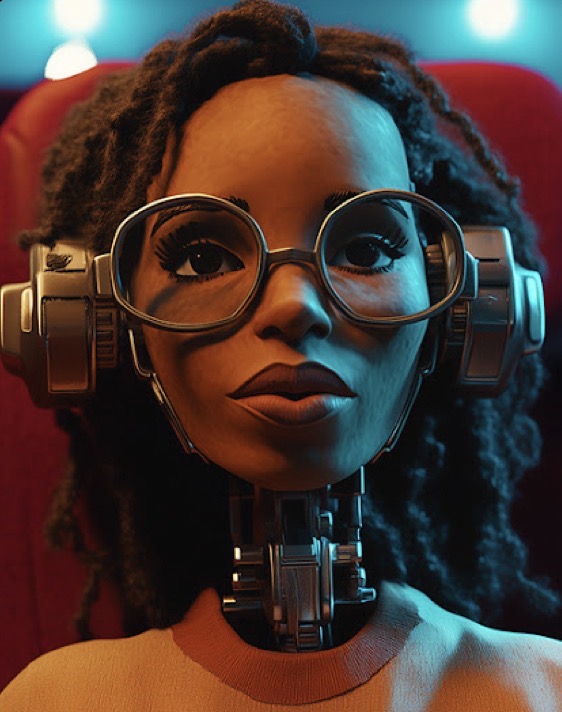
Taking time off because of health issues, was “when I started to experiment with AI, ChatGPT and Midjourney, I was just playing with it mostly as a distraction from what I was going through, and I just became addicted to it.”
Although addictive, she wasn’t satisfied initially, “You kind of notice when you’re playing with it [AI tools], that when you generate an image, because it’s trained on Google Images and models and all the kind of shiny stuff we see in magazines and the internet, everything it generates looks very perfect.” This motivated her to “create some images that actually resonated with what I was going through.”
Despite widely held opinion that AI image generation is just writing a prompt and getting an image back. Ronan-Chlond said that filters to stop inappropriate content being made her think creatively “to generate something different.” Until she finally generated an image that reflected how she felt, “it was just this amazing feeling that I’d never felt before, where you’ve created something that maybe you couldn’t quite express.” She sees AI filmmaking as a “back and forth creative process” between herself and AI tools. She uses AI to develop scripts and find plot holes, “all of it is kind of me, but [AI] just helps to refine it because it’s hard to be creative just sat on your own.”
To Ronan-Chlond AI is “like anything else that we use. It’s a tool to kind of help us.” Likening it to a mathematician using a calculator, she sees AI as an emerging tool to help filmmakers but not something to replace them, because “there always needs to be a human in the loop.”
“I could just make it happen and put it out there.” Stephanie Ronan-Chlond
AI filmmaking has allowed her to take control of her career, “I’m already doing what a producer does, so you can use it in creative ways to actually progress what you want to do.” Ronan-Chlond doesn’t have to ask if she can make something, “I could just make it happen and put it out there.” She can make her own films which is important to her because, “if you’re someone who hasn’t had the privilege of being able to author your own story, which is most people, most films and TV programmes we see are made by a very small demographic of elite white men… so to be able to author your own story is very powerful.”
Despite AI tools unlocking new creative avenues for herself, she acknowledges that AI is “not a morally neutral thing” to engage with; recalling times when she was invited to speak at universities and was met with a less than welcoming reception. “I wasn’t even able to show anything because people were just so angry that I was there,” but she understands the angry response. AI use is increasing in the film industry, and she feels for students who are being “trained for a world that is no longer there anymore, or it’s changing.”
Most people’s perception of AI is shaped by what is seen on social media, but unlike “slop that’s on Instagram feeds,” she said that she uses AI “in a positive way. When I make short films, I want them to be something that opens someone’s mind.”
AI "takes the art out of artistry"- Filmmaker Josh Evoy
A filmmaker firmly standing in ‘traditional’ filmmaking, and not using AI tools, is Josh Evoy,26. The Toronto based filmmaker’s short film Scapegoats was shown across various film festivals such as The Milan Indie Film Festival and was a finalist in the Berlin Short Film Awards, and in Evoy’s view using AI “takes the art out of artistry.” He furthers his stance by saying “I think if you need to use it as a tool for anything, it would have to be purely analytical.”
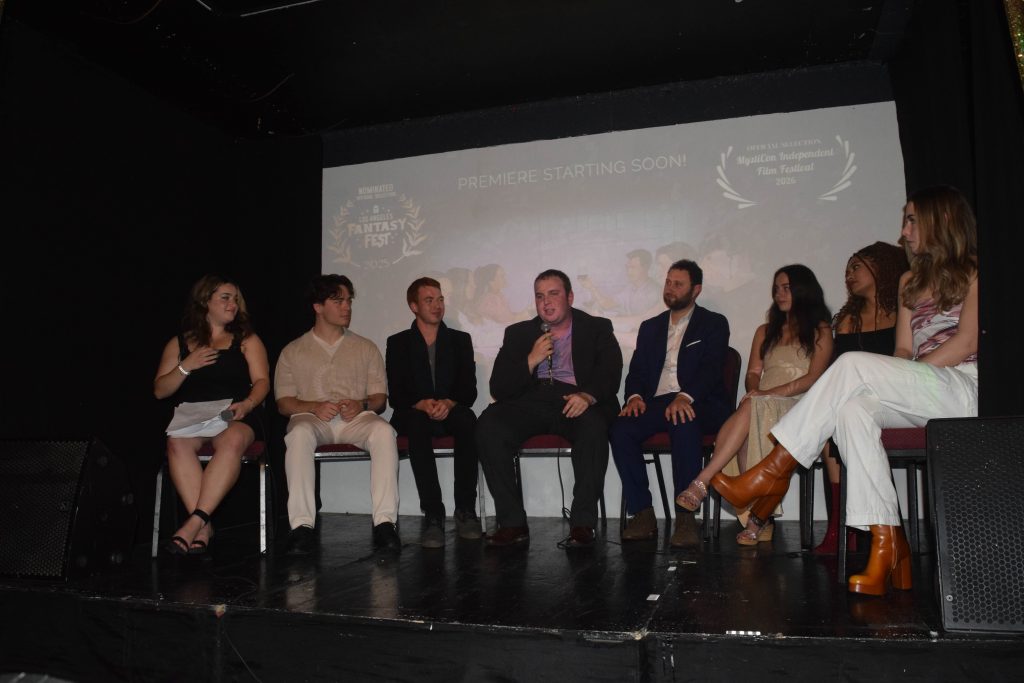
“If AI’s doing the majority of the work, you’re not a filmmaker.” Josh Evoy
Josh passionately defends filmmaking without AI saying, “if AI’s doing the majority of the work, you’re not a filmmaker. A filmmaker creates things out of thin air, uses resources, uses a crew, gets people together… if you can write a prompt and it can show up on your computer in 15 seconds. It takes no effort. You’re not a filmmaker.”
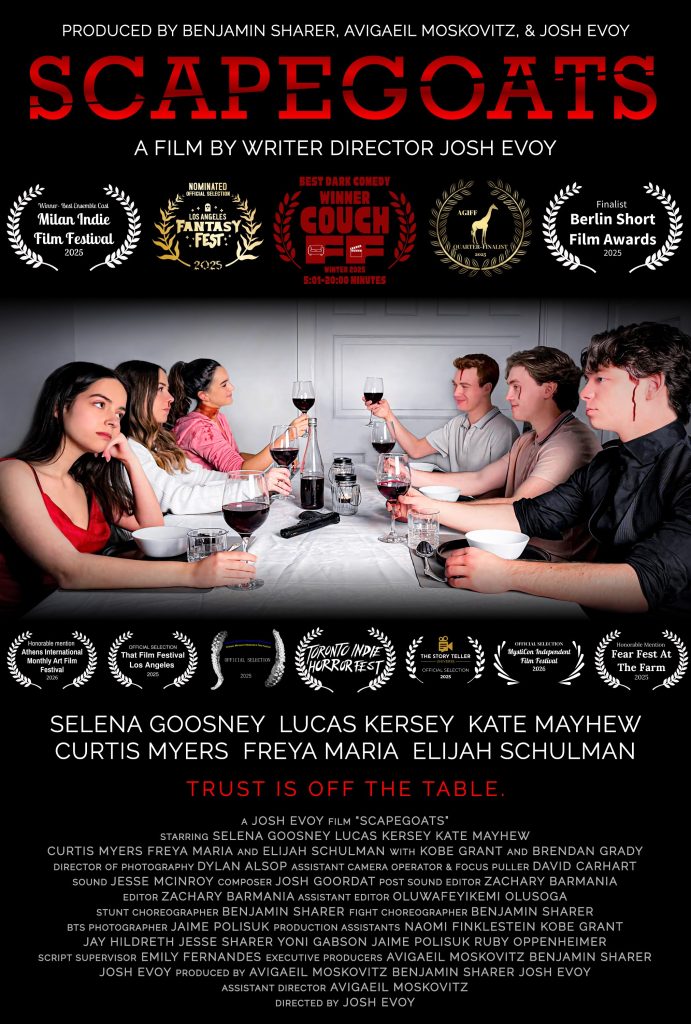
As strong as his anti-AI views are, he does concede that “we will eventually have to adapt to having AI in the landscape, but I don’t think you… should include AI art as art because it’s just a prompt.” As an independent filmmaker, resources are never plentiful for him, so does he see AI as a solution? The short answer is no; he explains that “there are so many ways you can go about lack of funding. There are so many ways you can figure out a problem that aren’t just ‘oh let me cheat.’”
One thing that they can agree on is film education needing an update, Josh left film school and says that he “learnt everything that I needed to by making my own films.” Both see a need for the curriculum to be updated but in different ways, Josh sees the curriculum as “very outdated and flawed because it generally just teaches the basics. It doesn’t teach about film marketing or film distribution properly. You have to learn all that extra stuff on your own.”
What’s clear is that the AI genie has been let of the bottle and there’s no way to put it back. Anyone and everyone can generate (almost) anything they like now. Accessibility to filmmaking should not be reserved for only a chosen few but AI filmmaking makes a career in the arts, already unstable enough, worse for aspiring actors, visual effects artists and more.
However, AI is not some filmmaking genius that can be left to its own devices; without a human helping hand AI would make poorly written and bad looking films. It would be as lost as Tom Hanks in Cast Away but maybe the future is looking slightly more AI generated. Although AI may be inevitable in filmmaking so are future creatives. AI won’t wipe out humanity just yet.