In his workshop in Suffolk, Billy Clarke, 29, is sweltering. His welding job, with its stuffy environment and burning hot metal, has never been a career you would associate with comfort. The uninsulated walls leave the workshop freezing in the winter and hot in the summer, and rogue sparks float past his protective gear, burning the skin underneath.
This, however, is no ordinary year. Since May, a succession of heatwaves across the UK have made the workshop conditions difficult to bear. “You’re in your gear, you’ve got your boots on, thick trousers and overalls, and you’re in your big welding gloves as well. When it’s already 30 degrees and there’s no air movement in the workshop, the workshop’s like 35 degrees.”
“When it’s up at this temperature, you’re doing maybe an hour’s work and then having a little step outside to cool down. You’ve got to. You’ve got to drink a lot of water as well because you’re sweating it out.”

Though the most intense heatwaves appear to have passed, Europe’s summer of fire is far from over. The extreme temperatures seen in the north of the continent across June and July, which saw records broken in across Western Europe and which saw the average summer temperatures in Cairo, Egypt eclipsed by readings in the East of England, have moved south, with Hungary recording a high of 41.8C, surpassing a record set in 1905.
With records like these being routinely broken, and with swathes of European forest from the Cairngorms to Athens smouldering from wildfires following droughts, extreme heat, and low humidity, it is increasingly clear that the summer of 2026 is not just an unusually hot summer. For almost everyone living on the usually-temperate continent, the heat has been shocking, and for some who are elderly or vulnerable due to underlying health conditions, it has been lethal.
In the global north, man-made climate change has often been seen as an intangible but threatening force always on the horizon but, with the UK experiencing its hottest ever June and the worldwide temperature increases set to surpass the 1.5C global warming target set in Paris in 2015, its effects are coming home to roost even on our mild shores.

There is a piece of technology implicated in this crisis that, depending on who you ask, is either a solution or part of the problem. Air conditioning – the mechanical process of cooling indoor spaces by drawing heat out of air pumped from outside and circulating it indoors – has occupied a strange position in Europe’s climate debate. Following a steady flow of mockery from American tourists over sweltering Paris’s lack of air conditioning units, the city’s deputy mayor Audrey Pulvar turned the issue on its head, pointing to the US’s hefty greenhouse gas emissions. “Your cities, which are 90 per cent air conditioned, are not unrelated to this,” she shot back in a statement on Facebook. “So please, enough with the lecture. Start doing your part.”
Meanwhile, commentators both domestic and international joined in with the mockery as planning regulations in some London boroughs forced residents to remove their AC units due to local authority policy that states active cooling methods should only be used as a last resort. “Is this real life?” asked an outraged Sky News Australia host in a segment about the incident, the words ‘Green Agenda Strips UK Of Aircon’ plastered underneath. “They’re going around telling people either before or during a heatwave that to take your air conditioners off your property”.
It is this unusual dynamic between AC’s cooling capabilities and its global warming-driving energy use that has seen the debate around such a straightforward piece of technology descend, at times, into farce. That said, the question of AC adoption is a real and pressing one. Even London, which is recognised as a heat trap owing to its miles of concrete and glass, does not compare with temperatures experienced in Australia or in southern parts of the US but the trajectory of climate change in the world’s fastest warming continent raises questions about whether Europeans are prepared for the new normal, and whether traditional approaches to summer and winter extremes are still viable.
The dynamic between active and passive cooling measures is central to any debate around AC. The former includes air conditioning of all kinds: small, portable units that stand on the floor, the traditional wall-mounted boxes seen in commercial settings as well as affluent homes, and the new technology on the block – low-carbon heat pumps. However the cooling itself works, these are all mechanical methods and require a steady input of energy.
Passive methods, on the other hand, are what many hotter European countries are already well-versed in. Be it the light, thick walls and wooden shutters of Mediterranean homes, or their ever-cool tiled floors, construction methods nearer to the equator inevitably reflect the need to keep heat outside, rather than inside, buildings.

It is these methods that were being prioritised during air con planning disputes in progressive, often rainy, Camden Town. The borough has adopted the London Assembly’s cooling hierarchy plan, legislation that seeks to reduce the need for AC by introducing passive measures first. It calls for developers to “minim[ise] internal heat generation through energy efficient design” as well as reducing the amount of heat entering buildings by considering elements like shading, orientation and insulation.
“London didn’t used to need air conditioning or most buildings didn’t,” says Richard Lowes, Senior Associate and Global Lead for Heat and Buildings at the Regulatory Assistance Project, a global organisation that focuses on energy policy. “But now with climate change, it’s 2 and a half degrees hotter than it was in pre-industrial [times]. Every degree of warming leads to X per cent increase in the need for cooling.”

Although RAP does not have a specific air con policy, Lowes’ perspective offers a middle ground between laissez faire optimism and climate-conscious caution. The ability to cool spaces without mechanical means has, of course, existed for eons, be it the ancient cultures of Sumera and Mesopotamia and their use of thick, mud walls and small windows to keep out the heat, or their modern equivalents in hot countries across the globe. In this context, the idea of adopting AC in every home and workplace might feel like a particularly American proposition, but the reality of the UK’s housing stock – primarily built to keep homes warm in the winter – makes passive cooling complicated.
“You hear about solar shading, planting more trees, putting shutters on windows, closing curtains, but that will only take you so far,” says Steve Molloy, sustainability and commercial solutions manager at Daikin, a Japanese company and the largest Air Conditioning manufacturer in the UK. “The issue we have with newbuild homes is that they are so fabric efficient to try to reduce the heating load that actually they’re overheating. The part about overheating in homes is a massive issue.”
Molloy believes that the insulation and ventilation provided by passive means serve to reduce the load on traditional AC units, rather than replace them. Despite the political football being played over AC adoption, the question of active and passive cooling measures could be less binary than it appears. Environmental experts and air conditioning industry leaders speak of a balance that keeps homes and businesses naturally cool, with the option of mechanical cooling as a contingency.
“If we look at the state of care homes and schools, the amount of fabric there and the massive windows, you need some sort of mechanical cooling as well to support the natural measures,” says Molloy.
Invented in 1902 by Willis Carrier in the US, the story of electronic air conditioning units began as a classic tale of American innovation and, at times, excess. In 1904, when the term ‘air conditioning’ was coined, a huge mechanical refrigeration unit was installed in Missouri State Building for the St Louis Fair, pumping 35,000 cubic feet of air per minute into its 1000-seat auditorium. The early systems installed in America’s public buildings were crude and inefficient, “resulting in hot muggy conditions at upper levels and much colder temperatures at lower levels, where patrons sometimes resorted to wrapping their feet in newspapers to stay warm,” according to U.S. Department of Energy.
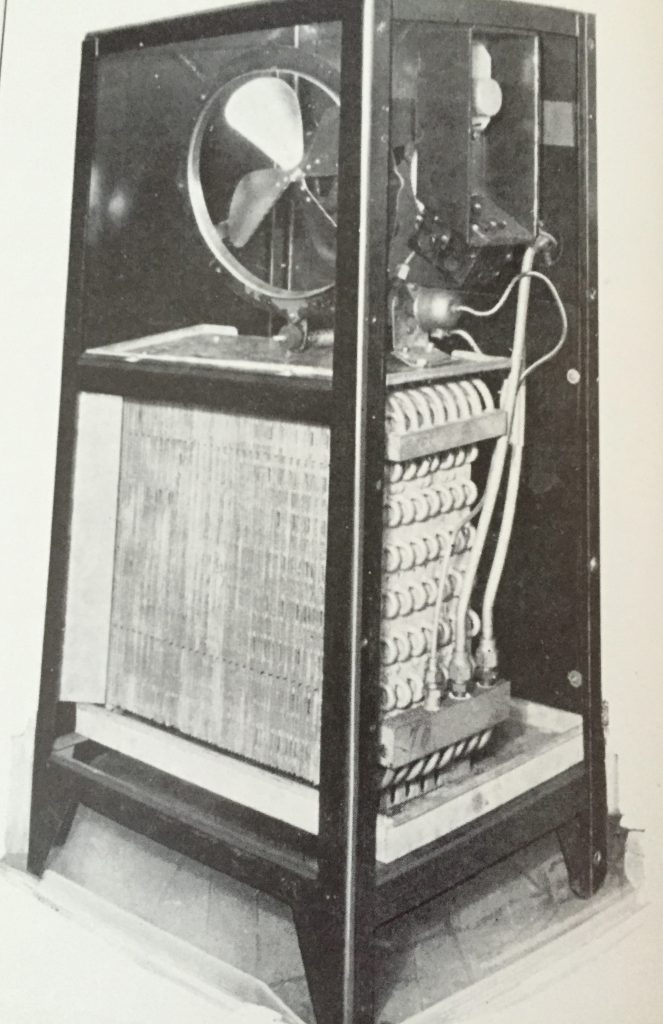
Early iterations of the home air conditioning unit developed in the mid-20th century mirror those available today. The core component, and historically the most environmentally damaging, is an air conditioner’s refrigerant – a substance that can transfer heat and changes shape in response to changes in temperature and pressure. This substance transfers between the indoor and outdoor elements of an AC system: in the inside unit, warm air passes over a coil filled with the cold refrigerant, drawing out its heat to be blown back into the building as cold air. The refrigerant is compressed as it rises in temperature, allowing it to travel as a hot gas to the outdoor AC unit. Here, the process repeats but in reverse: outdoor air is passed over the hot refrigerant, releasing the heat outside and allowing the refrigerant to return to its starting position as a cool liquid. The outdoor and indoor air do not mix.
The popularly held concern about AC’s environmental impact appears to focus more on its energy use than the sustainability of its materials. “There are emissions to save, like we haven’t got a perfectly clean grid in the UK. When you use [appliances], typically a gas power station is running to power some of it,” Lowes says. Widespread adoption, it could be argued, could create demand for extra capacity on an energy grid that is not yet fully decarbonised.
That said, Lowes believes the UK’s net-zero efforts are paving the way for more green capacity: “The total emissions from the grid, which has remained relatively stable in terms of use, have gone from 222 megatons to 63, so it’s like it’s 1/4 of the emissions it was 20 years ago. Wind and solar are just absolutely smashing at these days.”
In their modern form, the appliances themselves vary in efficiency. Cheap, floor-standing units commonly imported from Asia are relatively inefficient, although they have a far lower upfront cost. Wall mounted units, often known as ductless air conditioning, are more efficient, moving up to 6 units of heat for every 1 unit of energy put in among newer, more expensive models, according to Lowes and Molloy.
Regardless of their efficiency, common sense indicates that installing large appliances like AC units necessarily impact the environment through their manufacturing processes and the sourcing of their core materials. Starting in the 1940s, AC refrigerants were typically made using CFCs, or Chlorofluorocarbons, although these were eventually phased out of use after they were linked to ozone layer depletion in the late 1980s.
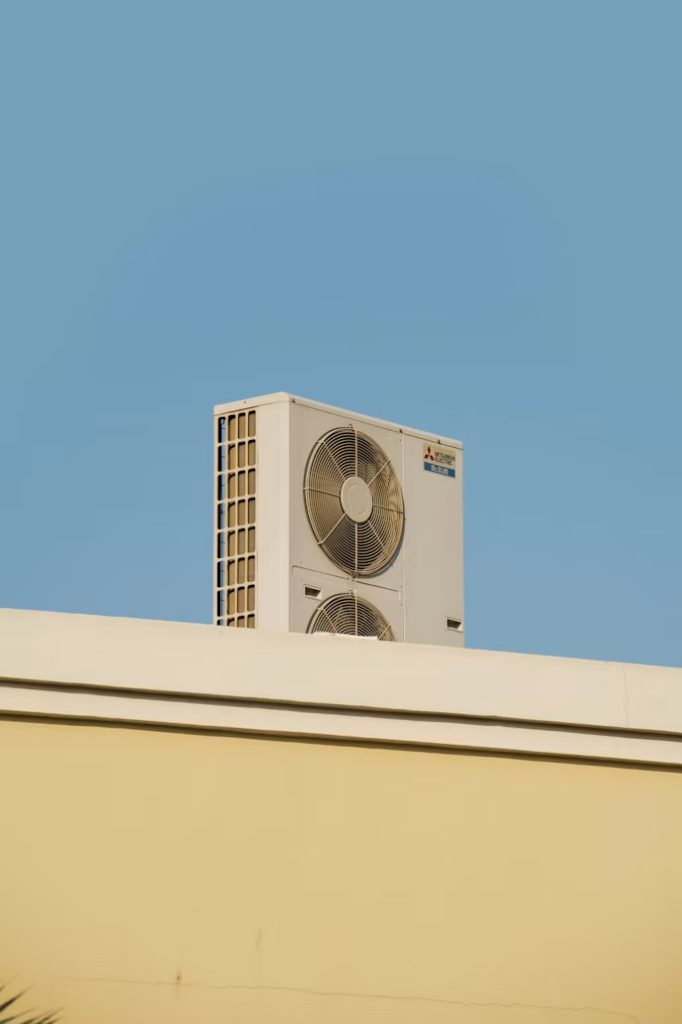
Today, this dynamic depends on where you are in the world as much as it does on individual companies. R-290, or propane, which is typically used in the UK and EU, has a GWP (global warming potential) of 3, meaning it is three times worse for the environment than the baseline of CO2 if released into the atmosphere. R-410A, on the other hand, is commonly used in the U.S. and Middle Eastern markets and has a GWP of 2088.
“[With the de-carbonisation of the grid] there’s a big shift from looking at operational carbon to looking at embodied carbon,” says Molloy. “Companies want to be able to look at their building and know how much carbon went into it… What we’re finding is that clients, whether they be domestic or commercial, are eco-savvy and are wanting to know what’s the makeup of these products. There’s no getting out of it – the only way for companies to hit their net-zero ambitions is reduce all scopes.”
Daikin, Molloy says, is an industry leader in tracking embodied carbon, and their commitment to material passports – documents that allow sustainability engineers to track carbon emissions across the whole supply chain – is an increasingly important factor for its clients. However, common sense indicates that installing large appliances made of metal, plastic and electronic equipment necessarily results in environmental damage.
“Most of the actual components are made in Asia,” says Lowes. “Typically, what’s happened in the UK market is that the components have been imported from wherever’s cheapest and then they’ve basically been put together in the EU.”
In this sense, opting for long-lasting, multi-use technology may help reduce the amount of materials going into homes and businesses even as active cooling is more widely adopted. The AC industry has an answer to this problem in the form of a relative newcomer – the heat pump. In northern Europe, these are known more for their heating capabilities than their ability to cool, but the technology rests on the same concept as ductless air conditioning. Air to water heat pumps, currently the most common in the UK, reverse the AC process by extracting heat from the outside and using it to warm the ‘wet’ central heating – the radiators and pipes typically installed in UK homes.
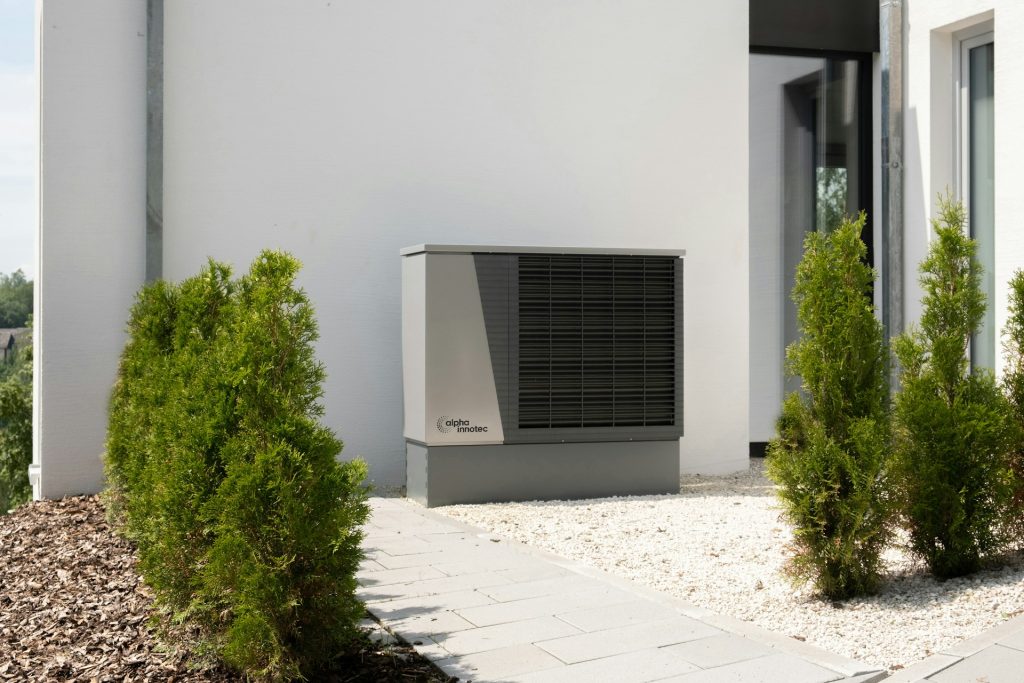
The recent innovation in the industry has been to do away with the wet element entirely in what is called reversible ‘air to air’ heat pumps. These allow the refrigerant to flow in either direction depending on whether the system is set to heat or cool, allowing the internal units to blow both hot and cold air. “The market is innovating around the typical UK or European house that wants heating and cooling,” Lowes says. The advantages of such an innovation are clear in terms of its material costs. The UK, which increasingly needs experiences both kinds of weather extremes, could benefit from the adoption of a unit which addresses them both while taking up less space and requiring fewer materials than wet central heating or traditional AC.
Back in Bill Clarke’s workshop, the heat is more oppressive than in any office space or even the stuffiest of residential flats, but, unlike these spaces, the idea of active cooling feels like a faraway dream: “They’re very expensive units. And then you need to insulate your whole building as well for wastage. If you’ve still got a tin-lined shed and you’re cooling it [with AC], it’s still going to get hot. It’s leaking money out into the atmosphere.”
When discussing AC proper – fully-fledged systems installed into buildings, be it heat pumps or otherwise – the crux of the matter is their upfront, rather than running, costs. These costs vary widely based on the number of rooms connected, the building stock, and the cost of labour, but air source systems (including air to water and air to air) typically cost between £8000 – £15,000, and larger, commercial systems can cost tens of thousands to install. While it is difficult to estimate the capital costs for any given building or space, Billy is certain that, for the company he works at, AC is a bridge too far: “[At the place I work] there’s only three employees. It’s only a small firm. For the actual cost of putting in air con, it’s not really worth it.”
The dramatic heatwaves of summer 2026 have led to some UK industry leaders and NGOs to call on government to protect workers from adverse conditions. The Trades Union Congress published a petition to create a legally enforceable maximum workplace temperature which has so far been signed by 68,000 people, joining calls from other public bodies and figures including Hannah Spencer, recently elected Green MP for Gorton and Denton. The UK currently has a minimum workplace temperature at 16C, but there is no statutory maximum temperature.
While the TUC calls on companies to act above 24C, and others have called for maximum temperatures between 24 and 30C, Spencer’s proposal advocates a by-sector approach, where a national body would be set up to decide maximum temperatures for different industries. Given the variation in workplace and scale across different industries, the question of safe working conditions is unlikely to be as simple as mandating a single temperature limit across the country.
“If [the max] is 28 degrees, now it’s getting hotter pretty much all summer, there’d never be any work done outside, let alone in a workshop,” says Billy. “I’m one welder in a workshop on my own, when you get ten people in a workshop the heat rises just because of the amount of bodies. If they did implement that, and all these small companies needed to fit air con, you’d end up shutting a lot of companies, I think.”
On the other side of the affordability question, though, is the cost of inaction. A 2024 study by European thinktank CEPR analysed the effects of rising temperatures on labour productivity, finding that, “as temperatures rise, the cognitive and physical capacity of workers decrease, and extreme temperatures can also increase absenteeism due to heightened health issues and transport disruptions.” This dynamic is especially severe for small and medium sized businesses which may not have the resources to easily adapt. The consequences of these effects in a UK economy which is already struggling with low worker productivity will make difficult reading for those in Westminster, whose agenda is already taken up by more tangible consequences like droughts and wildfires.
Another UK-based thinktank, Verdant, has estimated that the four heatwaves experienced by the UK in 2026 so far have cost the economy £4.4 billion in lost output. This projection is based on UK met office statistics, the gross hours and gross value added in different areas, and a research from insurance firm Allianz that indicates European economies “see a 3% fall in output per hour for every degree Celsius above 30C.”
“[AC] does make a big difference,” Verdant co-founder and co-author of the report, Dr James Meadway, told Novara Media. “If you’re doing outdoor work or working in construction or picking fruits, the effect is very immediate and physical. The second one is more subtle: if you’re in an office and it’s hot, it’s harder to think.”
“Particularly, it starts to matter when you have these tropical nights – nights over 20C – where you’re in an air-conditioned office but then you come home and it’s baking hot and you can’t sleep. You go in the next day and [your office] is air conditioned but you have not had good sleep and you can’t work as well.”
Mechanisms to alleviate this problem are already under consideration in the UK. The Health and Safety Executive announced it will hold a public consultation later this year that may include new guidance on workplace temperatures, and the government’s boiler upgrade scheme gives residential customers significant grants to replace fossil fuel boilers with heat pumps. These include a £7500 grant for air to water heat pumps, but only £2500 towards the air to air models which might finally offer a combined solution to the UK’s unique heating and cooling needs. To make sure these changes arrive on time and prevent further damage to the economy and people’s health, we might, says Lowes, need to get over our very British suspicion around air conditioning:
“There’s something very stiff upper lip about just grinning and bearing it when you can’t sleep. That’s a bit weird to me, and especially when the emissions that we have from heating are so much higher than what’s ever going to come from cooling in the UK.”