Davie Westwood was a marine engineer at Oceaneering International, Inc. for 20 years, he’s also the uncle who would disappear for months doing stints on oil rigs across the world. He’d come back with crazy stories that he would share over dinner that always left my siblings and I wanting to know more.
On grandpa’s 80th birthday, he told us how he’d passed his offshore health and safety training. He explained how he was put in a large shipping container which was then turned upside down, filled with water and set on fire. To pass the training he had to get out his seat, break a window, and swim to the top of a vat of water in a warehouse in Aberdeen. My siblings and I, all under the age of 15, were in awe of the uncle who arrived in his limited-edition Ford Mustang Bullitt and filled the room with booming tales of life offshore. But a lot has changed in the oil industry over the past five years, particularly in the North Sea.
I arranged to meet Uncle Davie at my grandpa’s house in Fauldhouse, West Lothian where he and his siblings shared a room until my mum moved out at 17. Initially, we speak about his trips around the globe, to Angola, Australia, and finally to the North Sea.
He explained “I’d get off a flight in Angola, and I’d be put on a ghost shift. I’d have a ten-minute handover with the guy I was replacing then I’d be up for 36 hours straight.” He would slip $10 into his passport to get through airport security, a trick he learned over the course of his offshore career. On one of his trips, a first-time American coming offshore didn’t bother to follow suit. Using a two-pronged grabber, Davie mimics a security guard in Angola’s airport cocking a gun and pointing it toward the American who had failed to pay the toll.
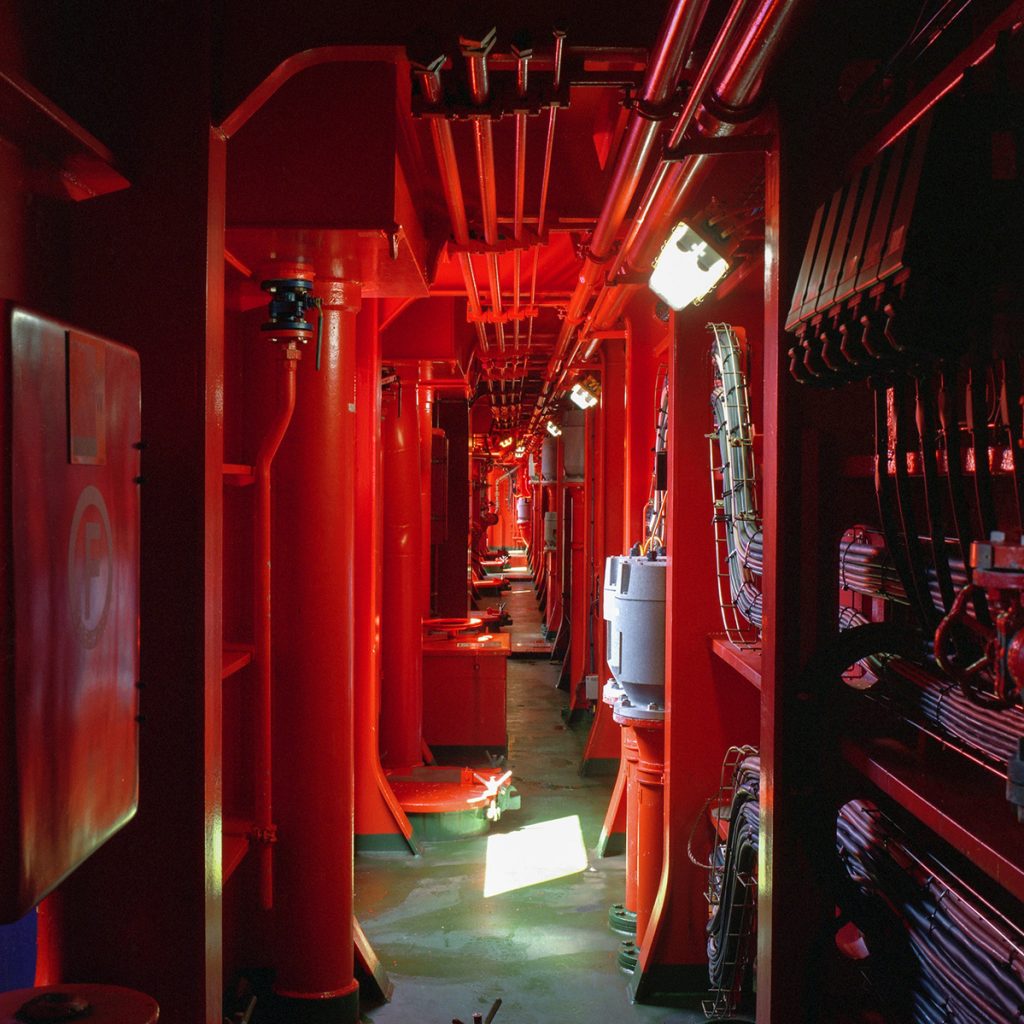
Despite these tales, Davie firmly believes that of all the rigs he’s worked on – the North Sea rigs are the most regimented and the toughest. On the older rigs in the North Sea, you joined a long-established culture. There’s offshore lingo that the guys use; “Most of it is abbreviations for technical processes, but it can take years to learn.” Davie continues explaining that the pressure caused rifts and it got to some of the guys. Being at sea without much communication with loved ones was hard. He says, “I got a call from one of the higher-ups asking me to come down to the pipelines to give him a hand, one of the guys had lost it, he was curled up under one of the cafeteria tables in the foetal position – shaking.”
When we discuss what it was like sharing four-bed bunks at sea for weeks at a time, where placards hung above the beds which read ‘built in 1964’, Davie says that it was routine that kept his mind occupied. He would wake up, eat breakfast, get on with his job for eight hours, then get back to his bunk handing over to the guy in the bunk above him who would take the night shift.
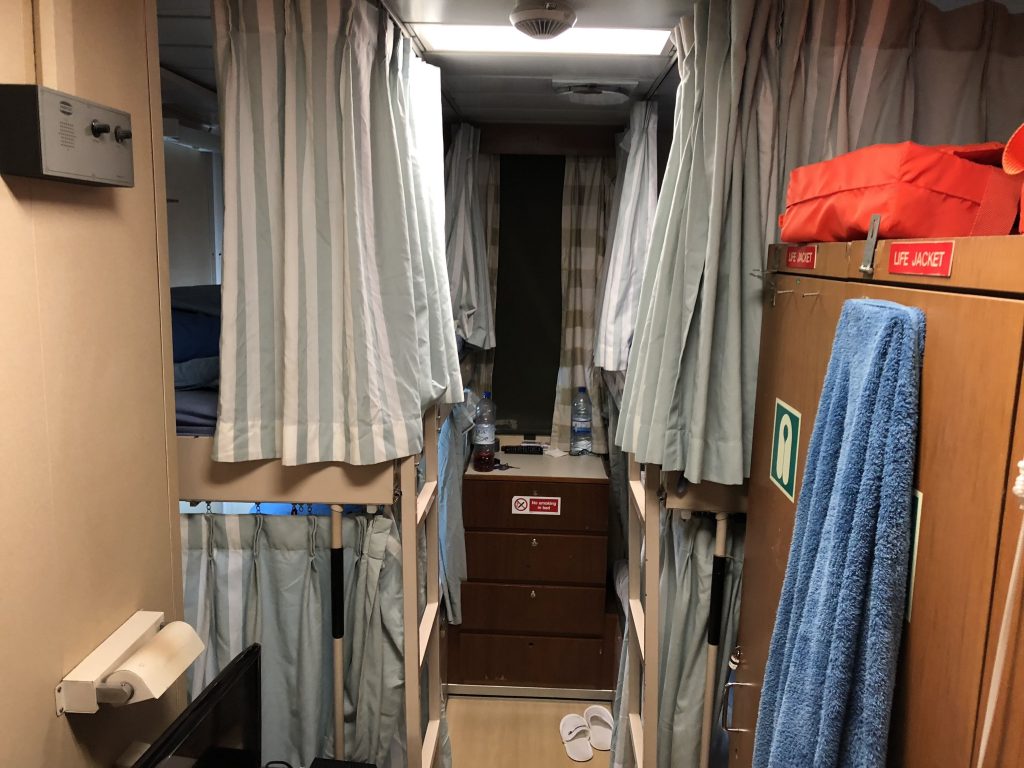
Davie saw three younger guys over the space of a few months walk-off jobs in the North Sea because they found out they wouldn’t have access to their phones until they got back onshore. He always worked to a timeline, if the job had to be finished by Thursday, he’d get it done by Wednesday. When the guys got back onshore, they would usually go to the pub. It was when they were ashore, they could make their emotions felt.
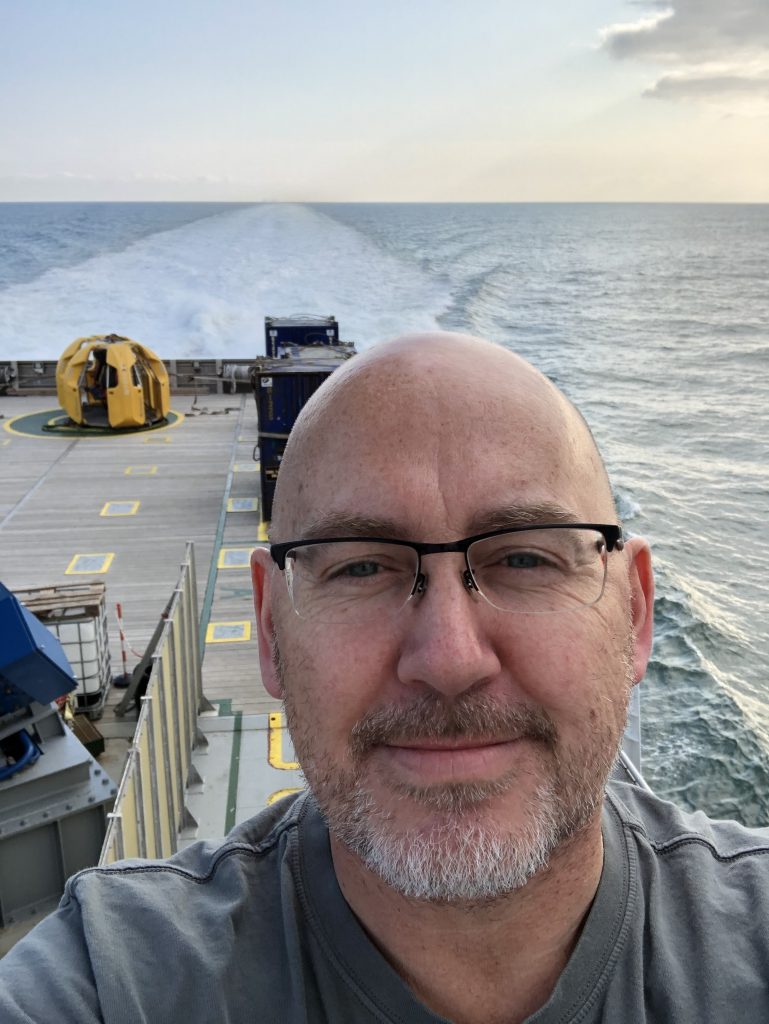
As I interview him, Davie looks like quite a large man in the 1960’s kitchen decorated by my grandmother. The roughcast semi-detached ex-council house sits in front of a field that was once acres of fir trees which has now been disrupted by 15 wind turbines, each standing at 400 feet tall. Are we looking at the future? After Davie had reminisced, I asked him if he knew the decline in the oil industry was coming, he responded in a disappointed tone; “We all knew it couldn’t last forever.”
Amidst the growing climate crisis, we are reflecting on how we have done things before and what the future of energy looks like. Professor Paul de Leeuw spent his career working for oil mammoths like Shell and BP but now works as the Director of Robert Gordon University’s Energy Transition Institute. He said, commenting on the future of oil and gas, “There are some jobs which will simply not exist in any future world.”
In 2019 the oil and gas industry supported 260,000 jobs in the UK, over the past five years 127,000 of those jobs have been lost. Leaving Aberdeen, a ghost of its former wealthy self. Businesses, shops, and wealthy expats have fled, leaving a vacant city with a rich history.
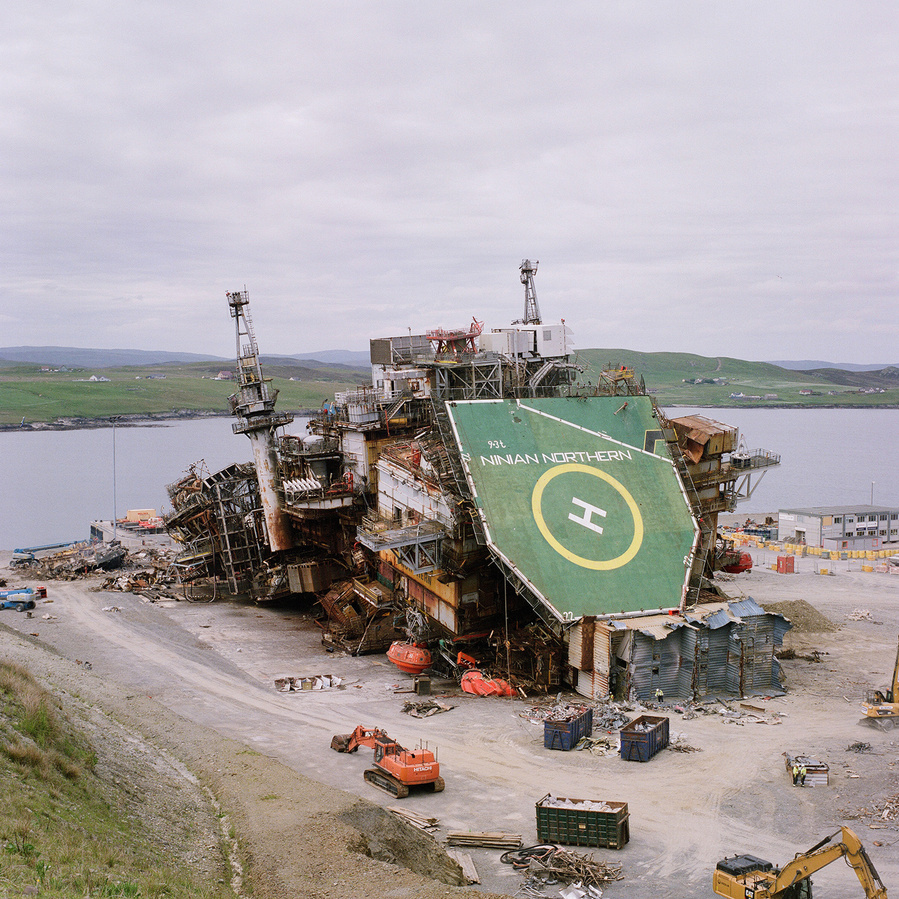
In July this year, amidst Labour’s landslide majority win in the general election, Keir Starmer doubled down on their pledge to reject new oil and gas licenses in the North Sea. Starmer was reinforcing aims, as agreed with the UN to reduce emissions by 45 per cent by 2030. The North Sea Transition Authority predicts that decommissioning spending is expected to grow by around £24 billion between 2023 and 2032, a £3 billion increase from the forecast from 2022. With no new wells being drilled and increasing decommissioning over the UK, where wells that have been drained are being filled with cement, we are a nation who are full steam ahead for renewables, despite our significant dependence on oil.
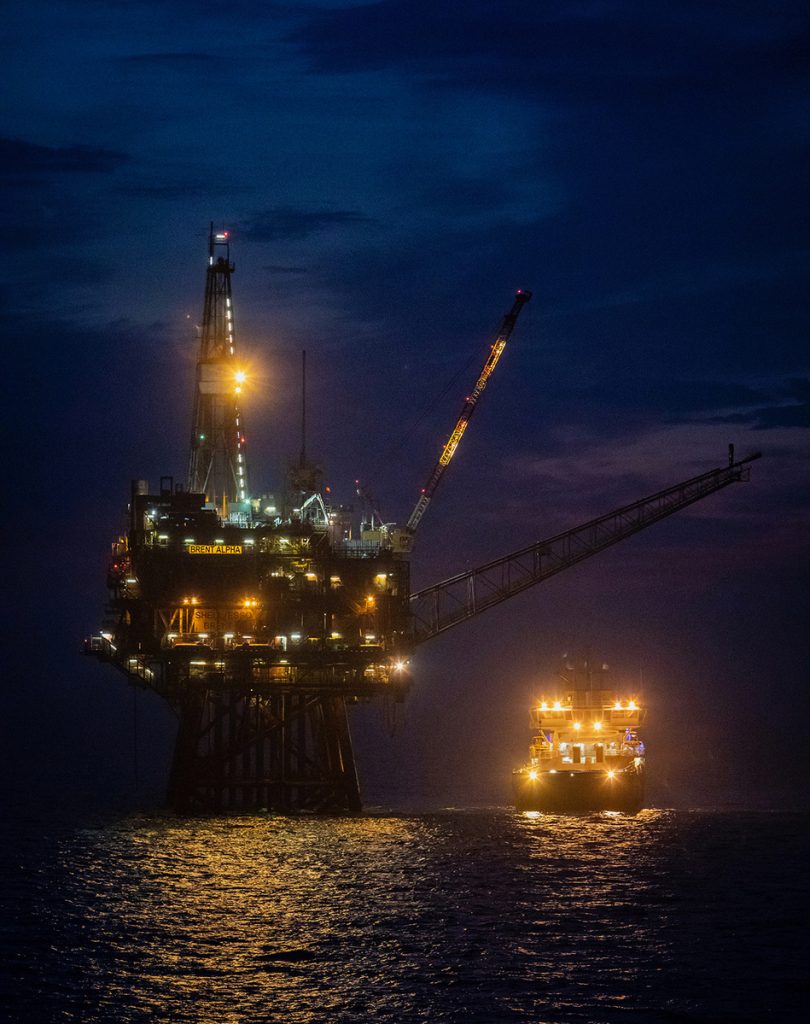
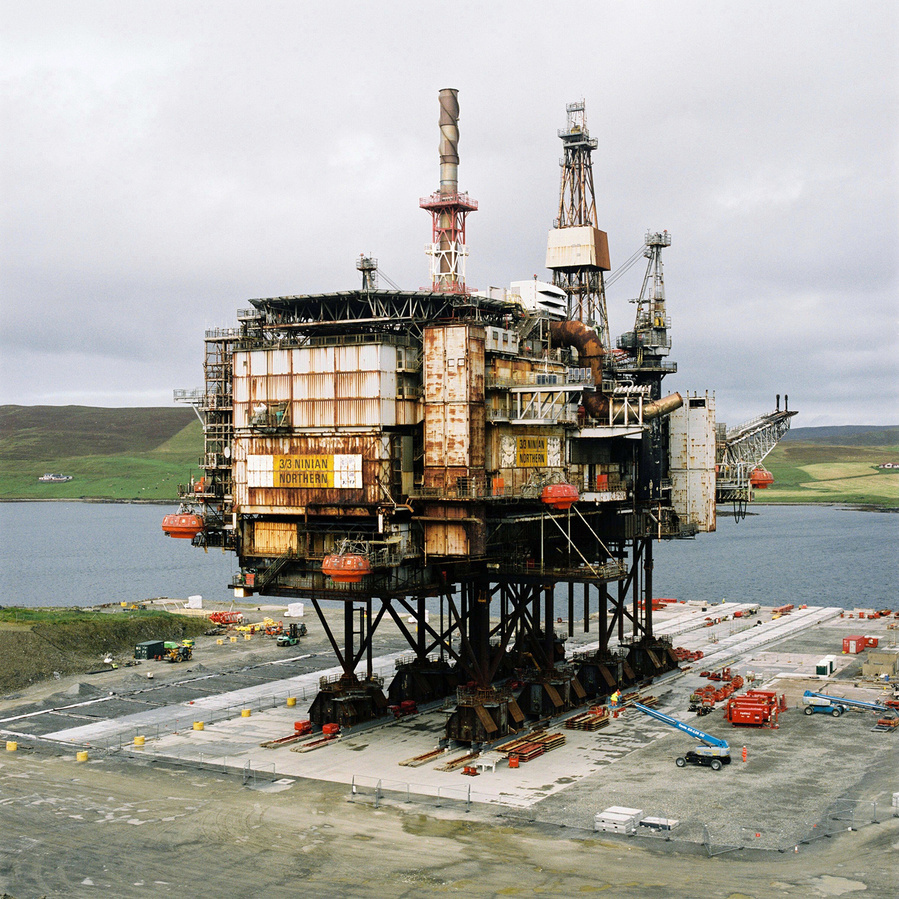
Peter Iain Campbell, a Scottish photographer got a job in catering on oil rigs just to have a chance to photograph the oil rigs. In the heat of summer in 2019, he spent 26 hours travelling North off the coast of Aberdeen to get to Brent Field, one of the oldest rigs in the North Sea. Travelling thousands of miles as part of a pack of mechanics, engineers, and drivers in the dead of night they began to approach the rig. Campbell looked ahead to see four platforms with flaming gas flares towering above them, illuminated among fields of blue.
The rig is powered by a skilled group of individuals who commit weeks of their lives, working day and night, to life at sea. Campbell refers to the drilling deck in dark winter nights as something from Star Trek Enterprise. He explains; “There would be a driller in his doghouse, like it was the captain’s seat, moving the joystick around controlling gigantic, columns of machinery and casing that were moving around on the drill floor. There would be other guys covered in oil moving large bits of machinery around.”
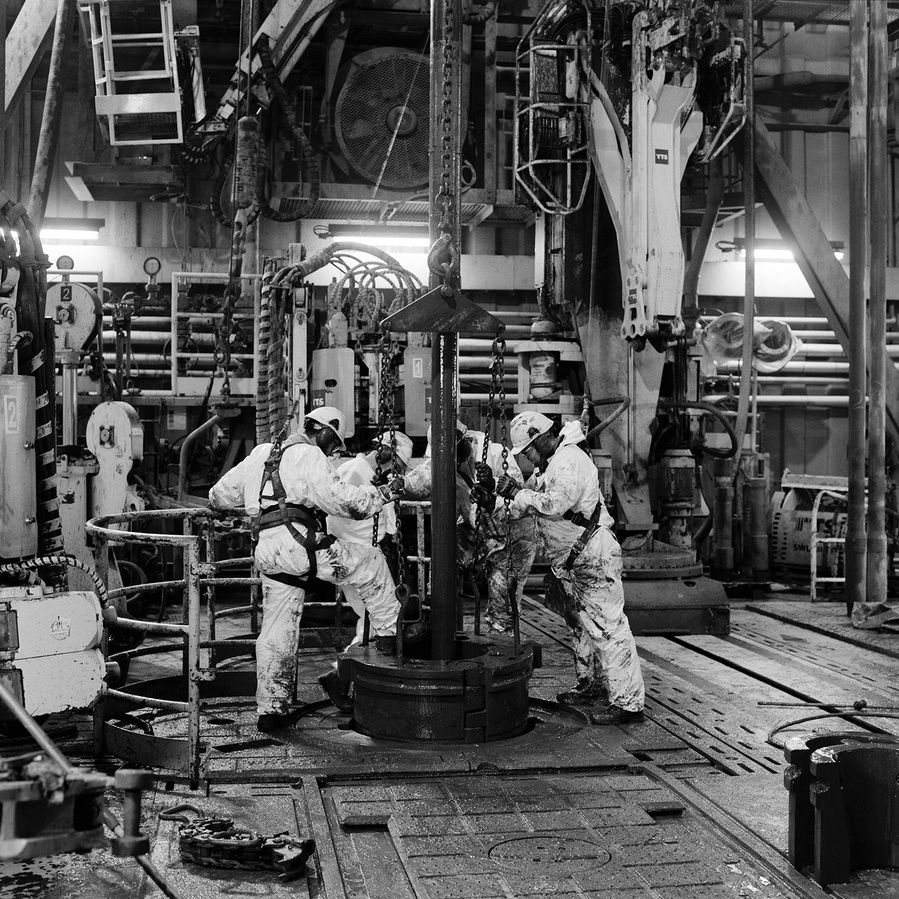
In August 2019, Oceaneering a subsea engineering company based in Texas with offices across the world announced the closure of seven of their properties around the Port of Rosyth, a small town two hours’ drive from Aberdeen with easy access to the North Sea.
Davie says, “They planned to build a single-purpose workshop and yard that supposedly did what the seven workplaces were doing.” Steven Cowie, Oceaneering’s UK country manager told Energy Voice that an incentive for consolidating the workspaces was to “reduce overall carbon footprint.”
Davie explains that in early 2020 as Covid-19 spread, they furloughed 16 of the 20 people in his department. After realising that the remaining four staff could manage the department themselves, Oceaneering recognised the potential to “restructure” the workforce.
“We have done this before, right? It’s not the first energy transition as a nation we have done.”
In May 2020, the company saw massive losses compared to the same period the year before. The Courier reported that they saw their “pre-tax losses at $397.8m (£313.7m), more than 13 times the $27.9m (£22m) deficit in the same period last year.” In June of that year, Oceaneering confirmed they were beginning redundancy consultations with over 300 staff over the UK. As part of those redundancies, they announced 15-20 staff originally based in Rosyth were to be made redundant and 50 in Aberdeen.
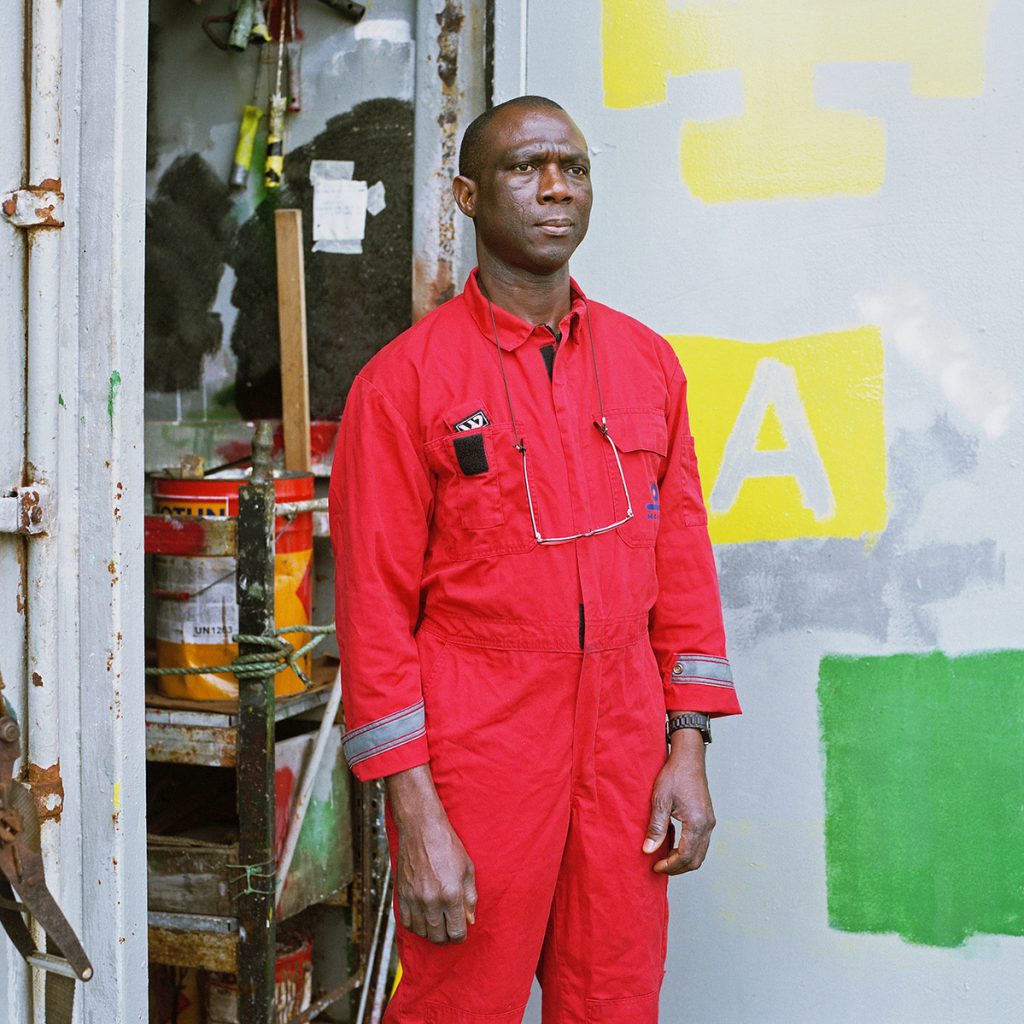
Davie said they told him it wasn’t economically viable to move people between the original workshops in Rosyth to Aberdeen, so they had to make redundancies. But after they announced the round of redundancies in June 2020, 20 vacancies appeared at the same workshop in Rosyth just before the new Aberdeen office opened. Davie says, “They weren’t the same jobs, of course, because that would be constructive dismissal.” But he says, “They wanted the same 20 guys, but they wanted to pay us around 40 per cent less of our existing wage.”
Soon after redundancies were announced Davie was invited for an interview at Oceaneering. The interviewers looked over the skills-based questions and looked at Davie. He says they must have acknowledged how half-witted it was to ask him “what he could bring to the role” that Davie had written the terms of reference for earlier that year. But what could they do – it was due process.
After making it clear he wouldn’t work for less than his current wage, Davie says the HR manager took great pleasure in telling him he hadn’t been successful. Aged 47 at the height of a global pandemic, Davie was made redundant. Two weeks later he found a job working in Amazon’s packaging warehouse, making minimum wage. Over the next year, he auctioned off what he referred to as his “toys”, a Harley Davis motorbike, a Ford Mustang Bullitt – and a vintage Land Rover that he had acquired over his time working in oil.
We are transitioning from one energy industry to another, again. De Leeuw reminds us “We have done this before, right? It’s not the first energy transition as a nation we have done.” De Leeuw acknowledges the closures of the mines across the UK over the 80s.
Growing up through the 80s and the closure of the mines, Davie saw the miners’ catchphrase “close a mine, kill a community” painted on rags, plastered across train stations and bookies. My grandpa, William Westwood, tells stories of a vibrant mining community that gave purpose to both social and working life that he says is “somehow forgotten these days.” The loss of the mining industry across Scotland left men of all ages out of work. It also led to a loss of indirect jobs and community ties. The village Davie grew up in has since fallen into poverty, and much like the rest of West Lothian has fallen into stasis. A report from April this year by Sheffield Hallam University found that in the former coalfield areas, “the population is older and ageing. Ill health is widespread. So too is deprivation.”
However, de Leeuw says the difference between our transition to renewables is that we knew this was coming. The oil sector has been in a long-term decline, our production has fallen by 70 per cent since 2000. A decline that has left Aberdeen, Scotland’s oil capital, taking a big hit. De Leeuw explains that although we foresaw the industry’s demise with oil reserves depleting over the years, the pandemic and the climate crisis are among a shortlist of global threats that have exacerbated the period of oil production decline in the UK.
Caroline Wilson has lived in Aberdeen for over 40 years. As an Aberdonian who worked in oil for over two decades, she says that Aberdeen has lost more than its expat community. Wilson says, “the amount of to let signs is unquantifiable, the bigger houses that were once occupied by Americans now lie empty.” Wilson worked in a chemical company affiliated to the rigs. She says, “I saw the rise and fall, dozens of times, people didn’t seem to think it had a shelf life.”

Over the early 2000s when oil money was rife in Aberdeen house prices skyrocketed, until 2015 when the decline in oil in the North Sea became more evident and people started leaving.
Wilson refers to the high tide of oil excavation in the North Sea as the “golden era.” She says, “I can’t imagine the money that was wasted, it was all about who could take you to the best place for dinner”, she likens it to London bankers. Wilson explains how noticeable the wealth became in the 80s up until the 2000s. She lists the commodities that would tell you someone was ‘in the oil’, “it was big cars, it was big houses and personalised number plates.” In December 2019, pre-Covid-19, the average wage was £2,500 a month in Aberdeen, making it the wealthiest region in the UK.
Between February 2020 and February 2021, the number of people claiming unemployment-related benefits doubled – an increase of almost 8,500 people – Aberdeen was rapidly changing during the pandemic and is almost unrecognisable since experiencing the collateral effects of Russia invading Ukraine.
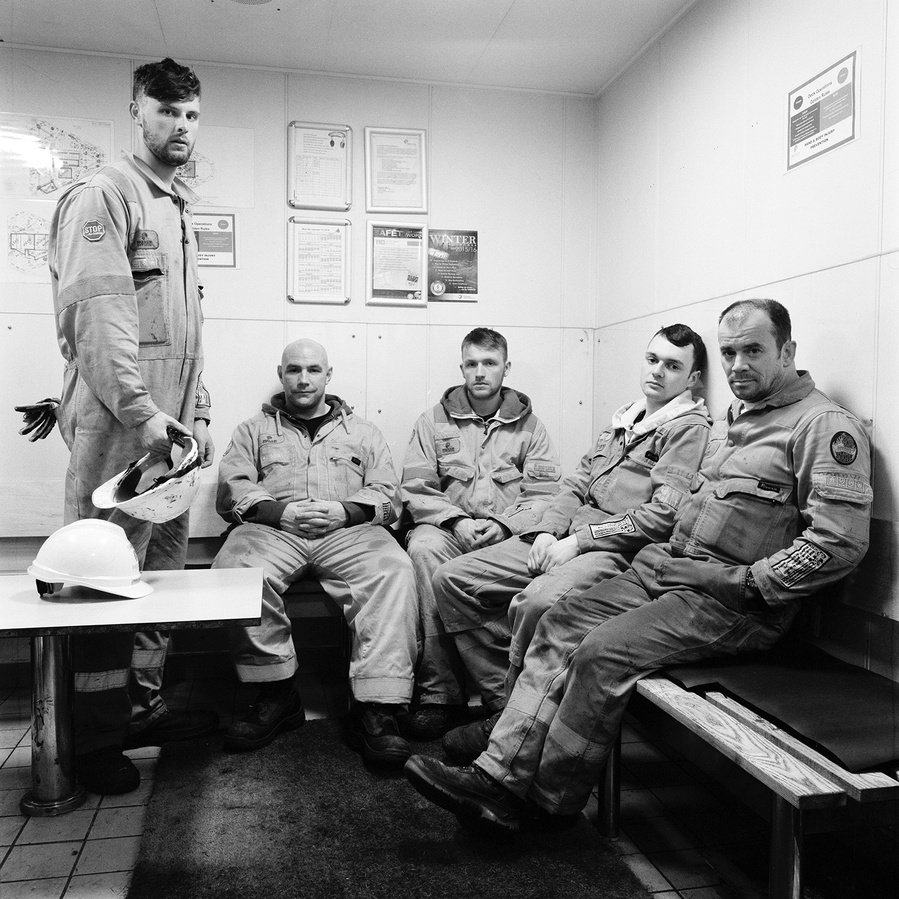
In 2021, 30 per cent of retail jobs were axed in Aberdeen, while the national average stood at 6 per cent. Businesses in Aberdeen have all downsized; huge office buildings now lie empty with some even being demolished, leaving gap sites with no sign of incoming cranes. Earlier this year, against the wishes of local architects and heritage campaigners, Shell demolished their former HQ in Aberdeen. Decades of conversations behind closed doors and 30 years of greenwashing accusations were bulldozed, leaving nothing but a gap site.
Wilson continues listing the losses Aberdeen has experienced since the oil money left, it’s clear the conversation is ongoing; “They built a new port to bring people here from cruises, which is laughable, there’s nothing to come here for.”
However, de Leeuw breathes new hope for the north-east of Scotland. He explains that we have a cluster of capacity and capability sitting in the north-east column – particularly in Aberdeen – he says, “It doesn’t exist anywhere else in Europe, furthermore it doesn’t exist anywhere else in the UK.” 90 per cent of the oil and gas workforce possess the necessary transferable skills for the renewables industry.
De Leeuw says that “ScotWind had a licensing round with the Scottish Government where they licensed 28 gigawatts of wind, 70 per cent within 100 nautical miles of Aberdeen”, proving that there is enough wind in the north-east to make investment in wind renewables there viable.
We are in a time crunch to find the “Goldilocks zone” in the UK, where we are striving to get just the right mixture of renewables, oil drilling and importation.
Westminster has published countless reports outlining how our renewables transition is poised to provide the activity for the swathes of qualified oil and gas workers in the UK. Currently 150,000 work in offshore energy, including renewables, but 120,000 of those work in oil and gas. It’s projected that of those 120,000 jobs in the offshore oil workforce 30,000 to 60,000 could be lost by 2030 if the transition to renewables isn’t properly managed.
As we transition to renewables, 80 per cent of the offshore workforce who are currently working in oil are poised with skills to meet the demand for renewables in the UK. De Leeuw says “There’s a huge amount of capability and capacity sitting in that workforce.” If we lose this workforce that’s been built over the past 40 years, then we will lose a large capacity who are prised to build our future in renewables. De Leeuw says, “If you lose it, you have to rebuild it. You don’t build clusters easily, and so it’s critical that we think about efficiently redeploying that capacity and capability.”
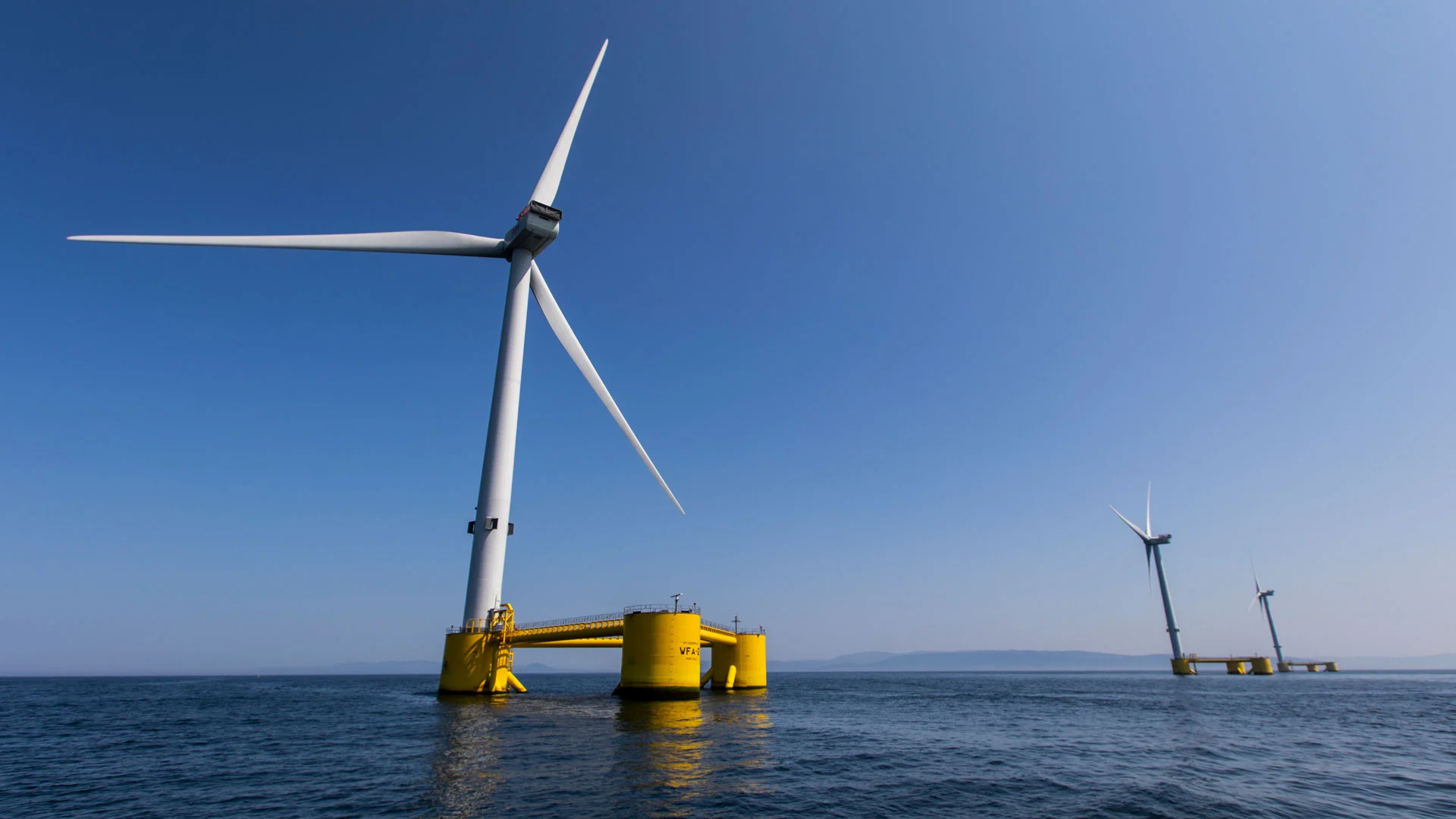
However, de Leeuw says there’s currently a “dislocation” in the system. He says, “The renewables industry is not ready yet, there’s not enough investment, there’s not enough activity. So, we see quite a lot of transferability where people can’t transfer yet because the activity doesn’t exist.”
De Leeuw says “We expect that a lot of people will either go to similar jobs overseas or retire.” The average employee working in offshore oil is 44 years old, this means that there’s a portion of the workforce that will be heading into retirement right as we get to 2030, the same year the UK Government committed to quadruple offshore wind activity. There is a moment in time to profit from this expertise. A workforce who has the skills to create the renewables system the UK envisions – but they have to act fast – or they threaten to lose a highly skilled set of experts who can build the future of our energy security.
“When you lose your natural resources you lose your independence.”
Davie Westwood
Another downfall of our slow move to renewables has been our overarching dependency on other countries for oil. De Leeuw explains that we are in a time crunch to find the “Goldilocks zone” in the UK, where we are striving to get the right mixture of renewables, oil drilling and importation.
We are the world leaders in offshore wind power, but we are leaders of a very small portion of the energy sector. Since 2021 our dependency on imported oil grew whilst production in the UK fell. Although renewables were able to provide 20 per cent of the UK’s total primary energy needs in 2021, this meant that three-quarters of the production was still dependent on oil and gas.
The latest 2024 data from the Department of Energy Security & Net Zero found that energy production fell by 8.9 per cent from the same period last year – our electricity imports reached a new high of 11.2 per cent, and our “UK net import dependency was 44.4 per cent for the quarter up 1.2 percentage points on last year.” When we discuss the increasing dependency the UK has on oil importation, Davie says “When you lose your natural resources you lose your independence.” The UK has had to import a third of its energy this year.
A 2021 report by OGUK said the Climate Change Committee found that “half of the UK’s energy requirements between now and 2050 will still be met by oil and gas.” Can the new government turn those odds around? De Leeuw explains that to turn the ship around we need coordinated action and coordinated activities, his recent research found that the UK offshore energy sector will need £200 Billion this decade to deliver the transition promised over this decade. He says to meet these goals, “We probably need to build 1.3 wind turbines every single day for the next decade. And install 1.2 wind turbines every day and we’re not doing that.”
We discuss if Scotland will have as big a slice of the energy pie as it once did. De Leeuw explains that the future of energy is far more localized, but the workforce will be transient. They will have to be prepared to move around the UK to build “carbon capture facilities or storage facilities, building hydrogen, building infrastructure and grid, building wind farms.”
De Leeuw leaves me by saying “This is the big challenge for the UK. Can we create it? Yes, we can. But we need a huge amount of activity.” Although, de Leeuw refers to the physical activity of building renewables – we need to see activity in government to secure our renewable future.