Sarah Galloway made the fight against sectarianism her life’s work. Scotland’s secret shame always lurks under the surface, and timely reappears in the aftermath of the country’s fiercest football derby, the Old Firm. Now her mission is to break the cycle, and help shaping a more tolerant new generation.
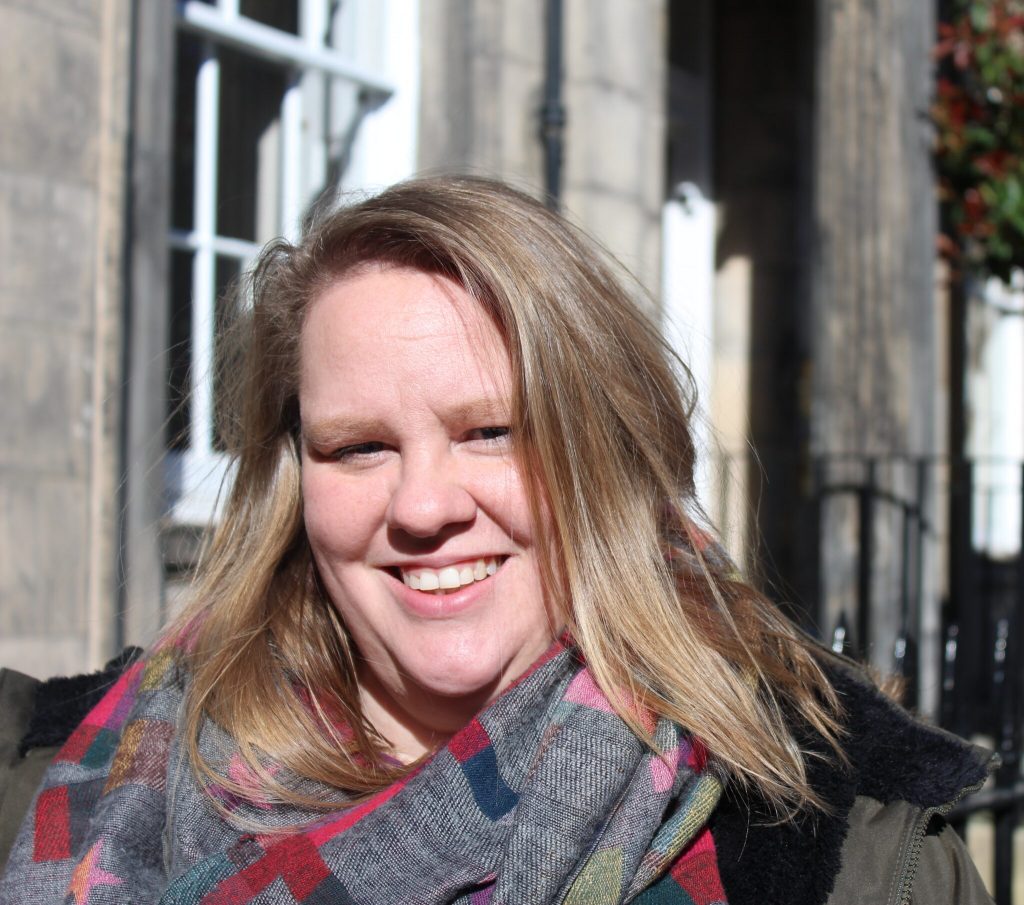
It’s a Thursday morning and Sarah Robinson Galloway, senior officer at Action on Sectarianism, sits in her office to fight the same hatred that torments her since her childhood in Northern Ireland, and that may never be fully eradicated.
“I have days where I just despair. Yesterday was one of those days. I wonder, have I actually made a change?”
Action on Sectarianism (AoS) is a charity that works with teenagers and children to stop sectarian hate between the two main religious groups in Scotland, the Protestants and the Catholics. She explained, “any kind of work to change prejudice, discrimination and hate takes time. So it’s going to take time.”
Scotland inherits a century old conflict “that is like a dormant volcano,” as Sarah described it. This political bigotry becomes most visible during and after the biggest game in the Scottish Premiership.
The iconic Glasgow derby, the Old Firm, is not just a simple football match: it’s a vis-a-vis where religious and political tension can be felt from the stands. The two Scottish giants, Celtic FC and Rangers FC, are cultural opposites in many ways. The first is traditionally Catholic, the latter Protestant.
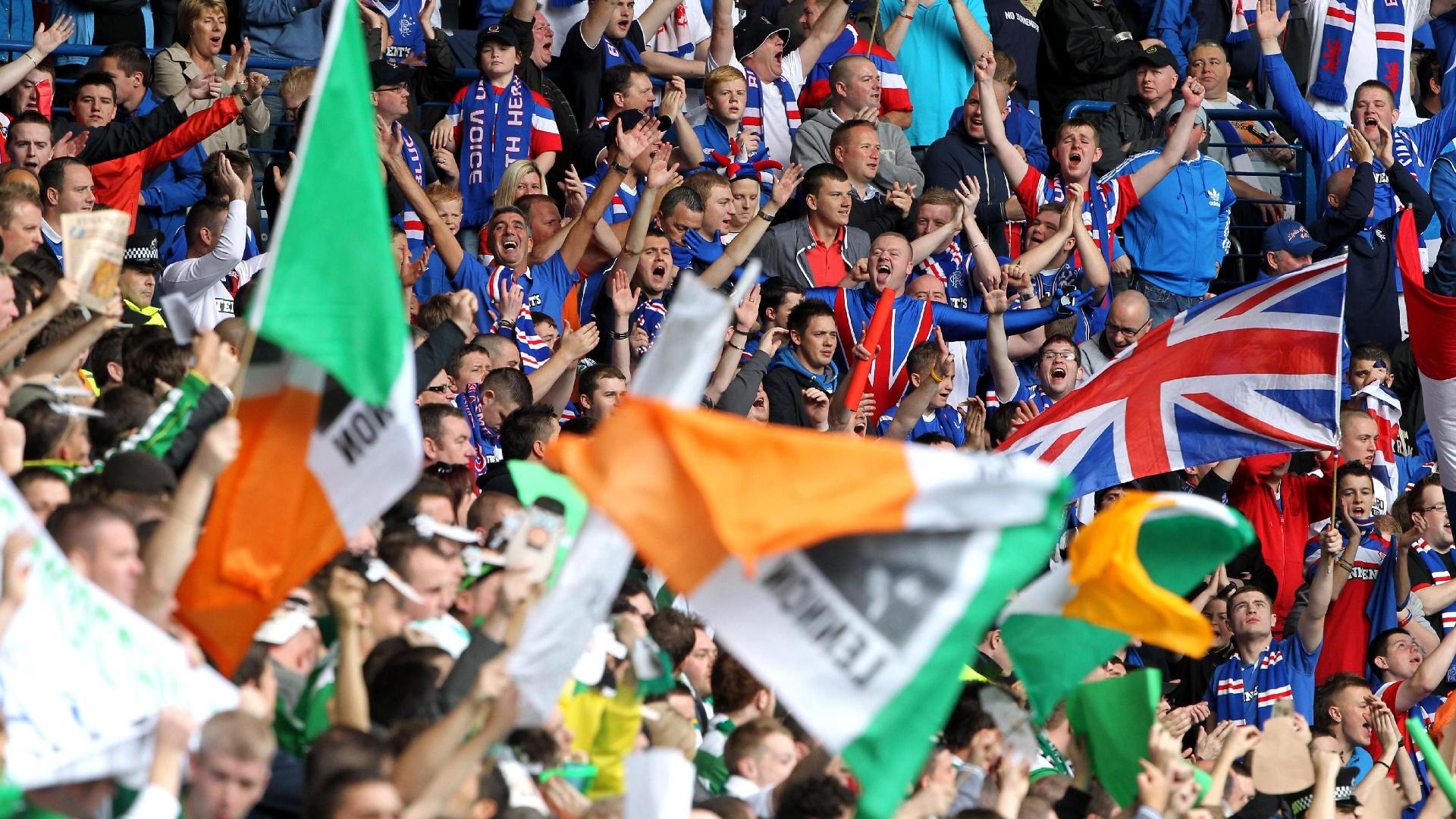
Glasgow is everything you would expect on a winter afternoon, the clouds cast a grey paleness on the neighbourhoods, the tall concrete estates and the asphalted roads make sure nothing hits the eye. And apart from a few cars driving past, the streets are silent. But a distant roar echoes through the main roads and alleys of Bridgeton, East Glasgow. Celtic Park is full to the brim and fans who couldn’t get a ticket are even standing outside the green stadium.
The Old Firm becomes one of the loudest football matches in Europe when the fans sing and shout, ready to jump from their seats before the ball even hits the net. Flares, flags and banners create undoubtedly spectacular visuals. While the Celtic stands are green and white, adorned with the occasional Irish flag, the Rangers side is blue, white and red, with some flying the Union Jack. And after the game, big crowds of fans head towards the many supporter pubs to celebrate, or to cheer each other up if on the losing side.
What’s usually a concrete desert during weekdays becomes a crowded mess of rowdy fans on matchday, a nightmare for stadium officers. Through screams and chants the fans get hard to manage, with police now even using drones to direct the two crowds and prevent ravaging hooligans to clash. The Old Firm is one of the most heated football rivalries in Europe, contending for that title with the likes of Real Madrid vs. Barcelona, AC Milan vs. Inter Milan, Liverpool vs. Everton or AS Roma vs. Lazio.
But this breathtaking face off hardly ever ends without unhappy repercussions. After the game sectarian slurs and offensive chants can often lead to street fights and mass brawls. Behind the chants at the stadium lies a long standing and unresolved Scottish conflict.
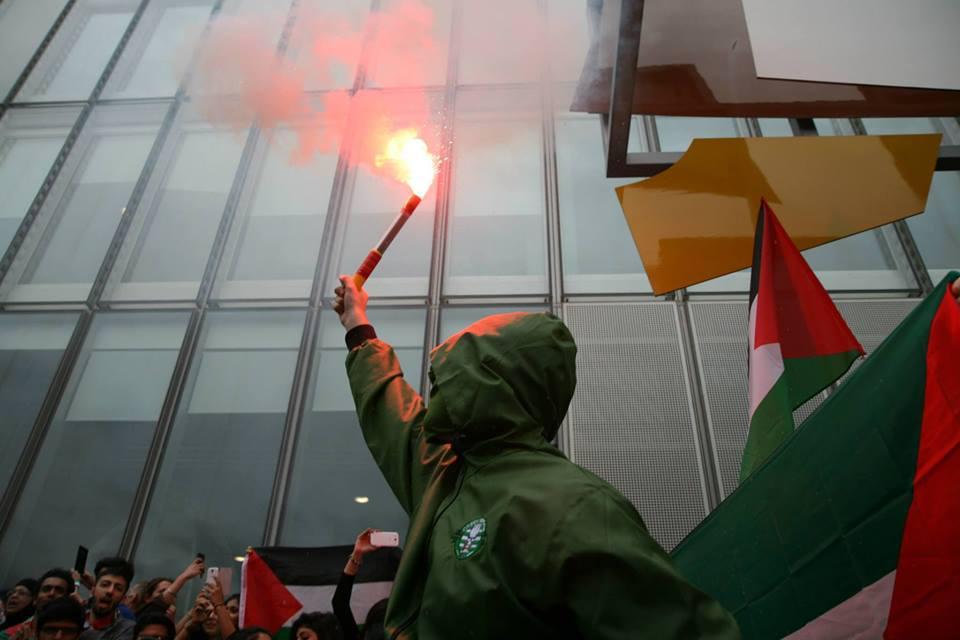
While the other European rivalries are limited to the sport, at the Old Firm football becomes political. The face off has two different world views clash in the same city, and its roots lie in a century old conflict that transcends national borders. And when the Celtic ultras, The Green Brigade, waved flags in support of Palestine last season, the Rangers counterpart, The Union Bears, replied in support of Israel. But what can a football derby possibly have to do with independence struggles, the monarchy, the Troubles in Ireland and even the Middle East conflict?
Sarah, happily married mother of two, now lives in Edinburgh with her family, far from the exhausting noise of Celtic Park or Ibrox, home to Rangers.
Back in the 90s, she was growing up in the outskirts of Belfast along with her two younger sisters. Only a child during the Troubles, she nonetheless remembers the conflict more vividly than her siblings. Anxiety and paranoia were part of daily life, such that she only realised life could be different when she moved to Germany for university at the age of 18. Not unlike many others, she was brought up with trust issues in a society split in two, where paramilitaries of opposed sides were constantly shooting and car-bombing each other.
In those years Irish Catholics lived segregated from Irish Protestants: they visited different schools, lived in segregated neighbourhoods that were often separated by a wall, had mostly different political views. Catholic-Protestant intermarriages were nothing short of an anomaly, something out of Romeo and Juliet.
From early on Sarah was hard wired to be suspicious when a stranger, even another child, asked for her last name, which school she attends, which neighbourhood she lives in: all strong indicators of which side she’d be on. This mistrust was always in the back of her mind and followed her into adult life. Many years later, when she started to work in Scotland, she was still cagey about her past when talking to her former boss, who was Northern Irish.
“I was shocked to discover that sectarianism is an issue here in Scotland too, especially for someone like me, coming from Northern Ireland,” she said.
Only after working at AoS in Glasgow, Sarah realised that many were impacted by sectarianism exactly like her, struck by the unawareness of the issue in Scotland.
“I remember being completely flummoxed by this in Scotland. I thought ‘how? Why don’t they just admit there’s an issue?’ And one thing I found is that people don’t admit that there’s a problem to begin with.”
“We are the Billy Boys – Hullo, Hullo – You’ll know us by our noise – We’re up to our knees in Fenian blood – Surrender or you’ll die” Rangers fans spotted singing in the stadium in April 2022
Celtic FC was founded nearly 15 years after Rangers FC, in 1886. It only took a few years for the division between Catholics and Protestants to become clear. Back then, Glasgow had just become an industrialised city. And after the potato famine in Ireland, the West of Scotland experienced big waves of Irish migration. Most Irish immigrants were Catholics who ended up living in miserable conditions and as a religious minority. At that time, for every Catholic in Glasgow there were four Protestants. And over the years, Celtic became so closely associated to Ireland, that during a later tour of the United States in 1931, they were asked to play under the Irish tricolour, as Rangers played under the Union Jack on their tour.
In their early beginnings both clubs already had a religious component: two of the four founders of Rangers were Protestant priests. Brother Walfrid, an Irish Marist, created Celtic as a charitable organisation to fund soup kitchens for the poor. When the clubs grew, it quickly became clear that Celtic would stand for the Irish Catholics and Rangers for the mostly British, Protestant communities of Glasgow. Rangers even implemented an unofficial policy in the 1920s to not sign or employ Catholics.
More than sixty years later, the first Catholic to play for Rangers was Mo Johnston in 1989. To this day, only 10% of the 9 million Celtic fans identify as Protestant, and only 2% of the 9 million Rangers fans identify as Catholic. But this divide goes beyond religion, as Celtic’s connection to the Republic of Ireland is still affirmed by many fans, while Rangers fans proudly wave the Union Jack on the opposite side of the pitch.
Elements of Ireland’s troubled history are still part of the Old Firm’s hooliganism. Especially at Old Firm games fans often shout sectarian slurs at their rival. Sarah Galloway explained, “You start to hear words like queen, king or Pope. All the things that come out of football: Celtic, Rangers, politics and xenophobia.”
“You also get the less savoury words, like the F-word for an Irish warrior,” Sarah didn’t want to pronounce the full word.
Growing up in Belfast, she had witnessed sectarian violence during the Troubles and profoundly condemns the lingo associated to it. The word “Fenian” is used as an insult towards Celtic fans, emphasising the Irish Catholic backgrounds of the club. It’s clear that some fans are still attached to the derby’s history, some even clinging on to a word that described Irish revolutionary warriors in the 19th Century.
“The famine is over – Why don’t you go home” Rangers fans singing in the streets of Glasgow in 2022
Thinking about her childhood in Northern Ireland, Sarah remembers chilling events that took place when her father was a member of the British army.
“As a child I couldn’t tell anybody what my dad did for a living. If I told people that my dad was in the army that would potentially put a big target on my back.”
“When you drive to the city centre with your parents everyone just gets in the car when you drive back, right? That’s not what we did. We stood back from the car, my dad went to the car, checked underneath it and then we got in,” she added. Even her childhood friends had to be mindful to keep her dad’s profession a secret.
“The other thing we grew up with, and I’ve heard this from people in Scotland as well, usually when you’d meet someone from Northern Ireland, the first thing they asked you after your name was what school you went to. Because you need to understand immediately, what is this person’s background? What side are they on? If you can’t tell by their name, you can tell by their primary school,” she said.
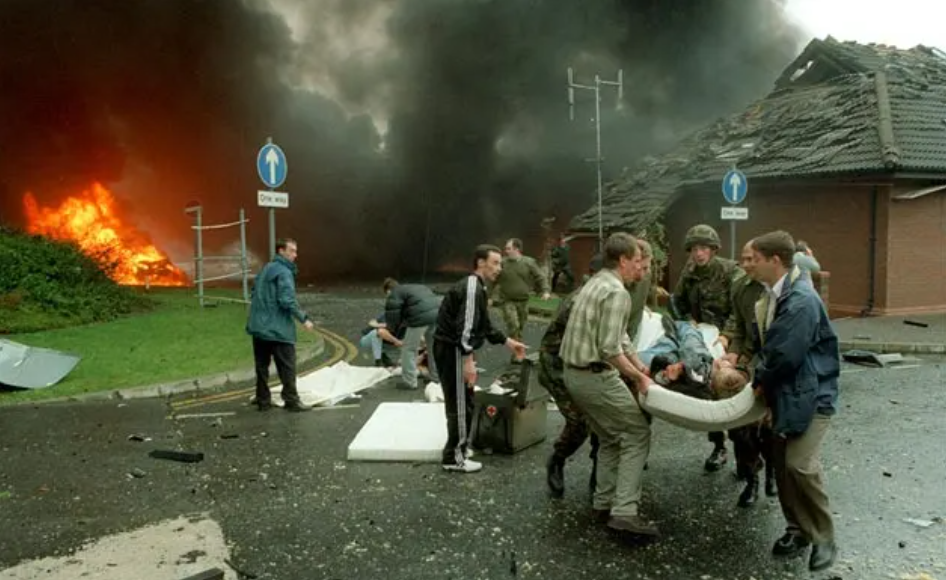
She remembered a defining moment of her childhood vividly. Sarah witnessed the aftermath of the Thiepval Barracks bombing in 1996 in first person, when she was just 9 years old. During the attack that was carried out most likely by the IRA, a British soldier died and 31 were injured.
“It was a car bomb outside my dad’s office, and I was in the barracks along with my sisters and we were two streets away from it. There was also a car bomb outside the medical centre. My dad ended up directing the evacuation of our street.”
She proceeded, “I remember my dad coming down the street and his shirt had bits of blood all over it, because a window had shattered onto his back. And it’s shattered glass.”
After leaving Northern Ireland nine years later, everything was very different. Only when she moved to Scotland Sarah realised that she was carrying emotional baggage of all the unprocessed memories with her.
“I only discovered once I was doing this work that I was still cagey about my dad’s history, because my former boss is Northern Irish,” she said. As Jack McCormell called it, ‘Scotland’s secret shame’ is linked to Ireland’s politics in a profound way. It’s not only about religion, even the political attitudes and beliefs of the two communities are imported to Scotland and shape the fanbases of the two Glasgow clubs. Irish Catholic immigrants nurtured the values of their community, and that bled into the football. As a result, to this day Celtic supporters will be more likely to support values such as Irish independence, hold scepticism towards the monarchy, and in some extreme cases even endorse the IRA. On the other side, Rangers supporters can be said to be more likely to support British unionism, be more sympathetic towards the monarchy and in some extreme cases endorse the UVF, the Ulster Volunteer Force.
This double connection is strengthened by the massive Celtic and Rangers support in Ireland, where fan clubs and bars colour Belfast’s streets blue and green, and massive crowds of fans travel across the Irish Sea to witness the Old Firm in person. Both teams have an immense international fanbase. Especially Celtic, with its 800 supporter clubs spread throughout 60 countries.
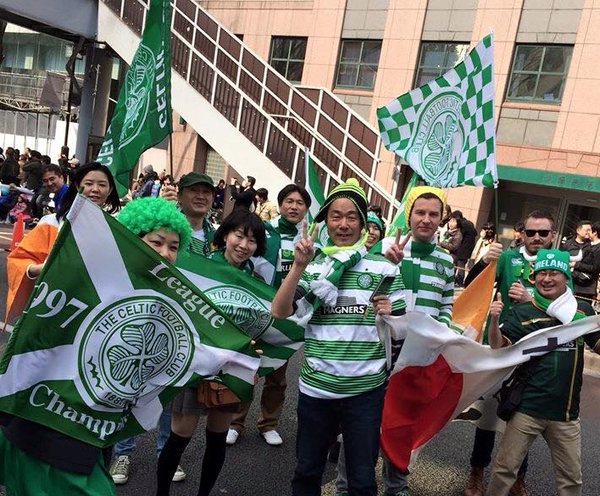
But the biggest Celtic-Rangers fanbases outside Scotland are in Ireland, unsurprisingly. When Belfast Celtic closed in 1949, a team created as an emulation of the Glasgow club, most fans went over to Celtic instead of choosing another Irish team. In some areas of Belfast, the rivalry is even more visible than in Glasgow, where apart from sparse graffiti, you’d rarely spot any public display related to the Old Firm.
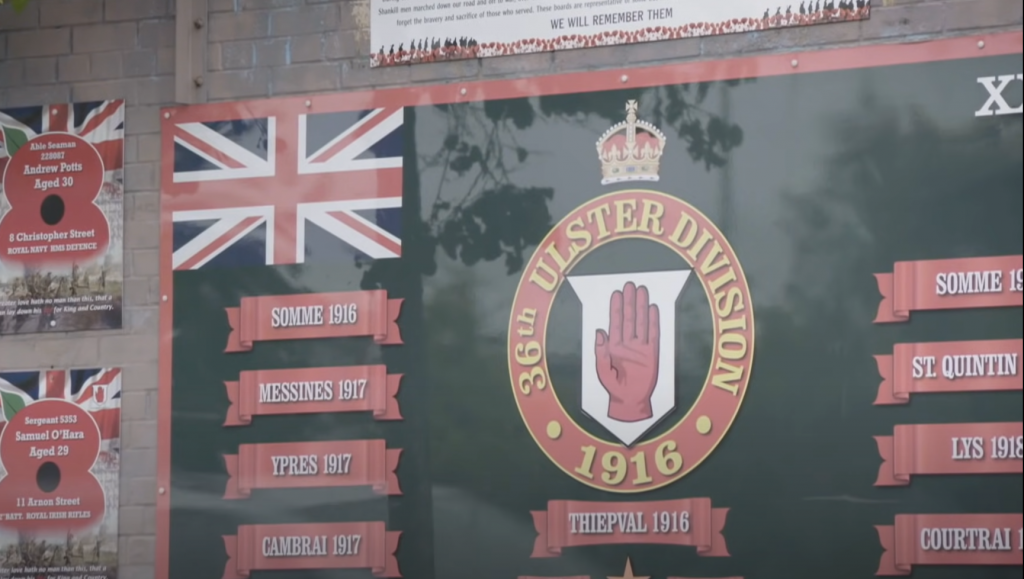
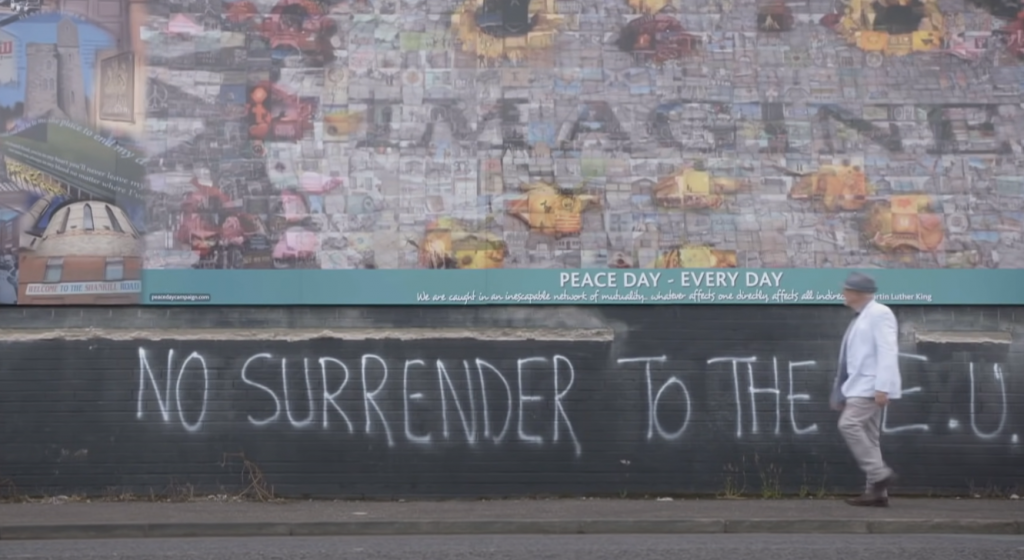
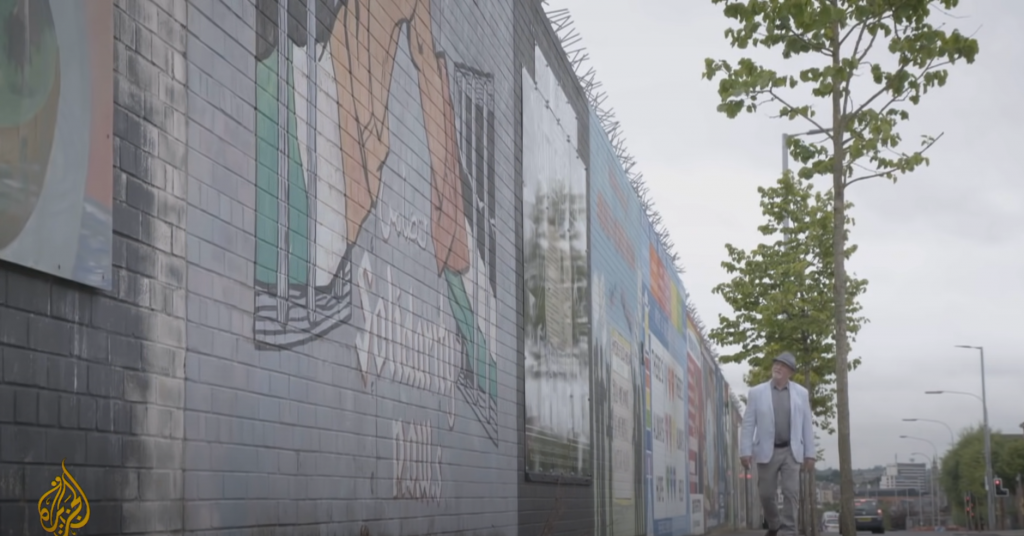
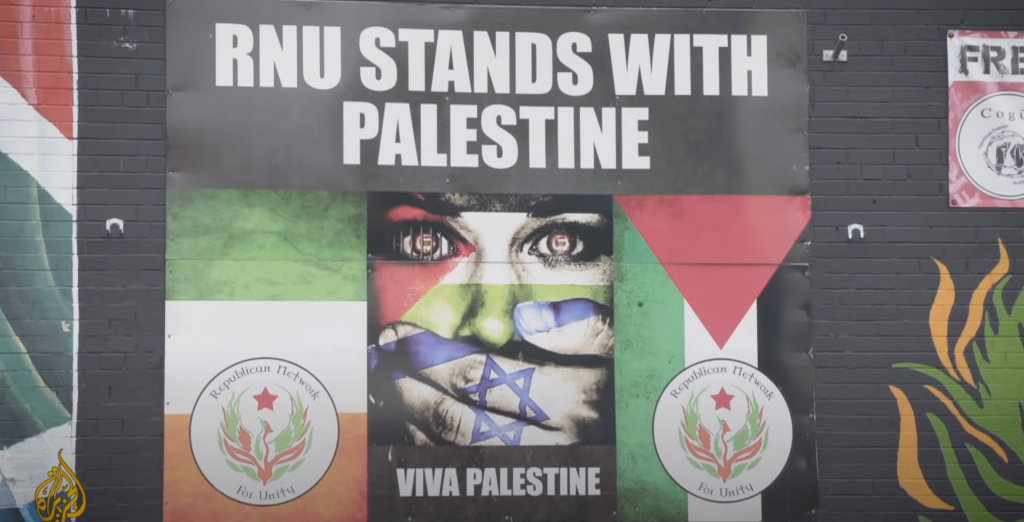
Catholic Falls Road and Protestant Shankhill Road in West Belfast were a war zone during the Troubles. Now the roads are connected, but divided in two. A gate in the middle closes everyday at 6pm and separates the two zones. The two sides are opposite political and religious poles. Pictures along the wall speak more than a thousand words. On the one side, green Celtic graffiti, murals of Palestine flags, Nelson Mandela: a conspicuous globally oriented theme. On the other side, the complete opposite.
Francis Quigley, painter in Belfast, told Al Jazeera: “Everybody on this side supports Celtic, and everybody on the other side supports Rangers.”
On the Protestant side, Quigley explained: “You’ll see the British Army and the British Empire celebrated on this side.” Union Jacks, UVF banners and the iconic red hand of Ulster. The same symbols that were seen on flags at Ibrox and Celtic park.
Although the religious divide still affects the discourse around the Old Firm, and both clubs as well as the Scottish Football Association had to take action against sectarianism throughout the years, most fans are just genuinely passionate about their team and share their love for the beautiful game.
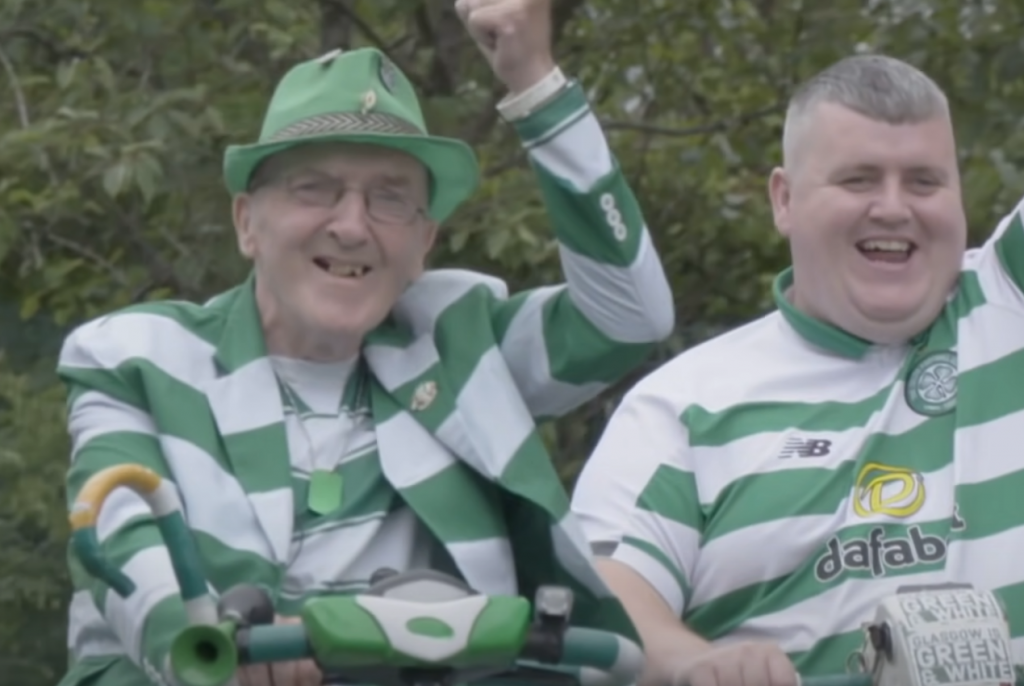
Celtic superfan Wee Duff, a smiling and joyful older man, told Al Jazeera while sitting on his Celtic themed wheelchair: “Celtic has given me an actual reason for living. I had a stroke about 10 years ago and I couldn’t move my arms and my legs. But one thing that kept me going was, ‘I have to get back to Parkhead. I have to go.’ And I went, and I haven’t stopped going.” For all the disgrace that religious bigotry and segregation has brought on in Scotland, one must be reminded that Glasgow is a vibrant city filled with mostly warm and welcoming people. A place where hate and racism do not rule the day. And to avoid sectarian and football related trouble, most establishments forbid visitors to wear a football jersey or display any Old Firm memorabilia.
On the other hand, sectarianism in Scotland is much more subtle than it has ever been in Northern Ireland. The razor swinging gangs of the interwar period are long gone, the most common sectarian offences in Glasgow are verbal. Sarah described it as a “dormant volcano, it’s always under the surface. It’s almost under the radar sometimes, it’s like a spy question.” It seems like sectarianism is a problem that everyone knows about, but still refuses to address clearly. It’s almost as if there’s a fear that talking about it, could summon it back to life.
Back in 2016 Anne-Marie Clements, a catholic primary school teacher outside Glasgow, was sacked for uploading pro-IRA posts on her Twitter profile. After a public apology, she was appointed by the Catholic Church as teaching engagement officer. More recently, police officer Kyle Cruickshank was reported and fired for making abusive, sectarian and misogynistic comments to his colleagues in October last year. The officer notably referred to Catholics as “Fenian bastards.”
Following 2014-15 government data, in 63% of religiously aggravated hate crime cases in Scotland the offence included behaviour that was derogatory towards Catholicism. But it’s difficult to quantify sectarianism. Around the Old Firm, and football in general, there is often a surge in anger and violence. A 2013 study even found that on days where Celtic plays Rangers domestic abuse increases by nearly three times.
Even if most sectarian offences are just a consequence of bigotry and ignorance, and can often be sided by racist and xenophobic remarks, for some it can pose a threat that’s as real as it gets.
”When you have certain events, maybe a football match, a parade or something has happened like the independence referendum, suddenly the volcano erupts.”
“You don’t realise that it actually really impacts people’s lives on a daily basis as well. Research shows that when a football match is on, women will change their daily routines to avoid certain areas. They will take a longer route to get to the shop for example,” Sarah explained.
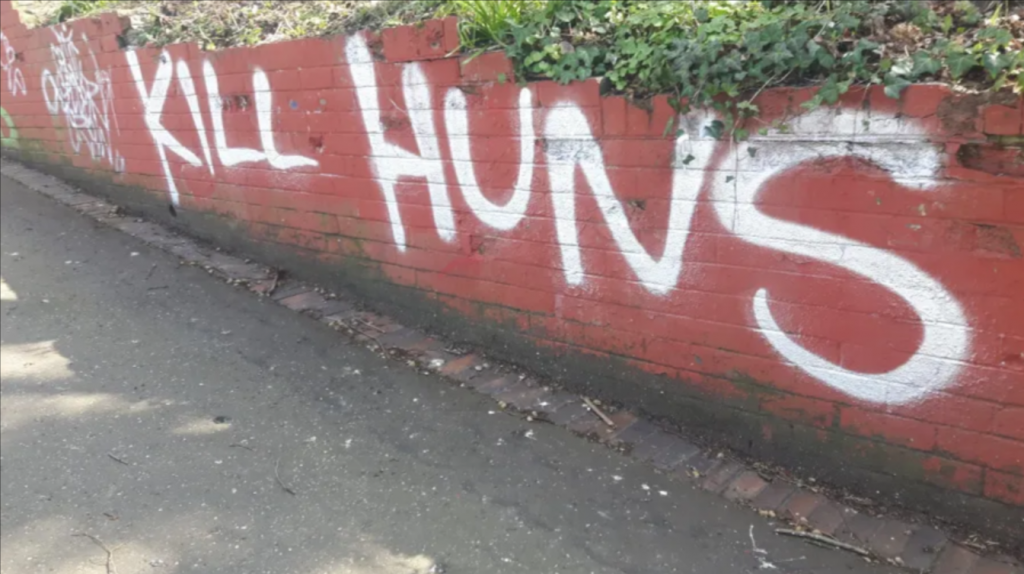
Yet sectarianism has an imminent racial dimension in Scotland, as it developed at a time where Irish immigrants were, and sometimes still are, considered a race apart. Although most fans who are light-heartedly screaming “Fenian bastards” or “Huns” (the derogatory term for Rangers supporters) probably don’t know all the history and the meaning behind these words, and most Scottish people wouldn’t ever use those words in the first place, these terms are racially charged. So if we apply modern standards of political correctness to the Old Firm, sectarian slurs would be shockingly out of place in a 21st-century society.
As time goes on, promisingly, people seem to start caring less about religious differences. Maureen McBride, Lecturer in Sociology at the University of Glasgow, explained: “Educational disadvantage was largely eroded and the creation of the welfare state offered employment opportunities in the public sector to Catholics who were economically disadvantaged or excluded from areas of the private sector.”
Today, people who identify as Catholics are still a minority in Scotland, making up around 15% of the population. Most of them live in Glasgow. It would be wrong to consider Catholics a completely oppressed group in Scotland, but traces of historical disadvantages of the past remain visible.
“Most Catholics over the age of fifty in the West of Scotland have lived their lives at an economic disadvantage, probably now irreversible.”
“Compared to their Protestant counterparts, Catholics are more likely to live in deprived areas, they are more likely to rent rather than own their own homes and in general have poorer housing experiences,” McBride said.
She explained that they are more likely to suffer from health problems and are overrepresented in the prison system as well. A dramatic picture, but it would be wrong to attribute all these disadvantages only to sectarianism; rather the historical conditions of an oppressed community of immigrants are slowly fading away, but didn’t disappear yet.
That Catholics are an overall oppressed minority in the United Kingdom is a hard position to hold. But the Green Brigade has a peculiar self-projected image of their oppressed state, trying to keep connected to the early Irish Catholic immigrants. Nonetheless, the Celtic ultras consistently try to display this characteristic, for better or for worse. Even Nelson Mandela mentioned Celtic’s support against the Apartheid in South Africa. And in line with Irish Republican policy of the last decades, the Green Brigade hasn’t been shy to express their support for Palestine. Again, often emphasising a supposed affinity between oppressed Irish Catholic immigrants and Palestinian refugees.
During a match against the Israeli team Hapoel Be’er Sheva in 2016, countless Palestinian flags and banners were flying in the stands. As a consequence the Green Brigade was banned from attending several matches, not without a fine of £10,000.
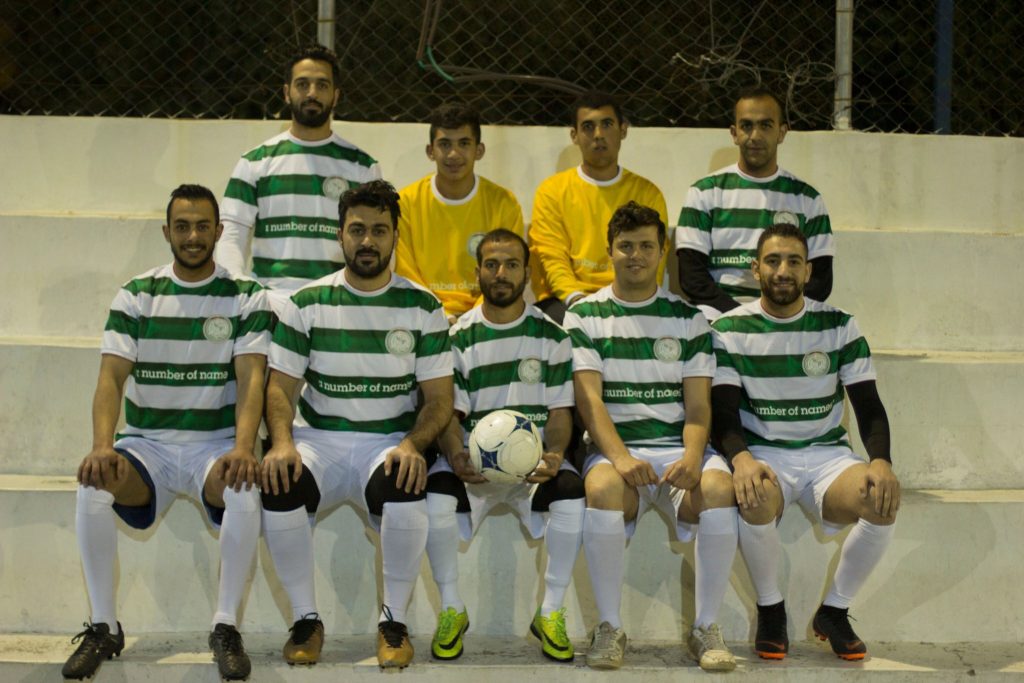
This gave the Green Brigade even more incentive and launched a fundraiser that highly surpassed the fee. With the surplus, the group funded a football academy in the Aida refugee camp in the West Bank. Aida Celtic was now operational and refugees could play football on a pitch just outside the graffiti ridden wall in Betlehem. But when the war broke out in October last year the team stopped playing. And a few days ago, all Aida Celtic pages went offline, including the social media profile I was in contact with.
The Old Firm is an explosive environment where politics can take the spotlight. The two fanbases take on political issues and express their values proudly, but sectarianism is an overlooked reality by many who are not willing to address the problem to this day. And as Sarah Galloway explained, it is mostly the older generations who are afflicted by sectarianism and risk to pass it on to the next generation.
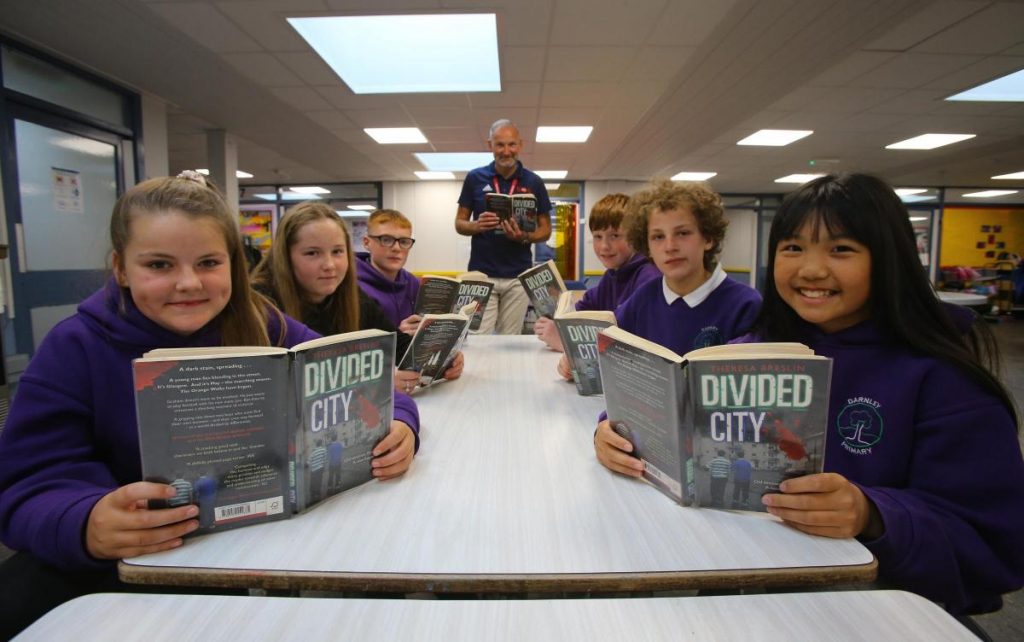
Back in Scotland, the only way to eradicate prejudice and bigotry is to break the cycle: Sarah teams up with Sense over Sectarianism (SoS), a program represented in nearly every school in Glasgow, that aims to break down the barriers and build a bridge between children of opposed communities. This can often boil down to putting young Celtic and Rangers fans in the same room.
This is a pivotal part of Sarah’s work: “when I approach children I never go in and ask the definition of sectarianism, because it’s not the same for every child or every family,” she explained.
“So I’d go through an activity called A to Z of sectarianism. You have to think of any sectarian word that comes to mind, and it’s basically about getting all the bad words out,” she said.
The kids then reply with any words they hear in their environments: “Fenian, Queen, Celtic, Rangers.”
“In every classroom there will be some differences. After that we will talk about sectarianism in football, social media, music and the news. We ask them how it affects them,” Sarah concluded.
A heart-warming picture, kids sitting together, sometimes even watching the Old Firm match, with Rangers and Celtic shirts in the same room. Very different from the atmosphere around hooligans shouting and fighting in the streets, because of someone wearing the wrong colour. In some instances, young kids seem to be much more mature than grown adults.
Workers who share Sarah’s mission sometimes had to deal with tragedies, and fight to create a more promising future. In 1995, Mark Scott, 16-years-old at the time, was murdered on a Bridgeton street walking home after an Old Firm match. Jason Campbell, who was standing outside a bar, slashed Scott’s throat as he saw him walking past in a Celtic jersey. Five years later, a school friend of Mark Scott created the charity Nil by Mouth in memory of the passed friend, for the sole purpose of exterminating sectarianism from Scottish society.
David Scott, now director of Nil by Mouth, explained: “It’s not that the Rangers and Celtic rivalry is only a proxy for Catholics and Protestants, I think that there’s a lot of hatred that has been passed on and it mutates to different forms”.
It’s difficult to fully blame the football bigotry, supposing that fans generally behave better after the game. Even if a fan singing a sectarian song at the stadium may not really mean every word he says, when the whole fanbase comes together and expresses a political position it will shape a lot of people’s beliefs. For example when many Rangers fans waved the flag of Israel or the Union Jack, while Celtic fans waved Palestinian flags, they end up expressing a political position that they probably won’t just give up as soon as the ref blows the whistle.
“Yeah there is passion for football and the feeling that it’s not real, but what happens when you make a statement? It becomes real,” Scott said.
He explained, “Identity is a massive part of it. The idea that our identity is better than yours. It’s kind of a medieval mindset.” The reality is that a lot of fans would still avoid pubs of their rival team in Glasgow.
“Some say: ‘we will sing songs that we see as passion.’ But it’s twenty-to-thirty people sitting together singing songs supporting republican paramilitaries or about murdering Catholics. And maybe you and I find it very distasteful, but you shouldn’t go to that pub,” he explained.
The fight to eradicate sectarianism is not over yet, but educating the children and breaking the cycle will be a central part in bringing the new generation together. There is no single cure against sectarianism in Scotland, but sometimes the solution can be simple.
“I can talk about my own experiences, but I did end up marrying a Rangers fan,” Sarah laughed.