Before the camera clicks, Katia Pereira-Mendoza asks a question she never expected would become part of her job.
“Tell me about your dog.”
Within minutes, owners are describing bereavements, break ups, cancer recoveries and periods of loneliness. Some struggle to remember their postcode, she jokes, but can happily spend half an hour explaining what their Labrador means to them. By the time the photoshoot begins, the conversation is no longer really about a pet, but about family.
Inside Cherish Studios, London’s only boutique photography studio specialising in pet photography, located in Crouch End, cream backdrops hang from ceiling rails while baskets overflow with squeaky toys, tennis balls and packets of dog treats. A grooming brush sits beside the camera equipment and, before the session begins, owners fuss over tangled ears and muddy paws. Katia Pereira-Mendoza, 54-year-old dog photographer at Cherish Studios, crouches to the dogs’ eye level, squeaking toys, whist rewarding every successful pose with a treat. Her clients usually arrive after taking their dogs for a pet blow-dry, carrying favourite toys and carefully chosen accessories. Some even bring matching outfits. Others arrive with detailed Pinterest boards of poses they want recreated.
“People don’t see them as pets anymore,” she says. “They see them as their children.”
Inside her studio, dogs sit alongside babies, grandparents, and partners in carefully curated family portraits. What began as a side project during the Covid-19 pandemic has become a thriving business. With parties and weddings disappearing during lockdown, Pereira-Mendoza started photographing dogs at a local farmers’ market and the response really surprised her.
“What started as a way to make money actually tapped into a real need,” she says.
The photographs are not cheap. Sessions begin at around £150, while large pieces of wall art can cost hundreds more, yet demand continues to grow.
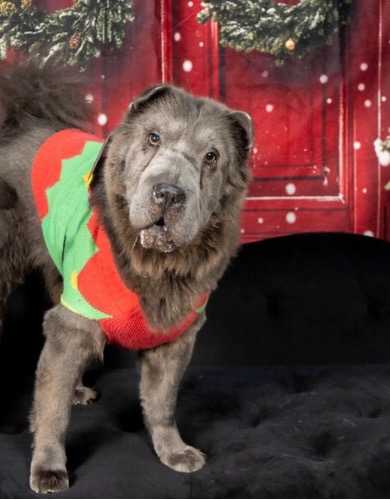
Photographs from Cherish Studios, pic: Katia Pereira-Mendoza
Across Britain, dogs now occupy a space once reserved for children. Owners are referring to themselves as “dog mums” and “dog dads”. Childfree couples are becoming DINKWADs – dual income, no kids, with a dog, a term that originated as internet slang and a viral trend on social media platforms.
However, the trend is no longer confined to social media. It has become a booming industry.
The UK’s pet economy is estimated to be worth billions of pounds, encompassing everything from luxury grooming salons and canine nutritionists to dog festivals, birthday cakes and pet psychics. Events tailored for dogs and their owners such as DogFest and Goodwoof attract thousands of visitors each year. Designer dog accessories sell out online and pet influencers have huge audiences that many human creators would envy.
For some, this represents a harmless evolution in the relationship between humans and animals. For others, it raises questions about loneliness, family structures and the increasingly blurred boundary between treating dogs as companions and treating them as children.
Matthew Adams, Principal Lecturer in Psychology at the University of Brighton who specializes in human-animal and human-nature relationships, believes the phenomenon reflects wider social change.
“There has been a societal shift towards recognising animals as important members of our communities and families,” he says.
The roots of that shift stretch back decades, but the pandemic accelerated it dramatically.
During lockdown, dog ownership surged. Isolated from friends, family and colleagues, many people found comfort in animals. Puppies became companions during a period of uncertainty and social isolation. For some, they provided routine. For others, they offered emotional support at a time when human contact was severely restricted.
“It filled a gap,” Adams explains. “It met a need.”
Psychologists understand these relationships through attachment theory, a concept traditionally used to explain the bond between children and their caregivers. While the theory has historically focused on human relationships, growing research suggests companion animals can also become important attachment figures, providing emotional security, stability and comfort for humans. Adams believes part of the appeal is that these relationships are uncomplicated. “We’re not judged by companion animals in that sense,” he says. “It’s less conditional.”
This explains why the bond between people and their pets has intensified in recent years. Loneliness has become one of Britain’s defining social concerns, while remote working, shrinking community spaces and digital communication have transformed how people interact. Dogs offer something many people feel is increasingly difficult to find: genuine companionship, daily routine and a reassuring sense of consistency.
The relationship also reflects changing ideas about care and family. Parenting, psychologists argue, is not simply about raising children but about the instinct to nurture, protect and form meaningful emotional bonds. For many people, dogs provide an outlet for those innate feelings in ways that fit modern life. Unlike children, they do not carry the same financial burden or lifelong responsibilities, yet they still offer affection, purpose and a sense of belonging.
Adams believes that ideas of family have evolved beyond traditional definitions, “We’ve become much more willing to recognise animals as individuals with their own personalities, emotions and relationships,” he says. Instead of being seen as separate from the family, companion animals have become part of what psychologists describe as our “kin” or intimate family groups, helping to explain why so many owners instinctively identify as dog mums and dog dads.
For Isabella Werth, 22-year-old Golden Retriever owner from Hertfordshire, that comfort has evolved into something much deeper.
Her Golden Retriever, Enzo, arrived after the family’s previous Golden Retriever, Fonzie, passed away. Isabella remembers wondering whether they could ever feel the same connection again. Instead, Enzo gradually became woven into everyday family life. Looking back, she believes he helped the family navigate that grief, making it easier to understand why he no longer feels like “just a dog.”
Enzo has his own Instagram account, @therealgoldenenzo. He celebrates birthdays, attends dog-friendly events and his photographs regularly appear on social media alongside captions that would not seem out of place beneath pictures of a child.
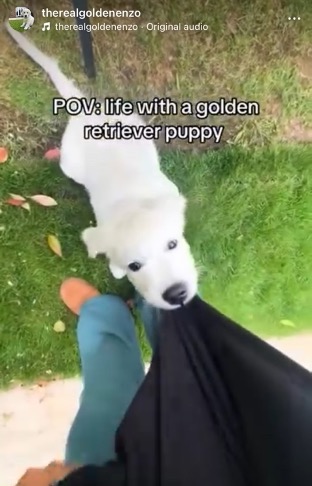
Enzo’s social media account screenshot, pic: @therealgoldenenzo on instagram
“He is our son,” she says.
When Enzo celebrated his birthday, he wore a personalised bib. Friends attended a party, presents were exchanged and many photographs were taken. The images generated significant attention online.
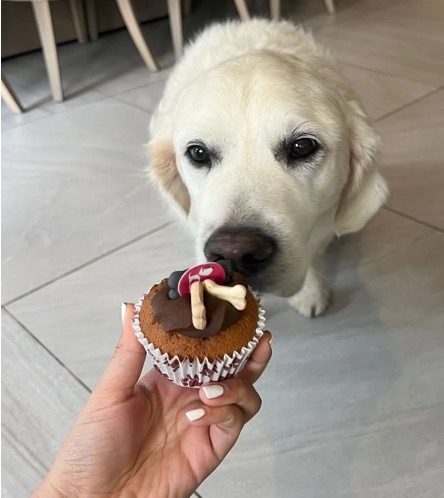
Enzo’s Birthday party, pic: Isabella Werth
To outsiders, it may seem excessive but to Isabella, it feels entirely natural. “He is part of our family,” she says.
Isabella’s experience is far from unique. Pereira-Mendoza hears similar stories almost every day.
Pereira-Mendoza believes dogs have also filled the space once occupied by traditional community. “People crave connection,” she says. “Years ago people met through churches, pubs or youth clubs. Those spaces aren’t as common anymore.” Instead, she has watched entirely new communities emerge around dog ownership. Clients meet through local walks, breed-specific Facebook groups, DogFest weekends and neighbourhood WhatsApp chats.
Events like DogFest and Goodwoof are no longer simply places for dogs to socialise. Increasingly, they have become social spaces for owners too, where shared routines and friendships are built around pet ownership. The dog often becomes the reason strangers begin talking.
For younger generations facing rising housing costs, delayed parenthood and economic uncertainty, dogs can provide many of the emotional rewards traditionally associated with children. They offer companionship, affection and responsibility without some of the other pressures attached to raising a family.
Yet while Britain’s relationship with dogs may be changing, not everyone believes humanising pets is entirely positive.
For Jessica Hyams, Bsc Biological Sciences Certified Canine Behaviourist at Little and Large Dogs, the issue is not that people love their dogs too much. It is that many owners misunderstand what dogs actually need.
“People absolutely adore their dogs,” she says. “But sometimes we are putting ourselves before our dogs without realising.”
Hyams has spent years working with owners struggling to navigate behavioural problems, anxiety and training difficulties. She believes social media is shaping unrealistic expectations about what dog ownership should look like.
Platforms such as Instagram and TikTok are flooded with carefully curated videos of dogs dressed in outfits, attending birthday parties, being groomed regularly, eating elaborate meals and accompanying owners everywhere they go. While often harmless, these images can create the impression that dogs thrive when treated like miniature humans.
The reality, Hyams argues, is more complicated, “Dogs need to be dogs,” she says.
She points to a growing trend of owners feeling guilty about leaving their pets alone, declining social invitations because of their dogs or structuring every aspect of their lives around them. While these behaviours are often presented as signs of devotion, they can sometimes contribute to problems such as separation anxiety. “Sometimes we’re meeting our own emotional needs rather than theirs,” Hyams says.
The pandemic played a significant role in accelerating these issues. Millions of people spent months at home with newly acquired puppies, creating routines that were difficult to maintain once normal life resumed. Suddenly, dogs that had rarely spent time alone were expected to cope with owners returning to offices, social events and travel.
For many, the transition was difficult, “We saw a huge increase in separation related problems,” Hyams says.
Furthermore, animal charities have reported growing numbers of owners giving up dogs for adoption which they bought during the pandemic. Hyams warns that that poorly socialised pets are contributing to increasing behavioural problems and, in some cases, dog attacks too. As dogs become increasingly humanised online, Hyams believes many owners underestimate the reality of training, boundaries and the daily commitment dogs require.
However, For Cara Misan, 22, from London, dog ownership has become something to celebrate publicly. Every Christmas she enters her six-year-old Yorkshire Terrier, Rex, into Bushey Park’s annual Christmas dog show, where dogs compete in everything from musical statues and musical chairs to egg-and-spoon races, trick competitions and best dressed.
In 2025 Rex won the egg-and-spoon race after finishing runner-up for best dressed in both 2024 and 2025.
“We plan for it every year,” she says. “Rex absolutely loves the attention and it’s become one of our favourite family traditions. Everyone there treats their dogs like family—you don’t feel silly dressing them up because everyone else is doing exactly the same thing.”
What started as a local community event has become part of Rex’s yearly routine, complete with festive outfits, photographs and friendly rivalries between owners.
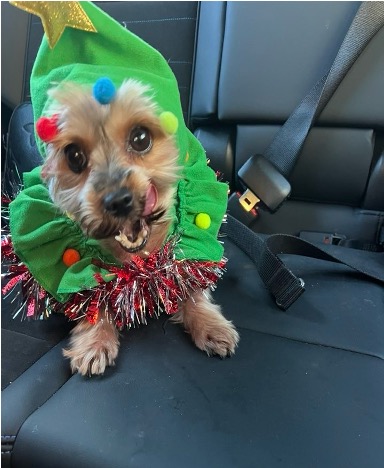
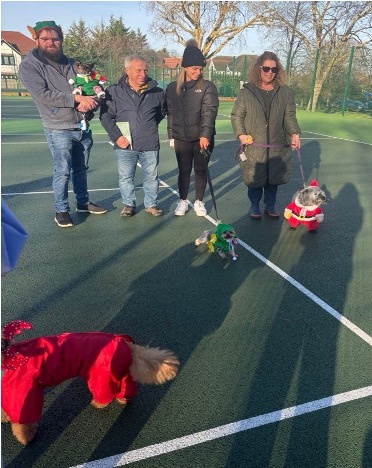
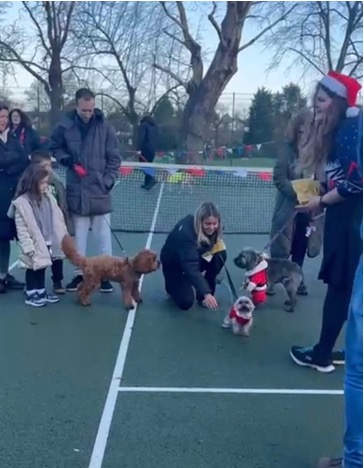
Rex at Bushey Park’s annual Christmas dog show 2025, pic: Mark Misan
What is striking is how common this has become. Adams believes the phenomenon is rooted in broader social and cultural change, rather than sentimentality alone.
“The changes aren’t really about companion animals alone,” Adams says. “They’re about the way our relationships and society have changed.”.
Historically, dogs often occupied more functional roles. They guarded homes, assisted with hunting or worked alongside humans. Affection certainly existed, but relationships were often defined by practical responsibilities.
The change today is visible not only inside homes but across the economy. The UK’s pet industry has expanded dramatically over the past decade. Luxury grooming salons, bespoke nutrition plans, canine wellness retreats and pet photography businesses have flourished alongside growing demand for premium products and experiences.
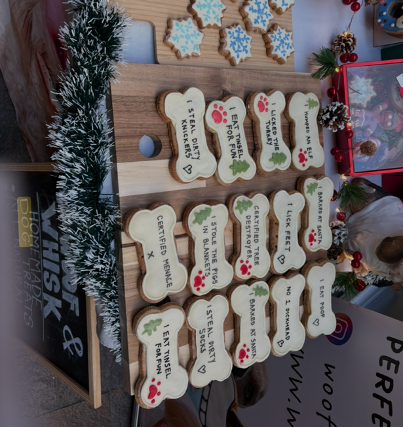
Premium dog treats at Goodwoof festival 2025, pic: Victoria Shulman
Pereira-Mendoza has witnessed this transformation first-hand.
Many of her clients invest significant sums into preserving memories of their dogs. Portraits are displayed prominently within homes. Entire walls are dedicated to photographs of beloved pets. Some sessions include multiple generations of a family alongside a dog. Others focus exclusively on the animal itself.
What emerges repeatedly is not a relationship between owner and pet but something that resembles kinship. “People want to capture that connection,” Pereira-Mendoza says.
However, For Pereira-Mendoza, the portrait is rarely about documenting a dog alone. It is about preserving a relationship before time changes it.
For many people, dogs are present during life’s most significant moments. They arrive during periods of loneliness, they provide stability following bereavement and they accompany owners through break-ups, illnesses and major life transitions.
Unlike many human relationships, they offer a form of consistency that can feel increasingly rare. Yet the growing centrality of dogs also raises broader questions.
If dogs are now filling roles traditionally occupied by chil
dren, extended families or local communities, what does that reveal about the society around them?
The answer may have less to do with dogs themselves than with the world their owners are attempting to navigate.
Across Britain, people are marrying later, having fewer children and living alone for longer periods of time. Traditional community structures have weakened. Loneliness has become a recognised public health concern.
According to the Office for National Statistics, the average age of first-time mothers in England and Wales has risen steadily over the past two decades, while fertility rates have fallen to their lowest levels on record. Single-person households have increased, and social researchers have repeatedly documented growing concerns around loneliness and social isolation.
Against this, dogs provide something profoundly valuable, routine, responsibility, emotional stability and unconditional affection. When Pereira-Mendoza asks clients to tell her about their dog, they rarely start with breed, age or training.
Instead, they tell stories about grief, recovery and love. And most notably, stories about family.
For Adams, however, understanding the rise of pet parenthood requires looking beyond individual owners and towards the wider society in which these relationships are developing.
“The changes aren’t just about dogs,” he says. “They’re about changing social relationships.”
“We shouldn’t underestimate how important these relationships are,” Adams says. “For many people, they provide genuine companionship, emotional support and stability.”
The rise of the DINKWAD lifestyle reflects this shift. Dogs are not replacing children, Adams argues, but they are often fulfilling some of the same emotional functions. At the same time, social media has amplified these relationships in ways previous generations could never have imagined.
Instagram alone contains millions of posts tagged with #dogmom and #furbaby. Entire online communities are built around pet ownership. Influencers collaborate with pet brands. Dogs have sponsorship deals, merchandise lines and audiences numbering in the hundreds of thousands.
Adams believes social media has also transformed dogs into consumer identities. “Animals have slotted into our consumer society,” he says. “We buy experiences, designer accessories and products around them.” The result, he argues, is a cycle in which owners are encouraged to continually optimise their pet’s happiness, often through purchases that reflect human anxieties more than canine needs.
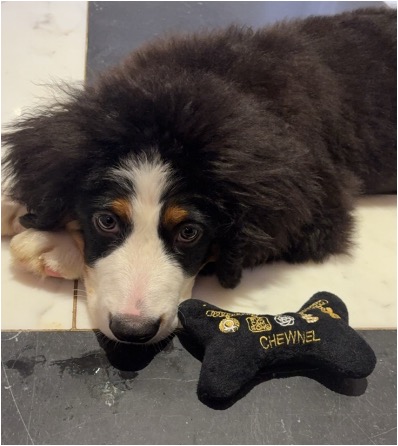
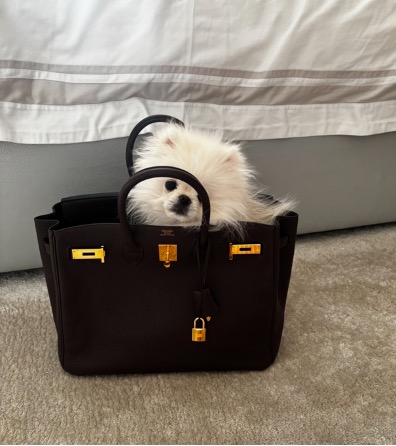
Dogs with designer items, pic: Sophie Shulman
For Isabella, however, social media has had a different effect. Sharing Enzo online began as a way of documenting memories.
Now, his Instagram account has become a place where other dog owners connect, exchange advice and celebrate milestones together.
“There are so many people who understand exactly how much your dog means to you,” she says. Yet social media’s influence remains complicated.
Hyams worries that owners are comparing themselves against unrealistic standards. Carefully edited images of perfectly behaved dogs can create pressure to constantly entertain, stimulate and monitor pets.
“It can make people feel like they’re failing,” she says.
The result is a paradox. Owners are spending more time, money and emotional energy on their dogs than ever before, yet many feel anxious about whether they are doing enough.
This anxiety has fuelled an entire ecosystem of products and services designed to optimise canine wellbeing.
For Pereira-Mendoza, however, the most interesting aspect of the trend has little to do with consumerism. After years of photographing dogs and their owners, she has become fascinated by what these relationships reveal about people themselves.
“When clients talk about their dogs, they’re often really talking about their lives,” she says.
Some clients adopted a dog after losing a parent. Others found comfort following divorce or redundancy. For many, a dog arrived during a difficult period and became a source of consistency when everything else felt uncertain.
The photographs hanging on their walls are rarely just portraits of an animal. They are reminders of a relationship.
The humanisation of pets is often dismissed as a frivolous trend associated with social media, consumer culture or millennial excess. Certainly, elements of all three exist. It is easy to laugh at birthday parties, personalised bibs and canine Instagram influencers. But doing so risks overlooking something more significant.
Throughout history, humans have formed deep emotional attachments to animals. What has changed is not necessarily the intensity of those relationships but the willingness to acknowledge them publicly.
People speak openly about loving their dogs. Rather than representing a decline in human relationships, this reflects an expansion of how people define family itself.
For Adams, this shift should not automatically be viewed negatively. “There is a tendency to dismiss these relationships,” he says. “But they can be incredibly meaningful.”
Back in the studio, Pereira-Mendoza crouches behind the camera once more, waving a squeaky toy until another dog finally looks into the lens.
“People think they’re coming here for a photograph,” she says, smiling as the shutter clicks. “But really they’re preserving a relationship.”