Composite: TikTok
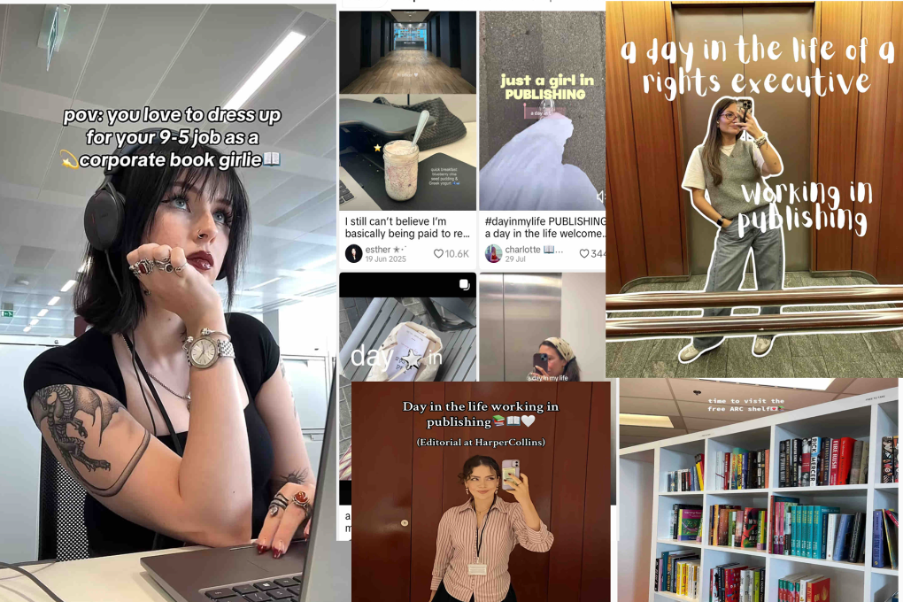
Young female employees are turning their admin-heavy lives inside top books publishing houses into glossy social media content, with millions tuning in to envy their bookish lifestyle. In the midst of a worsening youth employment crisis, an industry with a reputation for notoriously meagre salaries and an exclusionary culture is being romanticised. But is a role in books as rosy as it looks online?
Inside the airy London headquarters of a top publishing house, 23-year-old Grace Edwards props up her iPhone camera and hits record. Now rolling: she settles at her desk and into another working day. First come the sort of mundane, admin-heavy tasks that fall on the shoulders of many junior staffers. An inbox of an emails needs attending to. There are meetings to schedule and parcels upon parcels of fresh first prints to be unboxed. A stack of them also rest on her desk, waiting to be carefully organised. Aside from the occasional diversion to the coffee machine, the raven-haired marketing and PR assistant is chained to her keyboard, typing away, eyes fixed on her computer screen.
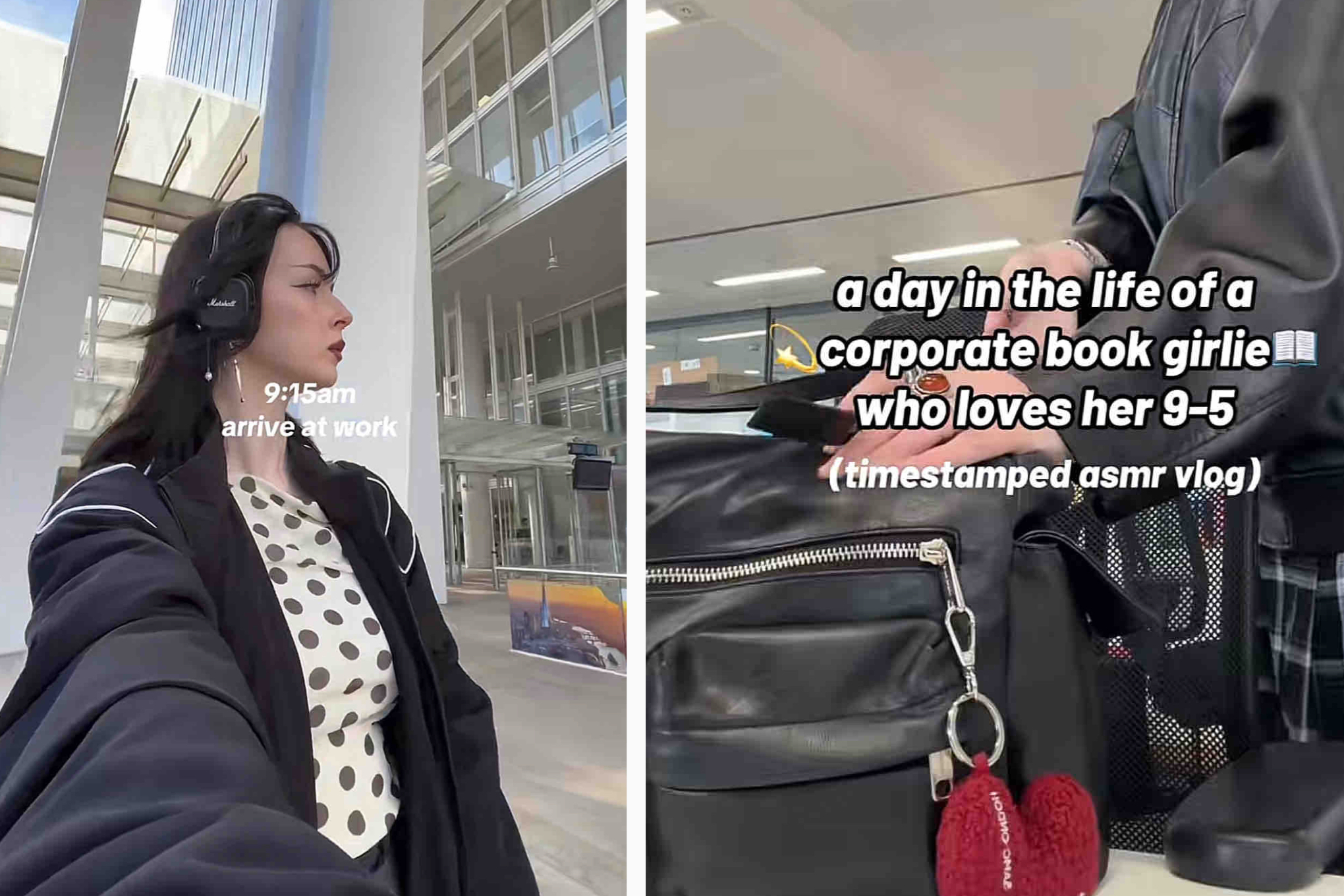
Behind every bestseller on our shelves is hours and hours of this work, often going invisible. But in the past year, Edwards has been helping to change that. Ever since her diaristic video series, “a day in the life of a corporate book girlie”, went viral on TikTok. Now, each part of her 8 hour shift is watched by an online audience in the millions. Clips of her typing, emailing, unboxing, organising and coffee making at work can attract as much as 3mn views. And thanks to an onscreen timestamp, viewers can follow the exact minute she performs each task. Her account, @bookswithgray, boasts 200K followers on the video app, on top of the nearly 300k on Instagram.
Edwards is among a growing trend of Gen Z women who are turning working life inside leading books publishing houses into glossy social media content. The phenomenon follows the rise of #WorkTok, a popular TikTok trend in which young employees record their 9 to 5’s, which gained traction online as Gen Z’ers, born between 1997 and 2012, entered the world of work. One creator described its appeal as “romanticising the mundane”. Publishing is far from the only industry to go under a rose-tinted iPhone lens; viewers have been taken into workplaces of finance, tech, education and hospitality, too.
“Every time you hear about publishing it’s a very romanticised view” Grace Edwards
Unlike these industries, however, working in publishing is being sold online as something of an aspirational lifestyle almost exclusively to young women, being consumed as something to envy not for the salaries. “May a job like this find me,” read a popular comment below one of Edwards’ videos. “I want to just sit and do Excel all day and everyday, it seems like a dream job.” Another read: “Finally, a type of corporate job that I think people would really appreciate and love and won’t be super stressed out.”
“Every time you hear about publishing, it’s a very romanticised view,” says Edwards, referring to a misconception that fancy book launches and catered lunches with authors washed down with champagne and pastries are routine. A glamorous side does indeed exist, she adds, but “it’s a smaller part of the roles than you would think from the outside”. Still, by her own admission, she thinks this “is something which my day in the life content also adds to”.
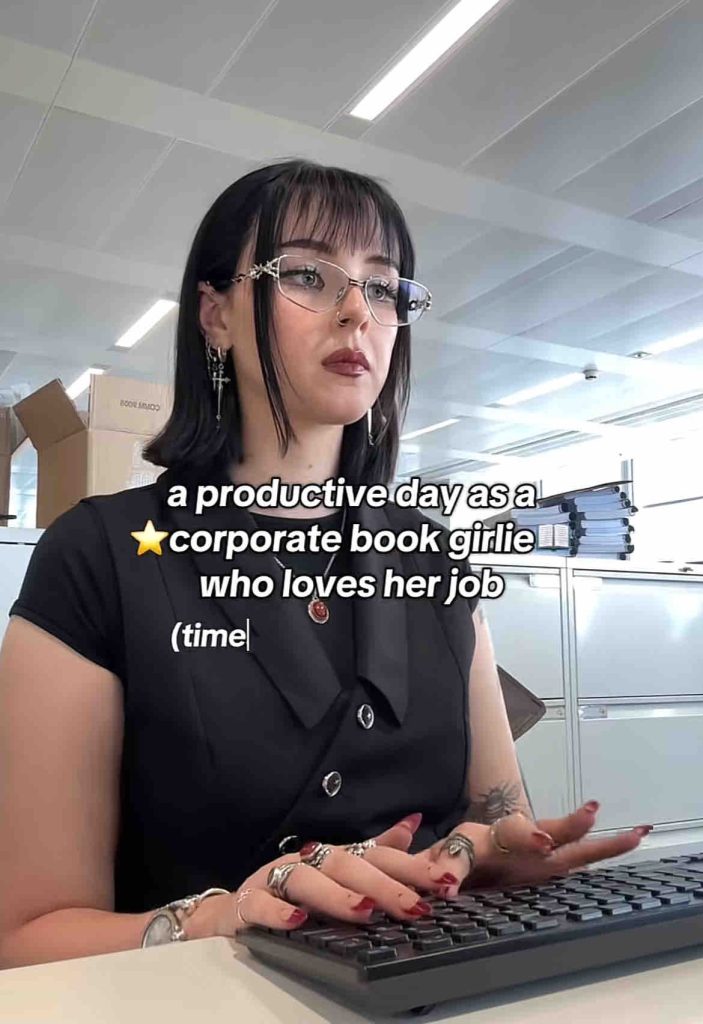
Her videos hardly show the glitz. If anything, they reveal the job to be chiefly office-focused, more “menial admin”, she says, than meetups with famous writers. What they do purvey is a heavily edited glimpse. She never, she admits, shows difficult days at work, “because you don’t need to worry about filming on top of everything else”.
Fresh out of university in summer 2023, Edwards set her sights on her dream of working in publishing. She found experience first as a bookseller before landing a clutch of industry internships. It was during this time she began steadily building a following online creating content for Bookstagram, the books community on Instagram, while continuing to pursue entry-level positions at top publishing houses. Six months of applications paid off when she was hired in her first and current role the following October, as a junior marketing and PR assistant (she requested her company not be named). Six months in and feeling settled, she recorded and uploaded her first “day in the life of a corporate book girlie” video on TikTok.
Videos like hers is something she wished she had when she was rewriting her CV “50 to 60” different times. “When I was looking to get into the industry I feel like it [was] so hard to fully understand what each department does and what your actual day-to-day looks like,” she says. “So I mainly started doing it as something I would have really loved to have known before I started the industry. Like, ‘how can I help other people who are kind of deciding what they want to do as well?’”
“Everyone has a platform, publishers have platforms and there’s BookToker’s that are all communicating day in, day out” Grace Edwards
A spokesperson for the Publishers Association described the popularity of that day in life videos as “fantastic”, saying that it may have made working in publishing more desirable for bookish young people. “It may be that [the] existence of BookTok means that there’s now more discussion of, and insight into, working in junior roles in publishing through people sharing what they do in a typical day,” they said. “The increase in conversations about books online may be encouraging people to consider careers in publishing.”
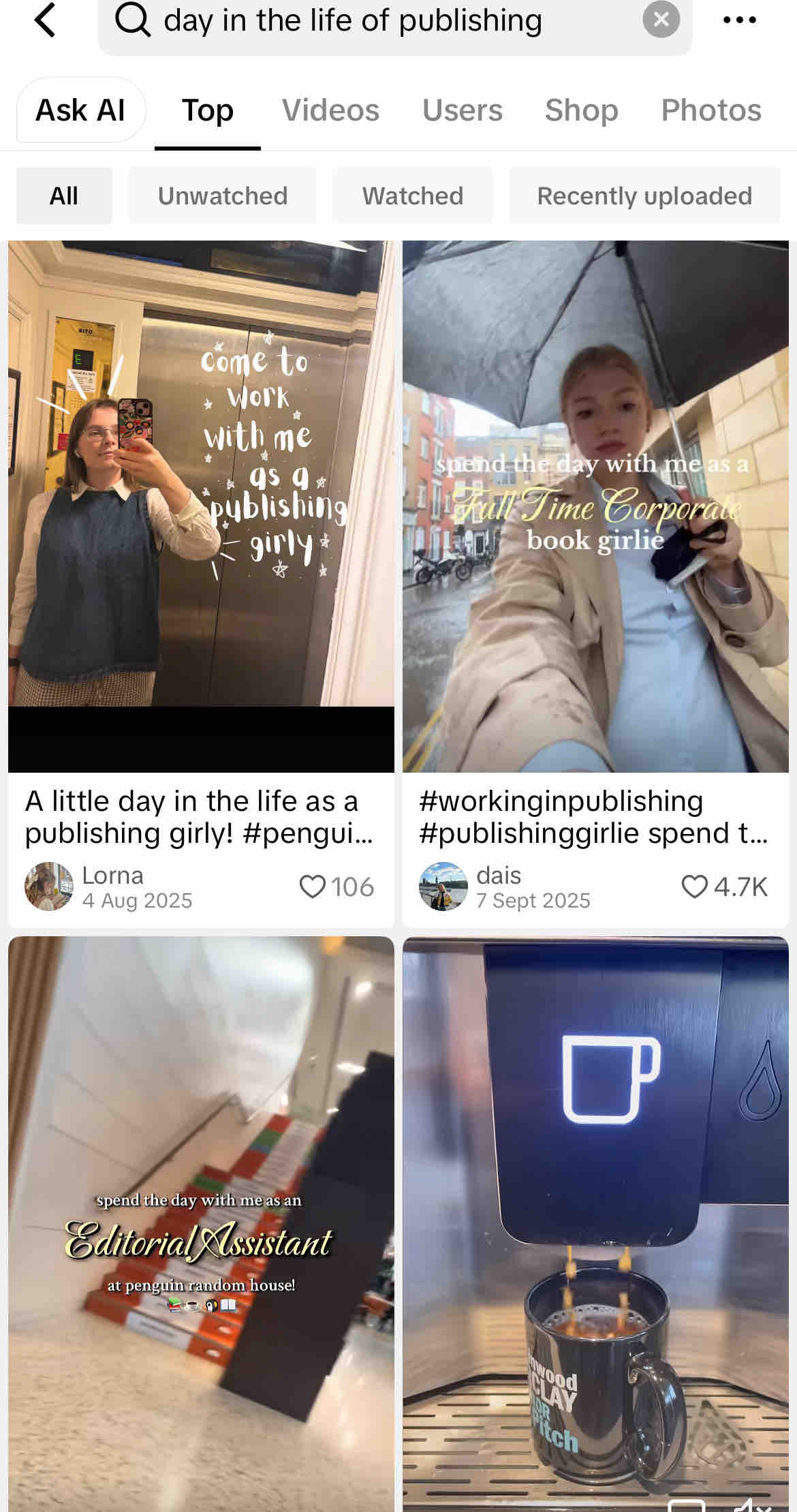
Publishers have become social media savvy, too. Titans like Penguin Random House, Harper Collins, Hachette and Pan MacMillan all run popular social media pages, posting videos on TikTok fronted by their young, predominantly female junior staff. Sometimes they are filmed as expected, eagerly promoting new titles, waxing lyrical to the camera with a hardback in hand. But mostly, feeds are preoccupied with showing what it’s like to work at their company in ‘meet the teams’ and tours around their offices, or even day in the lives like Edwards’ content.
She herself has noticed how publishers are becoming increasingly interested in promoting its internal culture to young viewers, rather than authors on the roster or books for which its running campaigns. “When I was growing up, I was never really aware of who published my books,” she says. “I’d always known about authors, but I never really looked at the publishers that actually would put them out into the world. Whereas now everyone has a platform, publishers have platforms and there’s BookToker’s that are all communicating day in, day out.”
Pic: Grace Edwards (@bookswithgray)
A keen audience has flowered, in large part, to the big BookTok boom. The TikTok community took off during the pandemic, led by a wave of Gen-Zers who enthused about their love of fantasy books from their bedrooms, recording themselves recommending favourite titles to a fandom of fellow book lovers that grew to be in the millions. It turbocharged a reading resurgence among teenage girls and young adults, in a trend that boosted book sales online and brick-and-mortar stores alike.
It also spurred publishers’ to make their industry visible to a new generation in unprecedented fashion. Suzanne Collier, of BooksCareers and author of How to Job Search in Book Publishing, is a careers advisor who has worked in the industry for nearly 40 years. When she founded the consultancy in 1999, “no publisher was interested in promoting careers in the industry,” she says. “If you want to know why there’s a current wave, then it’s because the publishers are now actively promoting publishing like they’ve never done before.”
Heather O’Connell, who runs the careers programme Get Into Book Publishing alongside her business Bluebird Works, points out that working with books has always been a sought after career by women, but social media has broadened that appeal on a mass scale. “The industry has made itself a bit more accessible and a bit more open,” she says.
“They promote careers within the industry as though there’s hundreds and hundreds of jobs, and there aren’t hundreds of jobs.” Suzanne Collier
O’Connell, who herself is from a working-class background, describes it as a positive move in the industry’s push for diversity, noting that its workforce has long been perceived as consisting disproportionately of women from privileged backgrounds. “Publishing companies realised a while ago that they were a sort of a mysterious place and nobody really understood what we did and how we did it,” she says. “And I think they’ve done a good job of trying to get that information out there more publicly in order to encourage people from from broader backgrounds to want to work in the industry, because traditionally it was very kind of white middle-class women.”
Collier agrees, but warns that publishers’ self-promotion can verge on excessive and has an obvious drawback, inadvertently hitting another issue facing young aspirants. “At times, the industry seems to be so far up its own backside,” she says. “Because of the way they promote careers within the industry, as though there’s hundreds and hundreds of jobs, and there aren’t hundreds of jobs.”
Stephanie Hall, director of talent and outreach at Creative Access, praises the industry’s move away from exclusionary practices like unpaid work experience and nepotism, but says it also had a knock-on effect: “What it does mean is that opportunities become really, really competitive because they’re advertised really widely.” At Creative Access, a social enterprise whose online careers board has become popular with young graduates seeking entry-level listings, publishing is one of the most oversubscribed sectors with which they work. Out of the 69,000 candidates registered, almost 25% have billed publishing roles as their main interest, “quite a big proportion” she says, given that they advertise roles across all creative industries including film and TV, theatre, live arts, museums and galleries. The website “saw a spike in applications for publishing roles between 2024 and 2025”, Hall says, potentially coinciding with the popularity of BookTok. She explains that the usual number of applications in other sectors average between 100 and 200, but they consistently receive a higher interest in publishing, hitting about 300 or 400 applications per listing.
Pic: Tiktok
Far from limited to the publishing industry, the imbalance touches on a bruising reality that many young jobseekers are facing in a nationwide youth employment crisis. The Office for National Statistics found that unemployment among 16 to 24-year-olds hit its highest level since 2014, including many graduates who report that they’ve sent out hundreds of applications in a bid to secure an entry-level role, to no avail.
Neri Bahceci, 26, has been pursuing a career in publishing since late 2024, after she “fell in love” with fantasy books and joined the BookTok community. But having had no luck, she was forced to take a break to protect her mental health, describing the experience as “deflating, very deflating”. She has hit send on more than 100 applications; at her peak, she says, she was glued to her PC laptop “for a good chunk of the day”, working on multiple cover letters for staff jobs, internships and work experience. “I feel like, ‘why am I not good enough?’,” she says. “I feel like [my applications] are not even being seen.”
“Trying to get right now, it’s just a door slammed in your face wherever you go,” she adds, expressing that she’s even lucky to even hear back from employers at all, even a standard ‘unfortunately’ email doesn’t always come through. Like many young publishing hopefuls, Bahceci consumes content made by staffers on social media. But day in the life videos, in particular, have become “a bit depressing to see when all you’re getting is like the rejection emails,” she says. Rather than motivating her to envision herself one day employed, alongside those creators in a publishing house as they once did, now it makes her feel as if “that dream is getting further and further away”.
Still, she’s resolved to persist, saying her overriding love for books drives to keep trying. Even the prospect of a low salary commonly offered by publishers fails to dissuade her. “I feel like the money shouldn’t matter if you absolutely have a passion for what you’re doing. For me, the thing is if you’re doing an accounting job and you’re getting all this money but you’re absolutely unhappy and your mental health isn’t doing well, I don’t see the point.”
“None of us are here for the money. We all do it because we love books” Suzanne Collier
According to Collier, it’s the industry’s desirability that has long helped justify its historically meagre wages. “If they had fewer applicants, they’d probably pay more competitive salaries,” she says. “The biggest barrier to diversity is salary.” Entry level salaries at top publishing houses often range between at around £24,000 to £28,000, below the average starting salaries for graduates of £31,850 per year.
Collier describes working in publishing as a “vocation” more than anything else. “You know, none of us are here for money,” she says. “We all do it because we love books, we love reading. We love working with authors and being in that literary space.”
For some Gen Z’ers, the worsening job market has not deterred them from pursuing their dream careers. Work-life balance has become a priority in their job hunt, with a 2025 survey of thousands of employees by Randstad reporting that workers belonging to Gen Z were the most likely to rank it above pay. Edwards says younger generations are changing expectations in what they demand from the world of work. Seeing her parents hold the same roles for years, it dawned on her just how considerable of a time she’d be tied to a life of employment. “So it was very important to me that I went into something that I actually really loved,” she says. “And I feel like that is what a lot of young girls and young people are having to consider nowadays, because work life is going to be a large proportion of your life, sadly.”

Pic: London Book Fair Pic Wikimedia/ActuaLitté
Emma*, 29, harbours a less rosy view of the industry, having worked at two leading publishing houses for nearly 4 years before exiting altogether. Working with books was never a dream for her, describing it as something she fell into when she decided to apply for a marketing role on a whim in 2021. But when she was hired, she says, she “threw herself into it”. “I enjoyed that it was quite fast paced and exciting. And everyone really cared about what they were doing.” Then about six months in, things changed.
The pressures of the role mounted: a competitive internal environment saw employees stretched between as much as 30 to 40 titles a year, with little time to take breaks, or even sometimes lunch. “I think the number of books that were being published was prioritised over the capacity that people had,” she recalls. “Over time, it felt like it got too much. And then lots of people burn out; burn out in publishing and taking sick leave is so common… staff turnover was high”
A culture of what staffers called “toxic positivity” was encouraged. “Like, ‘we’re doing really well, so let’s keep going!’. Rather than ‘we’re doing really well, so let’s take a break and recover’, or acknowledge that for people to do really well people have put everything on the line and worked overtime.” She alleges that junior staff were often stretched beyond their bandwidth and pushed to the brink. The pay, she says, “is just not rewarding that sort of work. That can then be a bit difficult if people are working really hard but they don’t even have enough money to pay rent in London.”
“Burn out in publishing and taking sick leave is so common” Emma*
Emma*, who requested her name be changed, eventually quit publishing herself in 2024 for “health reasons”, having begun to suffer from burnout and insomnia. She says there was a feeling that “we should be really happy to work here. ‘So, why would you leave?’ They found it very surprising”.
Edwards, who repeatedly calls publishing her “dream job”, encourages those who are waiting in the wings to take a step back. “Actually think to yourself, is this exactly what I want to do?… Do you have that sacrifice for salary?,” she says. “So it’s not going to be the dream job for everyone, as easy as people will just comment it [under her videos].
It makes me feel nice that people like my job, but also it’s not a career to rush into. There’s a lot to think about.”
*Some names have been changed